What is Stilton Blue Cheese?
A PDO English blue cheese made from full-fat pasteurised cow’s milk in Derbyshire, Leicestershire, and Nottinghamshire. Penicillium roqueforti is added and the cheese is pierced during ageing so its characteristic blue-green veins can develop. It is sold as Blue, Mature Blue, or Vintage Blue Stilton according to maturity and sensory character.
Taste, aroma, and texture
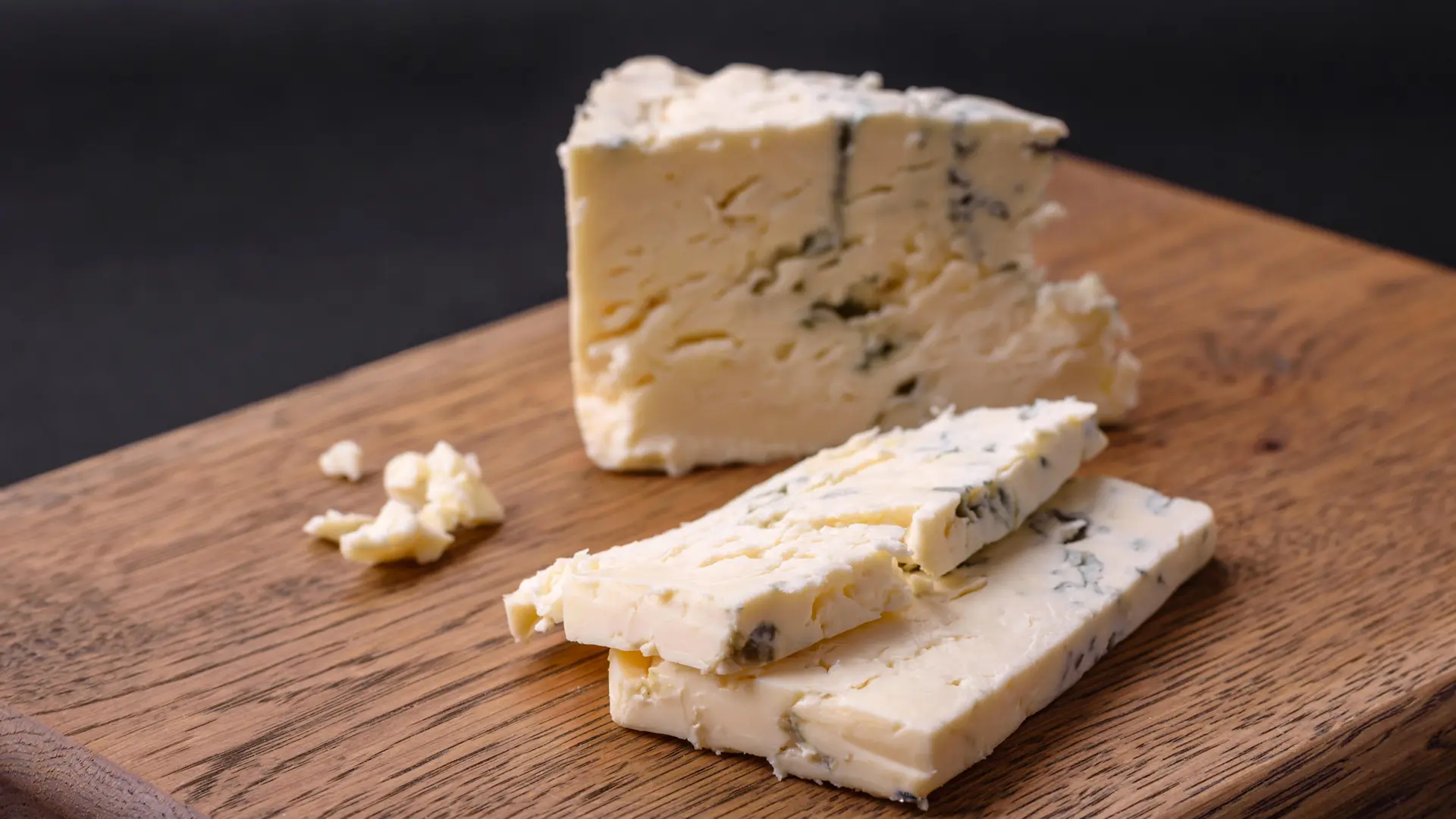
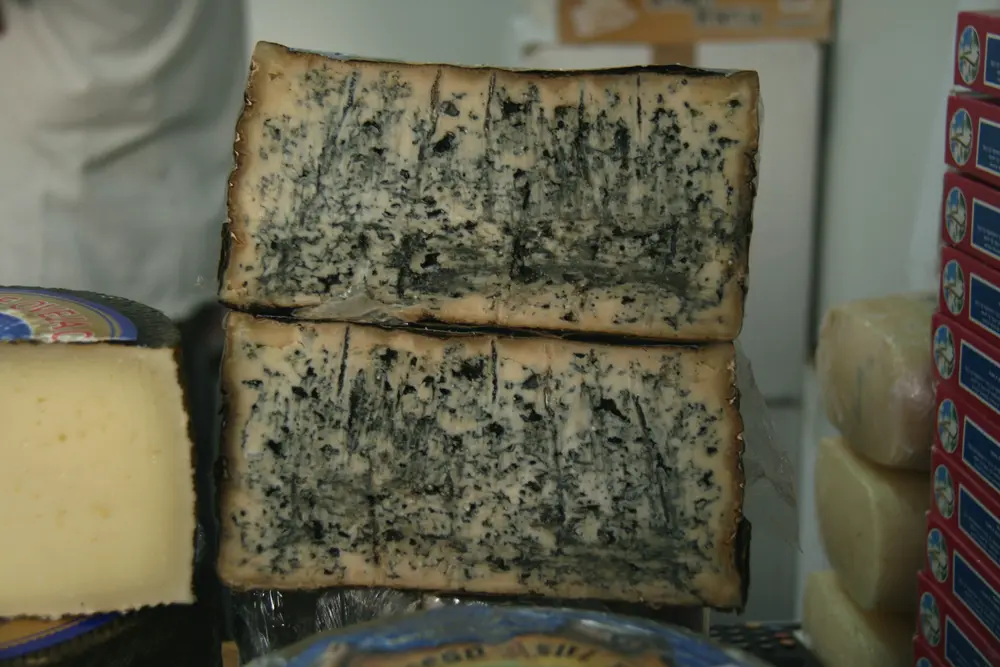
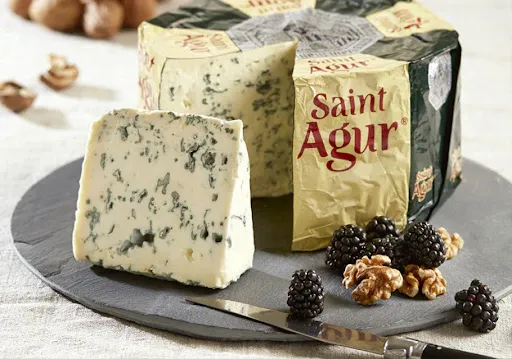
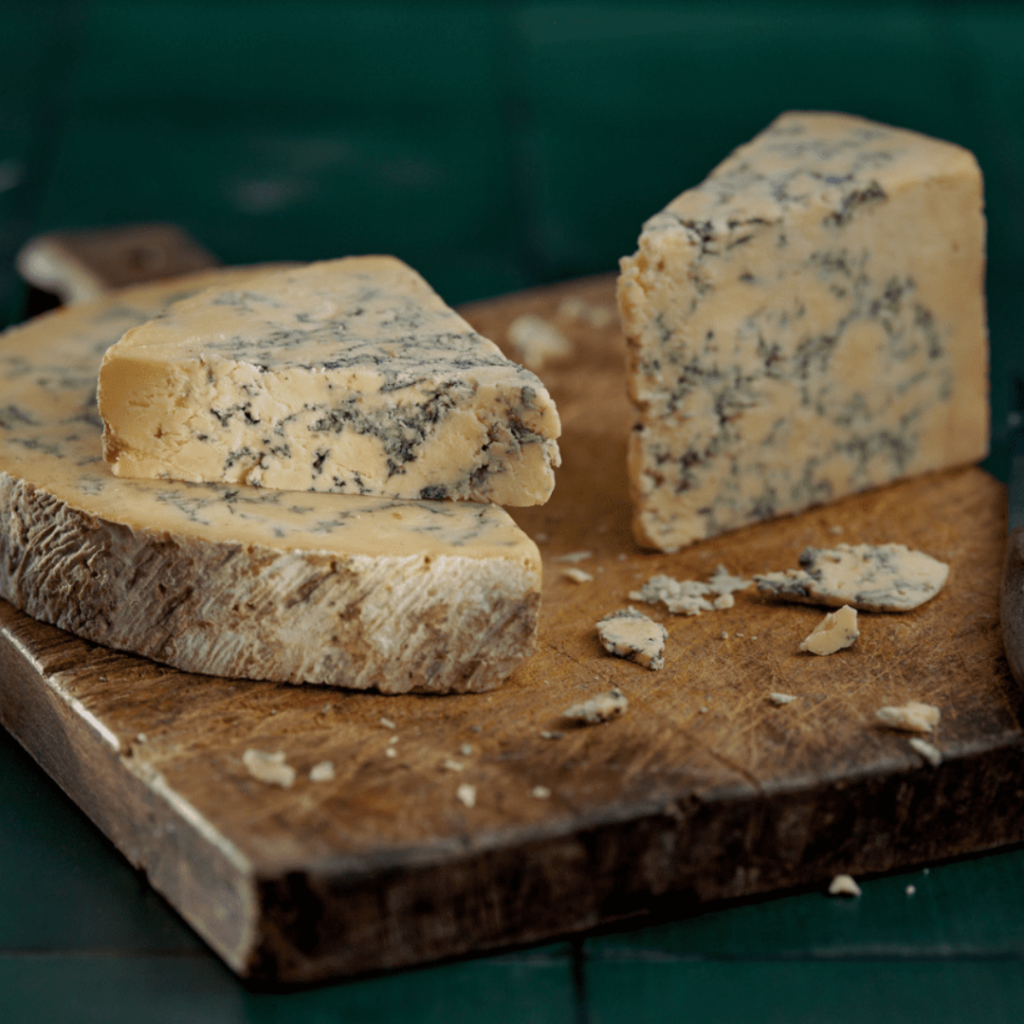
Slightly crumbly and open when young, becoming softer and creamier as it matures. Blue-green mould radiates from the centre through a creamy white to yellow-white paste, while the exterior develops a slightly wrinkled natural coat.
Earthy blue-mould notes are strongly dominant, supported by a clean milky background. Fruity and animal notes become fuller with maturity, while herbal and lactic notes remain noticeable. Mature and Vintage Blue Stilton develop a deeper, rounder, and more complex aroma.
Cheesepedia taste profile
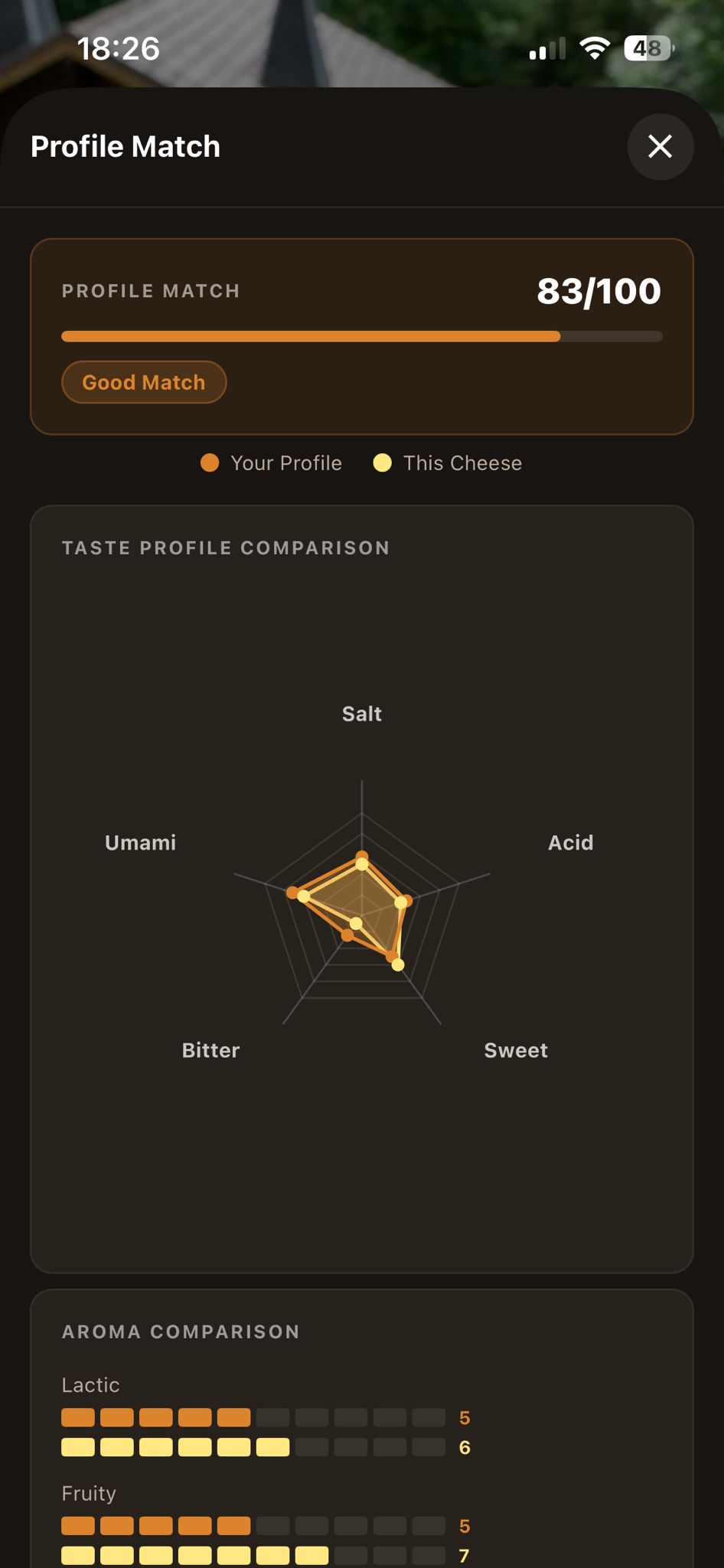
The values below are the structured baseline in the Cheesepedia app. Your personal match is calculated separately from your own taste profile.
A general profile can describe Stilton Blue Cheese, but it cannot know how closely the cheese fits your preferences. Cheesepedia Premium compares this profile with your personal taste profile and lets you evaluate cheeses side by side.
See your personal matchHow to enjoy it
- Crumbled over salads, soups, or roasted vegetables.
- Melted into sauces for pasta, steak, or potatoes.
- Used in savoury tarts, dips, or cheese spreads.
What pairs with Stilton Blue Cheese?
Classic serving companions from the Cheesepedia catalog.
- Traditional Alentejo Bread
- Local Black or Green Olives
- Intense Floral Honey
- Walnuts
- Oatcakes
Find the right wine in Cheesepedia
Cheesepedia uses an expert-designed algorithm that compares the cheese's taste, intensity, and production profile with the wine's body, acidity, tannin, and sweetness. Wine pairings are not generated by AI.
See wine pairings for Stilton Blue CheeseStory and origin
The earliest written record of Stilton dates to 1722. The name derives from the village of Stilton in Cambridgeshire, where it was sold at coaching inns, although it was never made there and the village falls outside the three protected counties. Frances Pawlett of Leicestershire is traditionally credited with establishing the modern style in the 1720s. The Stilton Cheesemakers’ Association was formed in 1936. The registered name Stilton Blue Cheese received PDO protection in 1996.
Storage and serving
- Store in the fridge, wrapped in cheese paper.
- Air travel: suitable only for short trips if sealed and kept cold.
Profile sources and methodology
This page uses the same curated record as the Cheesepedia mobile app. Production-style and designation references provide context; they do not imply endorsement of Cheesepedia.
- Official designation
- Protected Designation of Origin (PDO)
- Registered name
- Stilton Blue Cheese
- Register reference
- UK PDO · registered 31 December 2020
UK geographical indication register