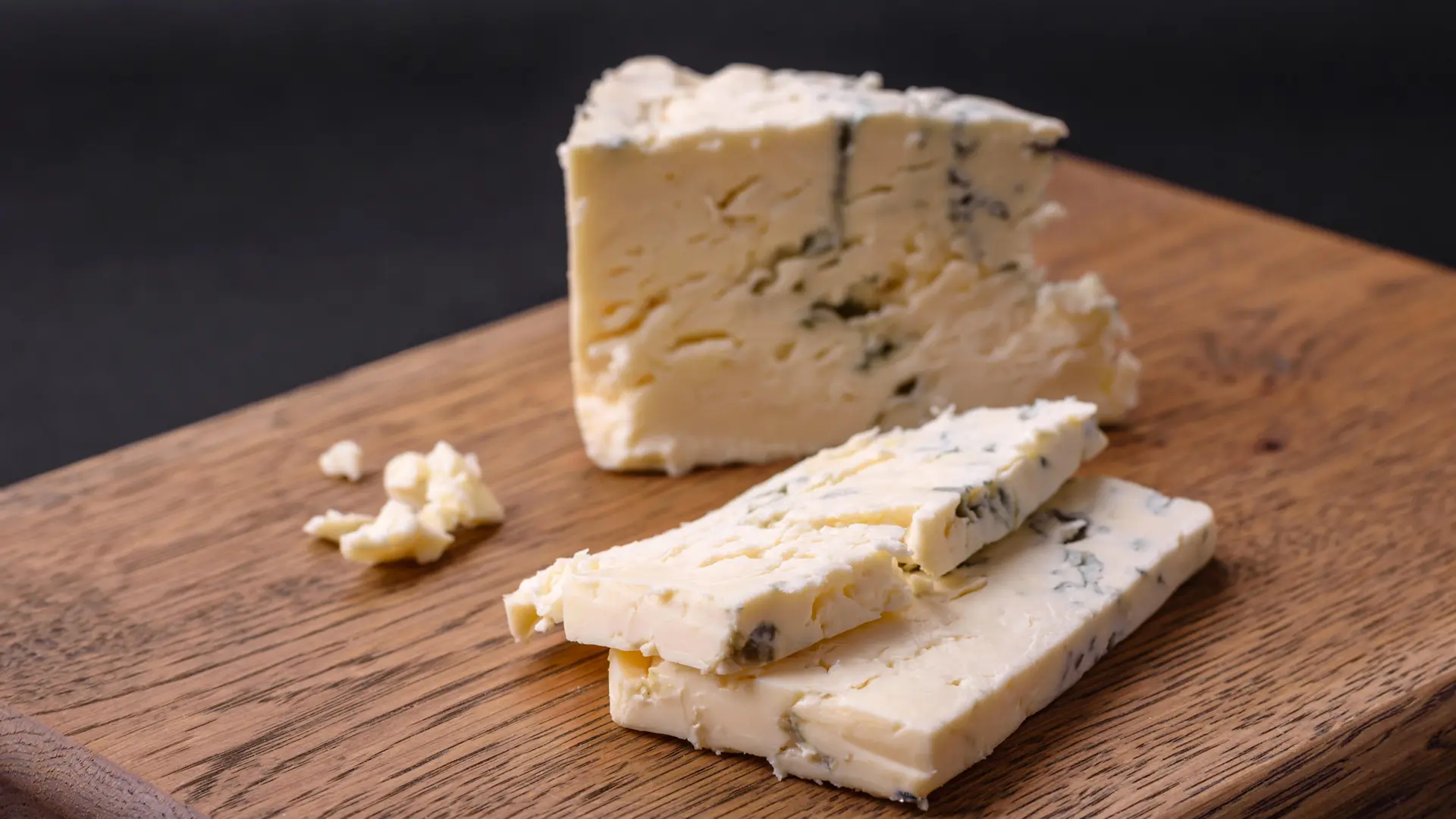
What is Gorgonzola?
A bold Italian blue cheese from Lombardy and Piedmont, made from pasteurised cow’s milk in two styles: Dolce, young, mild, and creamy, aged 2–3 months; and Piccante, older, sharper, and crumbly, aged 6–12 months. One of the world’s oldest blue cheeses, with origins near Milan dating back to the 9th century. Produced in cylinders of 6–13 kg.
Taste, aroma, and texture
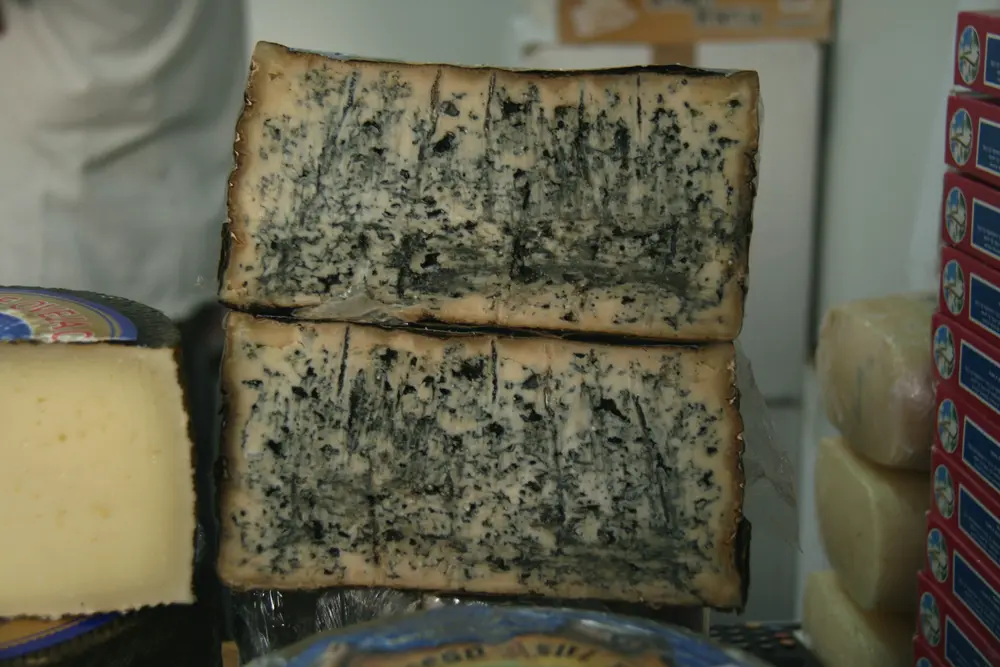
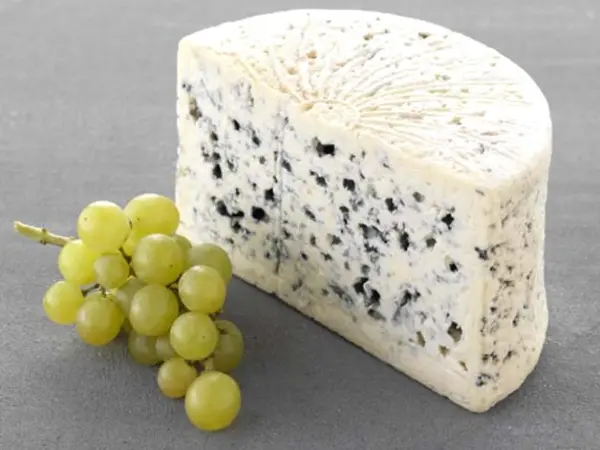
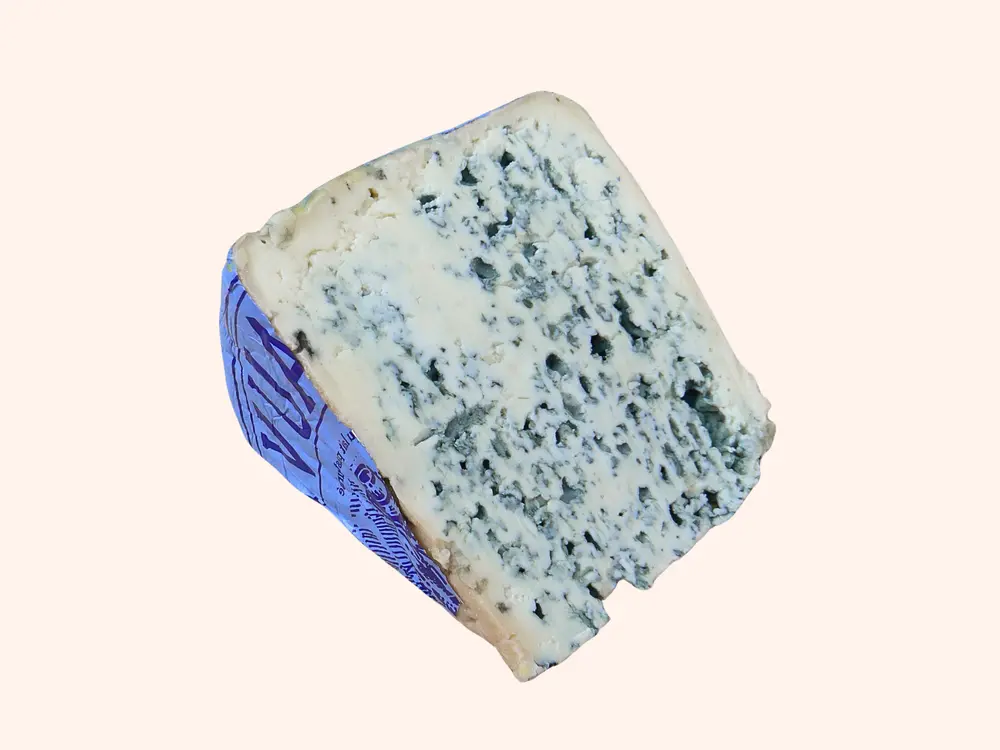
Dolce: soft, spreadable, and extremely creamy, with fine blue-green veining. Piccante: firmer and more crumbly, with more pronounced veining and a drier, more granular paste. The natural rind is reddish-orange and slightly sticky in both styles. Cylinders weigh 6–13 kg.
Earthy notes are strongly dominant, shaped by Penicillium glaucum and cellar ageing. Animal notes are strongly present, while lactic notes are noticeable. Fruity and herbal notes remain faint. No smoky character. Dolce is milder; Piccante is significantly more intense.
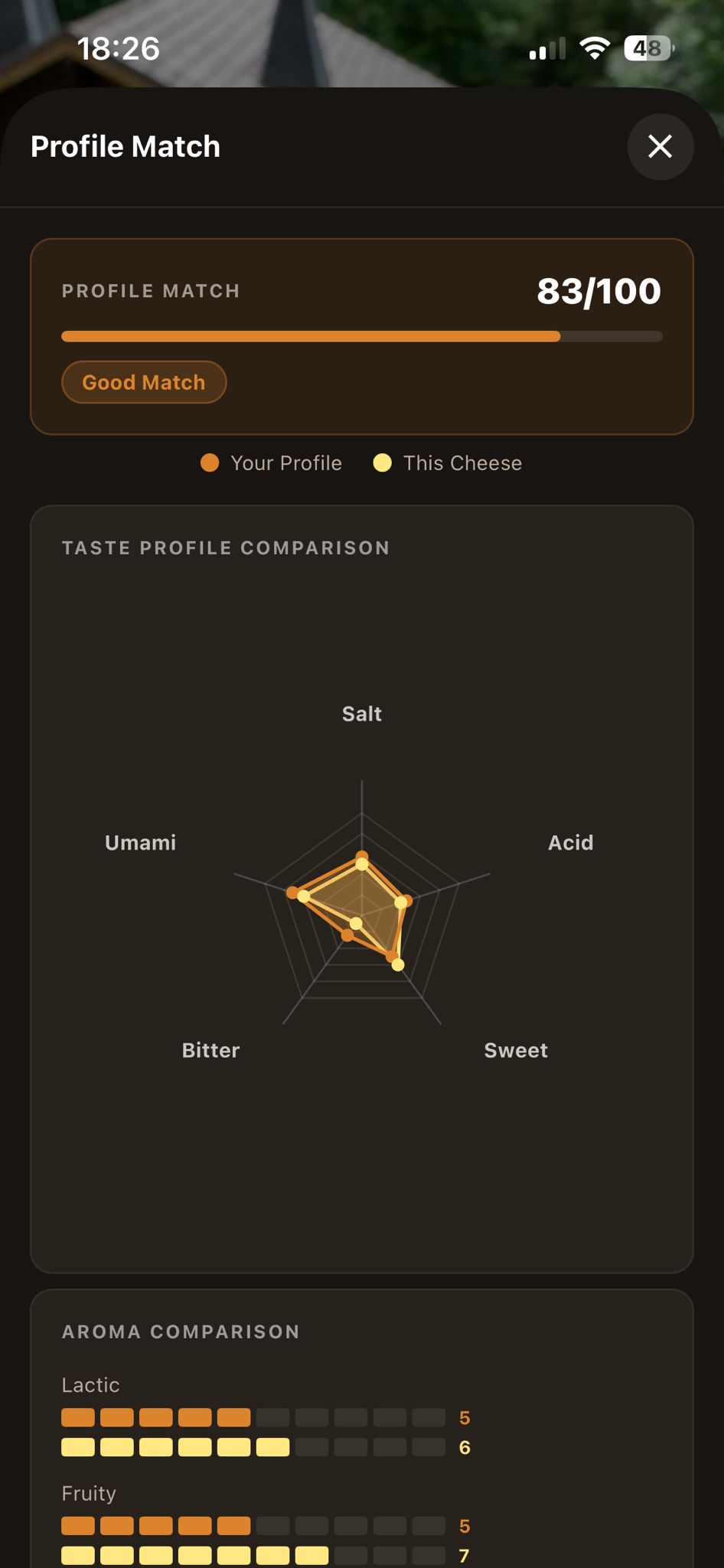
Cheesepedia taste profile
The values below are the structured baseline in the Cheesepedia app. Your personal match is calculated separately from your own taste profile.
A general profile can describe Gorgonzola, but it cannot know how closely the cheese fits your preferences. Cheesepedia Premium compares this profile with your personal taste profile and lets you evaluate cheeses side by side.
See your personal matchHow to enjoy it
- Melted into creamy sauces for pasta or risotto.
- Crumbled over salads, steak, or roasted vegetables.
- Served with pears, walnuts, or honey.
What pairs with Gorgonzola?
Classic serving companions from the Cheesepedia catalog.
- Mini Sesame Bagel
- Butter Cracker
- Salted Cracker
- Whole Wheat Cracker
- Lavash Chips
Find the right wine in Cheesepedia
Cheesepedia uses an expert-designed algorithm that compares the cheese's taste, intensity, and production profile with the wine's body, acidity, tannin, and sweetness. Wine pairings are not generated by AI.
See wine pairings for GorgonzolaStory and origin
One of the world’s oldest blue cheeses, with origins documented near the town of Gorgonzola, close to Milan, in the 9th century. The blue veining was reportedly first noticed by accident. It has held PDO status since 1996, with production restricted to specific provinces of Lombardy and Piedmont.
Storage and serving
- Store in the fridge, wrapped in cheese paper.
- Air travel: suitable only for short trips if sealed and kept cold.
Profile sources and methodology
This page uses the same curated record as the Cheesepedia mobile app. Production-style and designation references provide context; they do not imply endorsement of Cheesepedia.
- Official designation
- Protected Designation of Origin (PDO)
- Registered name
- Gorgonzola
- Register reference
- PDO-IT-0010 · EUGI00000012992
European Commission eAmbrosia