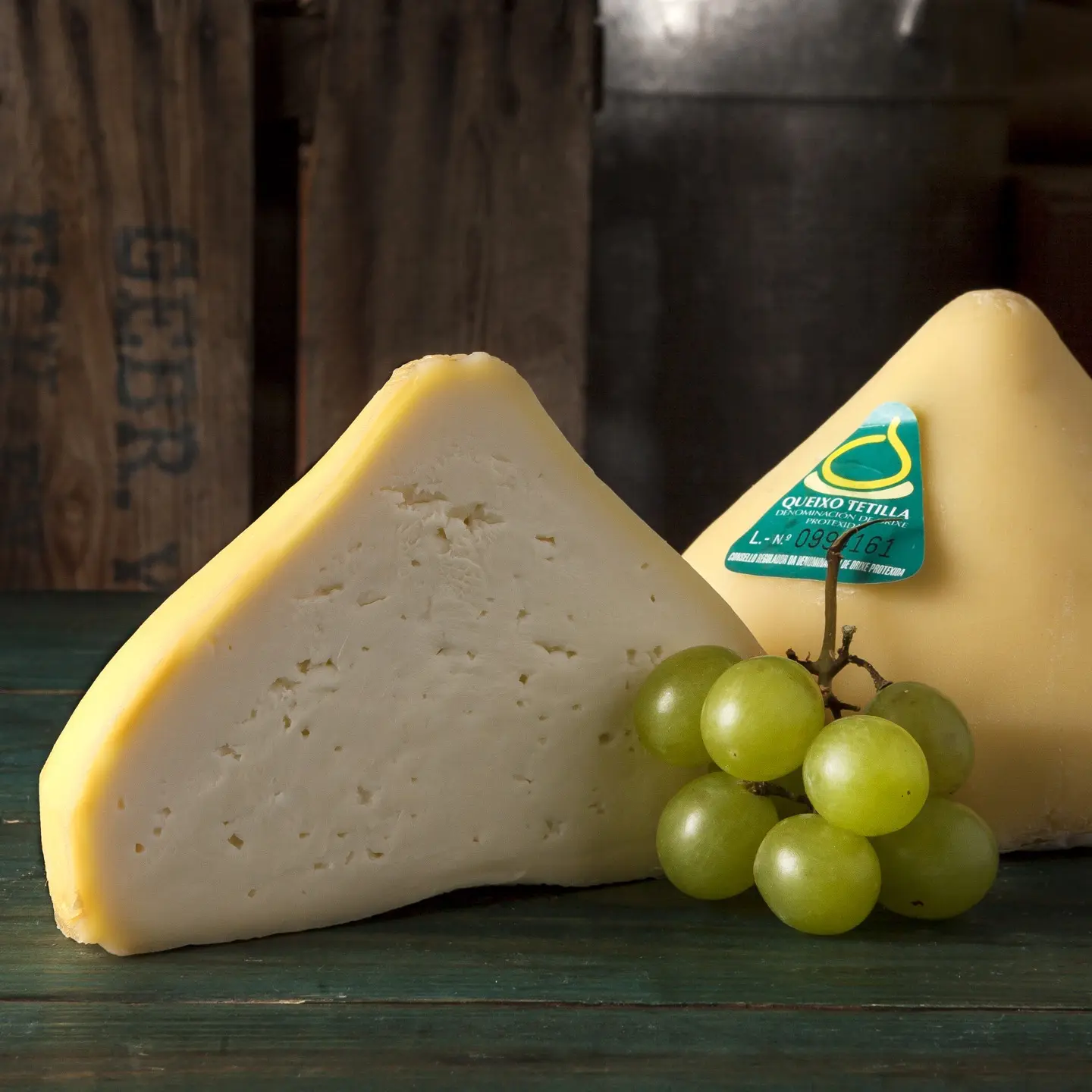
What is Tetilla?
A mild, soft cow’s milk cheese from Galicia, named after its pear-drop or breast-like shape (tetilla means “little breast” in Spanish). Made from the pasteurised milk of Rubia Gallega, Frisona, and Parda Alpina cows. Aged 10–30 days. One of Galicia’s most loved and widely consumed cheeses.
Taste, aroma, and texture
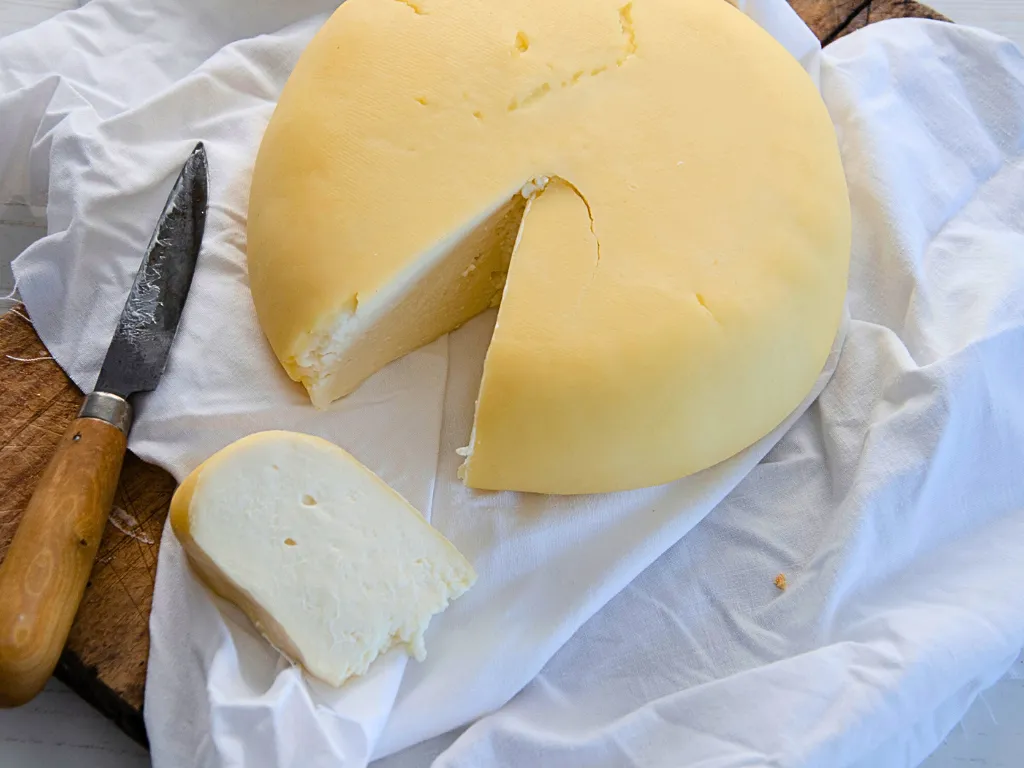
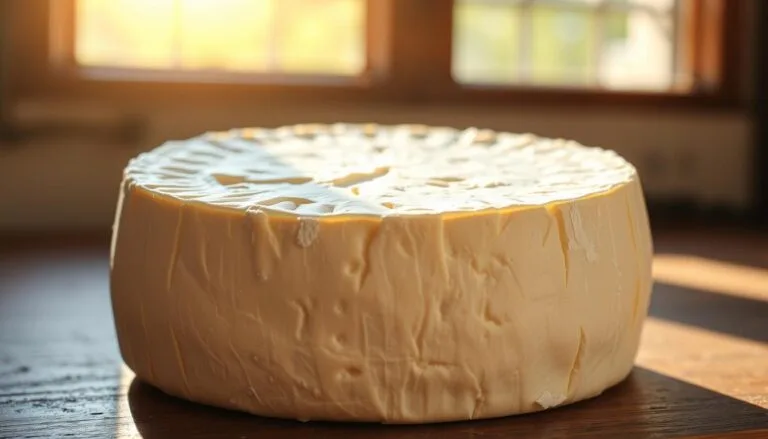
Supple and elastic, with a creamy, homogeneous interior and very few small eyes. Thin, smooth yellow rind. The pear-drop shape is its key visual marker. Melts well and is widely used in Galician cooking. Wheels weigh 500 g–1.5 kg.
Lactic notes are strongly dominant: clean butter and fresh milky sweetness. Fruity and earthy notes are faint. Animal and herbal notes are barely detectable. No smoky character. One of Spain’s mildest and most accessible aromatic profiles.
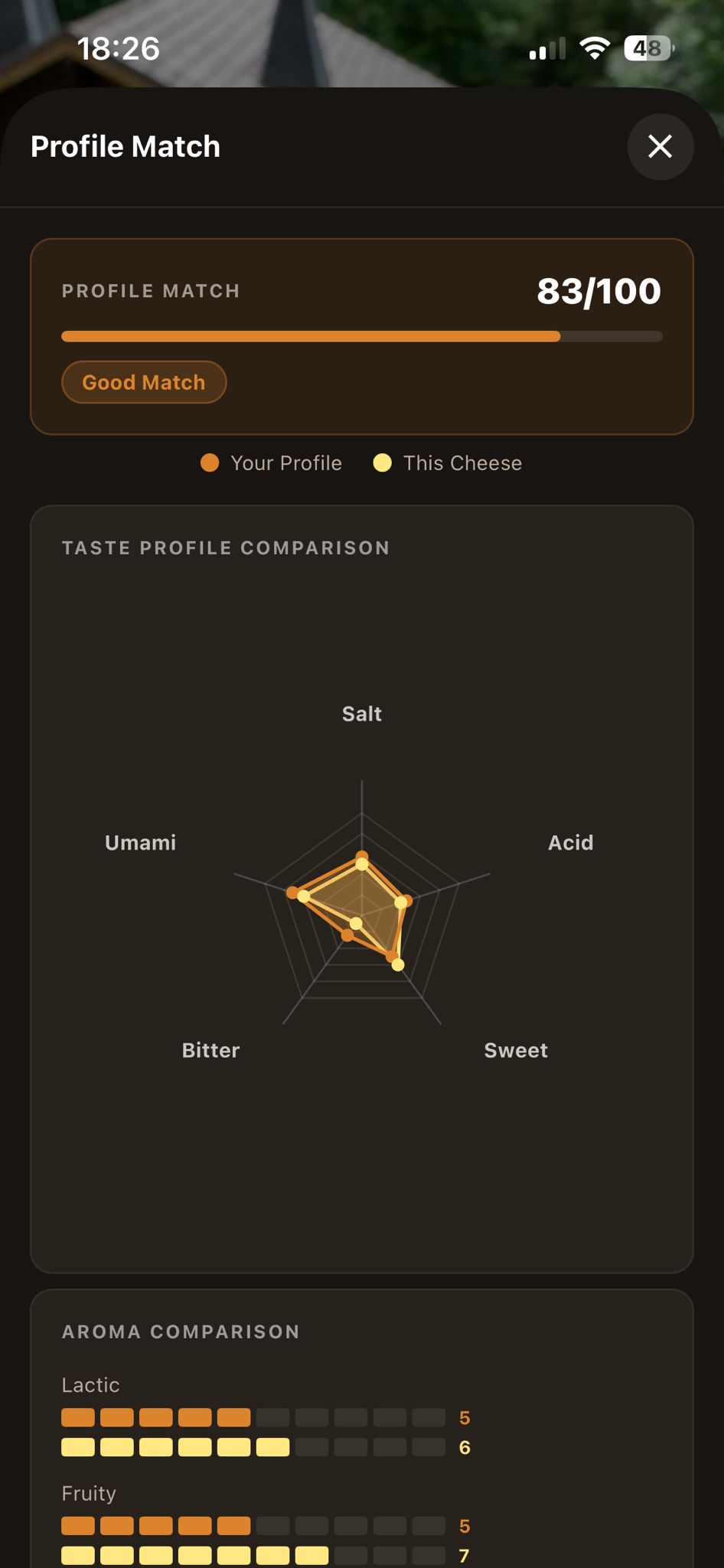
Cheesepedia taste profile
The values below are the structured baseline in the Cheesepedia app. Your personal match is calculated separately from your own taste profile.
A general profile can describe Tetilla, but it cannot know how closely the cheese fits your preferences. Cheesepedia Premium compares this profile with your personal taste profile and lets you evaluate cheeses side by side.
See your personal matchHow to enjoy it
- Melted into Galician-style pies, omelettes, or baked dishes.
- Sliced into sandwiches, tapas plates, or snack boards.
- Served with bread, fruit, or simple cold appetisers.
What pairs with Tetilla?
Classic serving companions from the Cheesepedia catalog.
- Quince Paste (Membrillo)
- Anchovies
- Cured Ham
- Walnuts & Honey
- Butter Cracker
Find the right wine in Cheesepedia
Cheesepedia uses an expert-designed algorithm that compares the cheese's taste, intensity, and production profile with the wine's body, acidity, tannin, and sweetness. Wine pairings are not generated by AI.
See wine pairings for TetillaStory and origin
Tetilla has been made in Galicia for centuries, historically produced by women on small family farms as an everyday household cheese. The pear-drop shape has been documented since at least the 19th century and has become an emblem of Galician dairy culture. PDO status was granted in 1992.
Storage and serving
- Store in the fridge, wrapped in cheese paper or parchment.
- Air travel: suitable for short trips if sealed and kept cool.
Profile sources and methodology
This page uses the same curated record as the Cheesepedia mobile app. Production-style and designation references provide context; they do not imply endorsement of Cheesepedia.