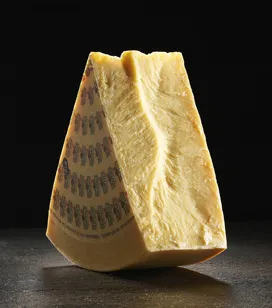
What is Sbrinz?
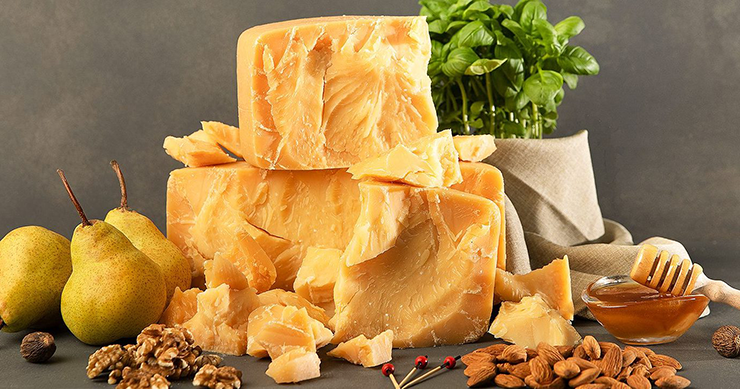
An extra-hard raw-milk cheese from Central Switzerland, considered the country’s oldest hard cheese, with origins dating back to the 16th century. Produced in 35 kg wheels from silage-free milk in selected dairies across Obwalden, Nidwalden, Lucerne, and Zug. Aged for a minimum of 18 months, with full flavour developing around 22 months. Unlike most hard cheeses, it is not cut but broken into chunks, shaved into thin curls, or grated.
Taste, aroma, and texture
Extremely hard and granular. Broken rather than sliced, or shaved into paper-thin curls. Amber-coloured paste with fine white protein crystals. Excellent for grating.
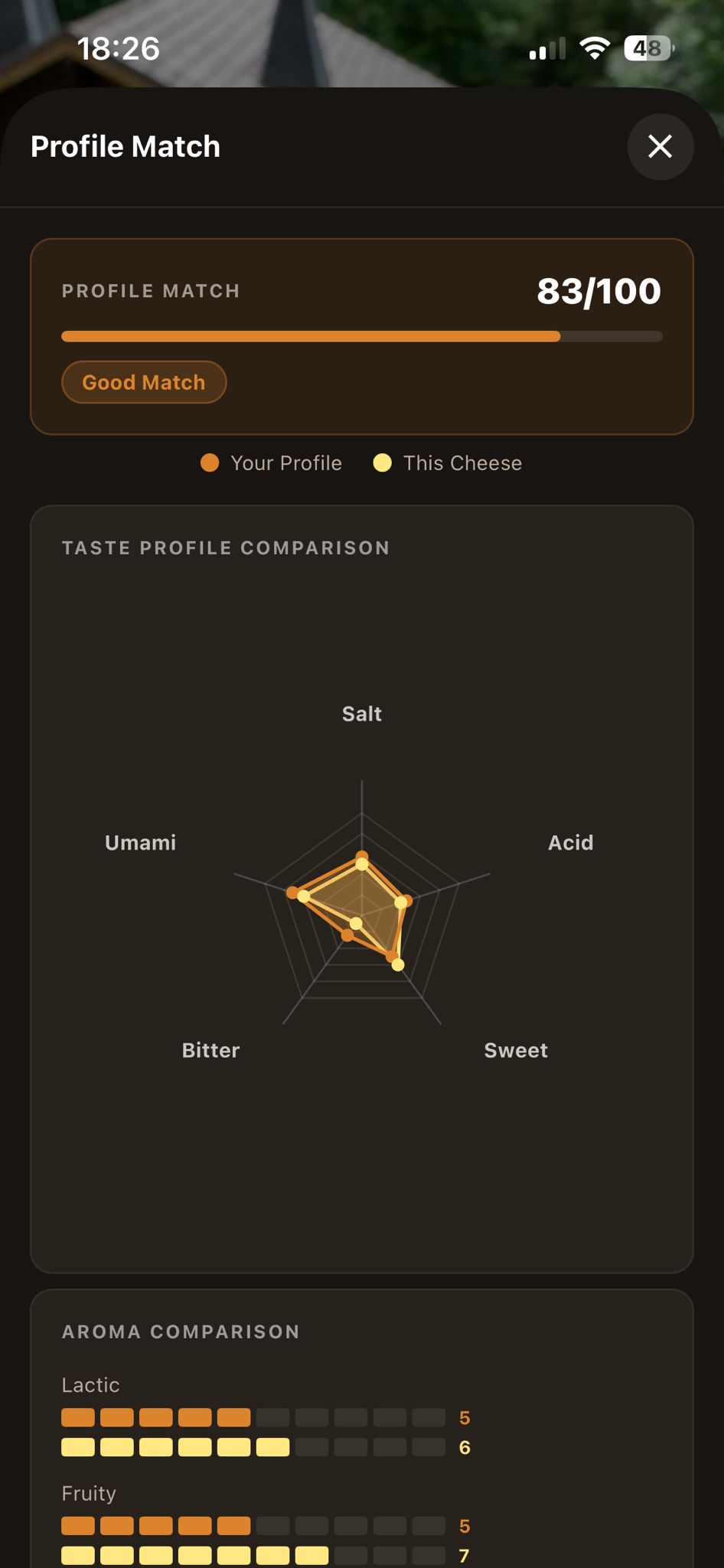
Fruity notes are most prominent, with lactic and earthy tones at a similar intensity. Herbal notes are faint, while animal and smoky nuances are barely perceptible. Clean and concentrated.
Cheesepedia taste profile
The values below are the structured baseline in the Cheesepedia app. Your personal match is calculated separately from your own taste profile.
A general profile can describe Sbrinz, but it cannot know how closely the cheese fits your preferences. Cheesepedia Premium compares this profile with your personal taste profile and lets you evaluate cheeses side by side.
See your personal matchHow to enjoy it
- Grated over pasta, risotto, or soups.
- Broken into chunks and served as an aperitif cheese.
- Shaved into thin curls for salads or carpaccio.
What pairs with Sbrinz?
Classic serving companions from the Cheesepedia catalog.
- Dark Bock Beer
- Whole Grain Bread
- Sharp Dutch Mustard
- Pickled Pearl Onions
- Dutch Genever
Find the right wine in Cheesepedia
Cheesepedia uses an expert-designed algorithm that compares the cheese's taste, intensity, and production profile with the wine's body, acidity, tannin, and sweetness. Wine pairings are not generated by AI.
See wine pairings for SbrinzStory and origin
Named after the town of Brienz, a historic hub for cheeses transported across the Alps to Italy. Records from the 16th century mention “formaggio di Sbrinzo” being exported to Italian markets and enjoyed by Pope Clement VIII. AOP status was granted in 2002.
Storage and serving
- Store in the fridge, wrapped or vacuum-packed.
- Air travel: suitable, especially if vacuum-packed.
Profile sources and methodology
This page uses the same curated record as the Cheesepedia mobile app. Production-style and designation references provide context; they do not imply endorsement of Cheesepedia.