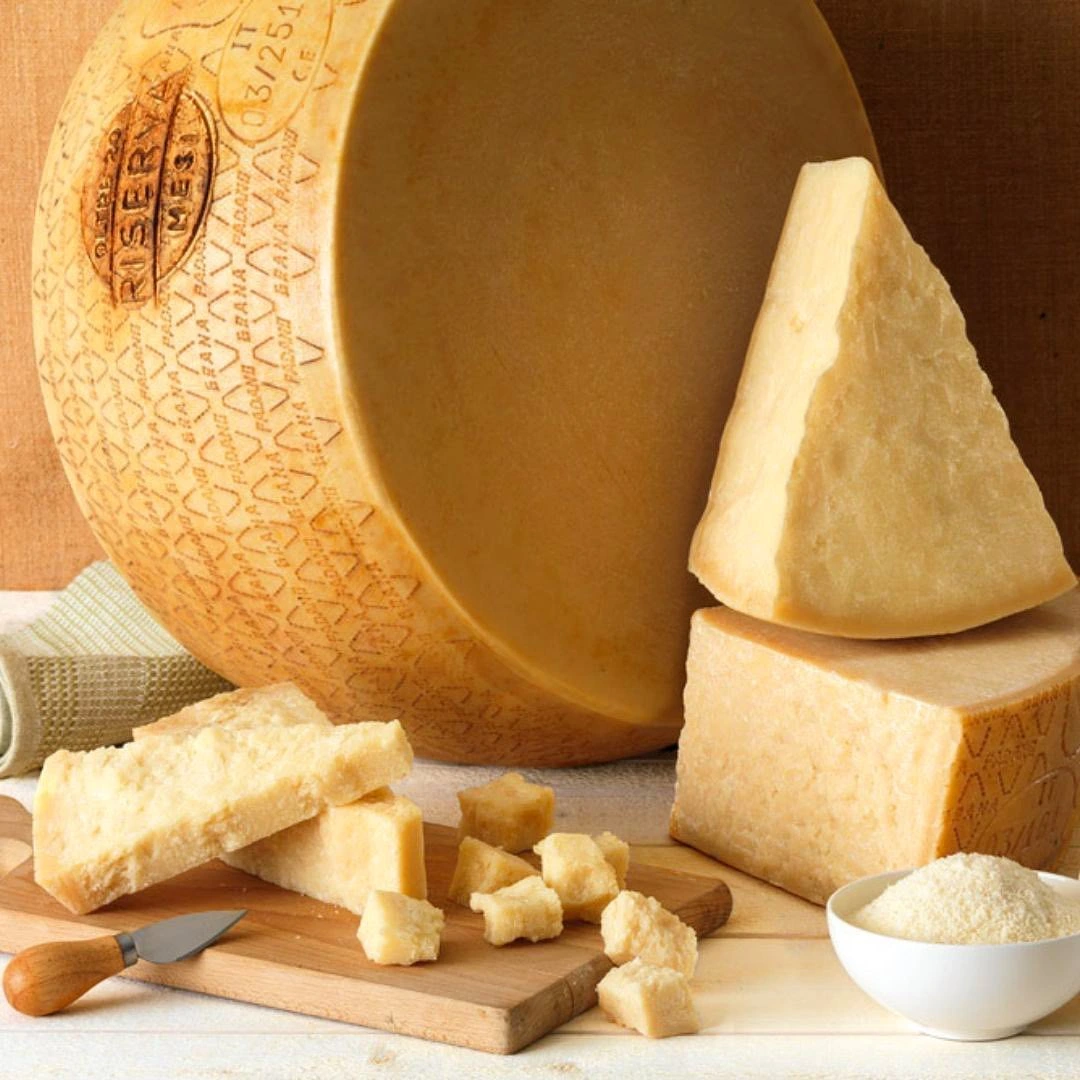
What is Grana Padano?
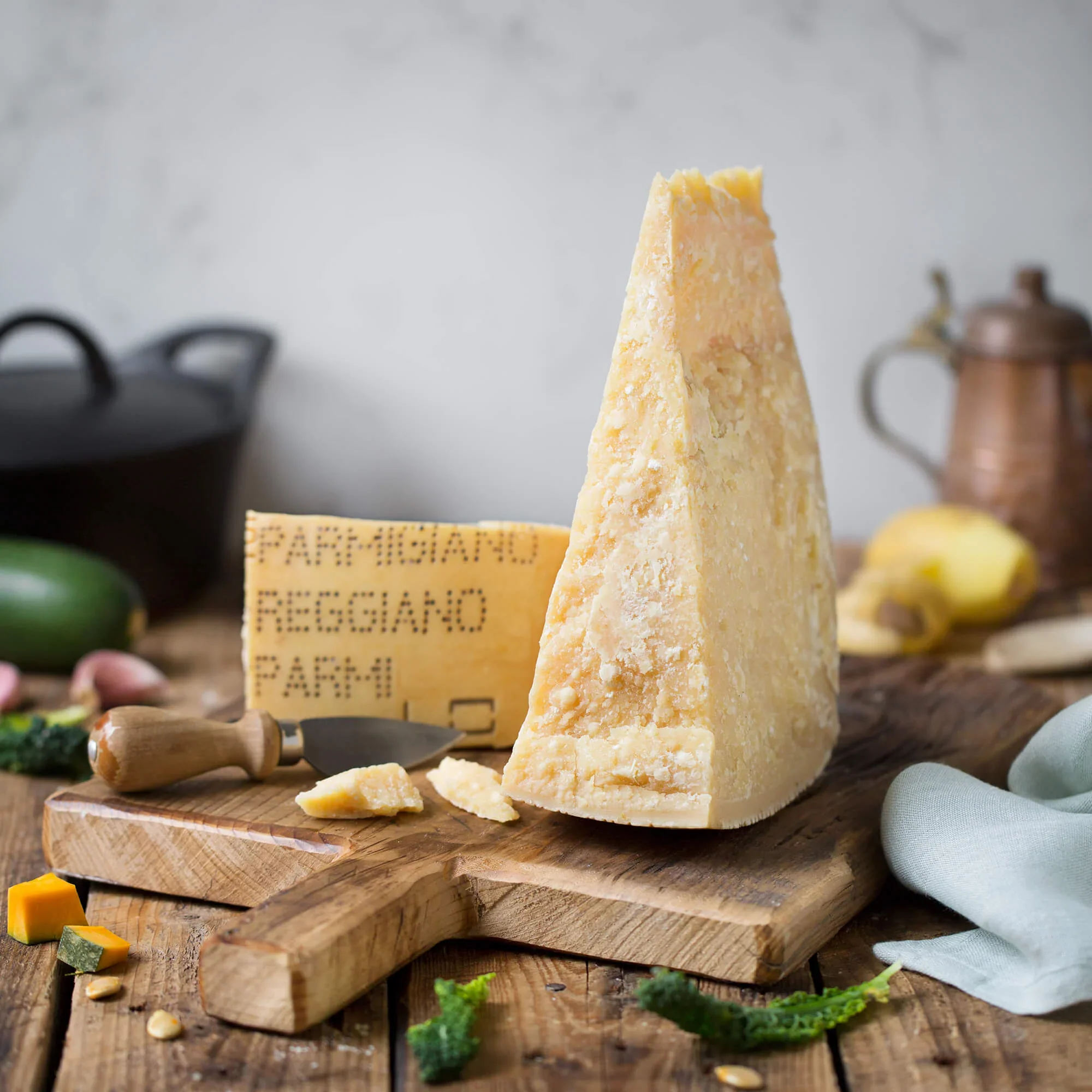
A hard granular cheese from the Po Valley, covering nine regions including Lombardy, Veneto, Trentino, Piedmont, and Emilia-Romagna. Made from partially skimmed cow’s milk, it is one of the world’s most widely consumed geographical indication cheeses. Aged for a minimum of 9 months, 16 months for Riserva, or over 20 months for the longest-aged versions. Milder and less complex than Parmigiano Reggiano.
Taste, aroma, and texture
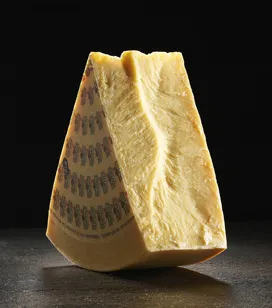
Hard and granular, with a fine crystalline structure and visible protein crystals. The ivory-to-straw-yellow paste fractures cleanly rather than crumbling. The natural rind is hard, dark golden-brown, and often stamped with the PDO mark. Excellent for grating.
Lactic and fruity notes are equally dominant. Earthy and herbal notes are equally noticeable, while animal notes remain faint. No smoky character. Browned butter and brothy nuances sit within the fruity dimension. Milder overall than Parmigiano Reggiano.
Cheesepedia taste profile
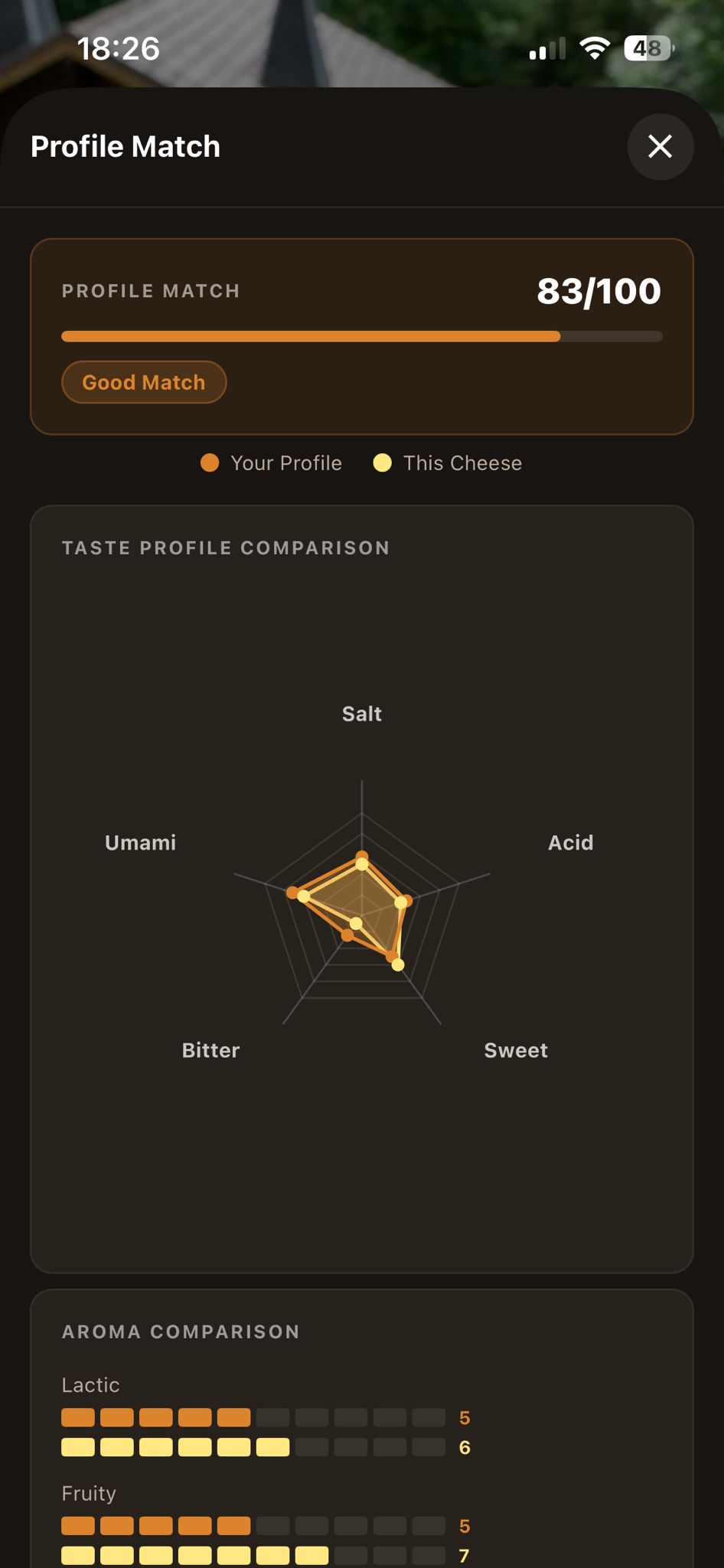
The values below are the structured baseline in the Cheesepedia app. Your personal match is calculated separately from your own taste profile.
A general profile can describe Grana Padano, but it cannot know how closely the cheese fits your preferences. Cheesepedia Premium compares this profile with your personal taste profile and lets you evaluate cheeses side by side.
See your personal matchHow to enjoy it
- Grated over pasta, risotto, soups, or salads.
- Shaved over vegetables, carpaccio, or grain bowls.
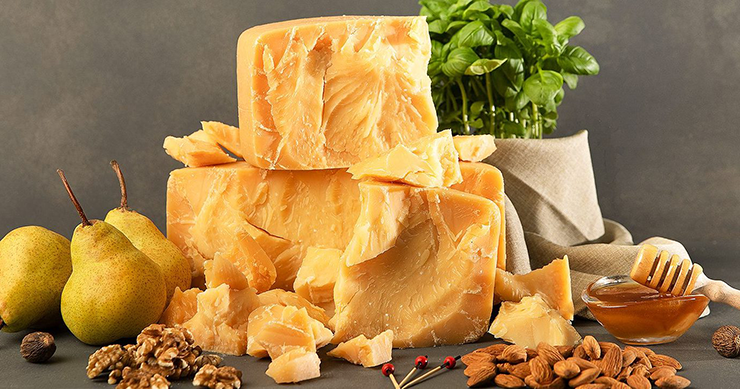
- Served in chunks with nuts, honey, or fruit.
What pairs with Grana Padano?
Classic serving companions from the Cheesepedia catalog.
- Village Bread
- Walnuts
- Salted Cracker
- Butter Cracker
- Whole Wheat Cracker
Find the right wine in Cheesepedia
Cheesepedia uses an expert-designed algorithm that compares the cheese's taste, intensity, and production profile with the wine's body, acidity, tannin, and sweetness. Wine pairings are not generated by AI.
See wine pairings for Grana PadanoStory and origin
Created by Cistercian monks in the Po Valley around 1135 to preserve surplus milk from local dairies. The granular texture and the name grana derive from the grain-like protein crystals that form during ageing. One of the first Italian cheeses to receive formal geographical indication protection. It has held PDO status since 1996.
Storage and serving
- Store in the fridge, wrapped or vacuum-packed.
- Air travel: suitable, especially if vacuum-packed.
Profile sources and methodology
This page uses the same curated record as the Cheesepedia mobile app. Production-style and designation references provide context; they do not imply endorsement of Cheesepedia.