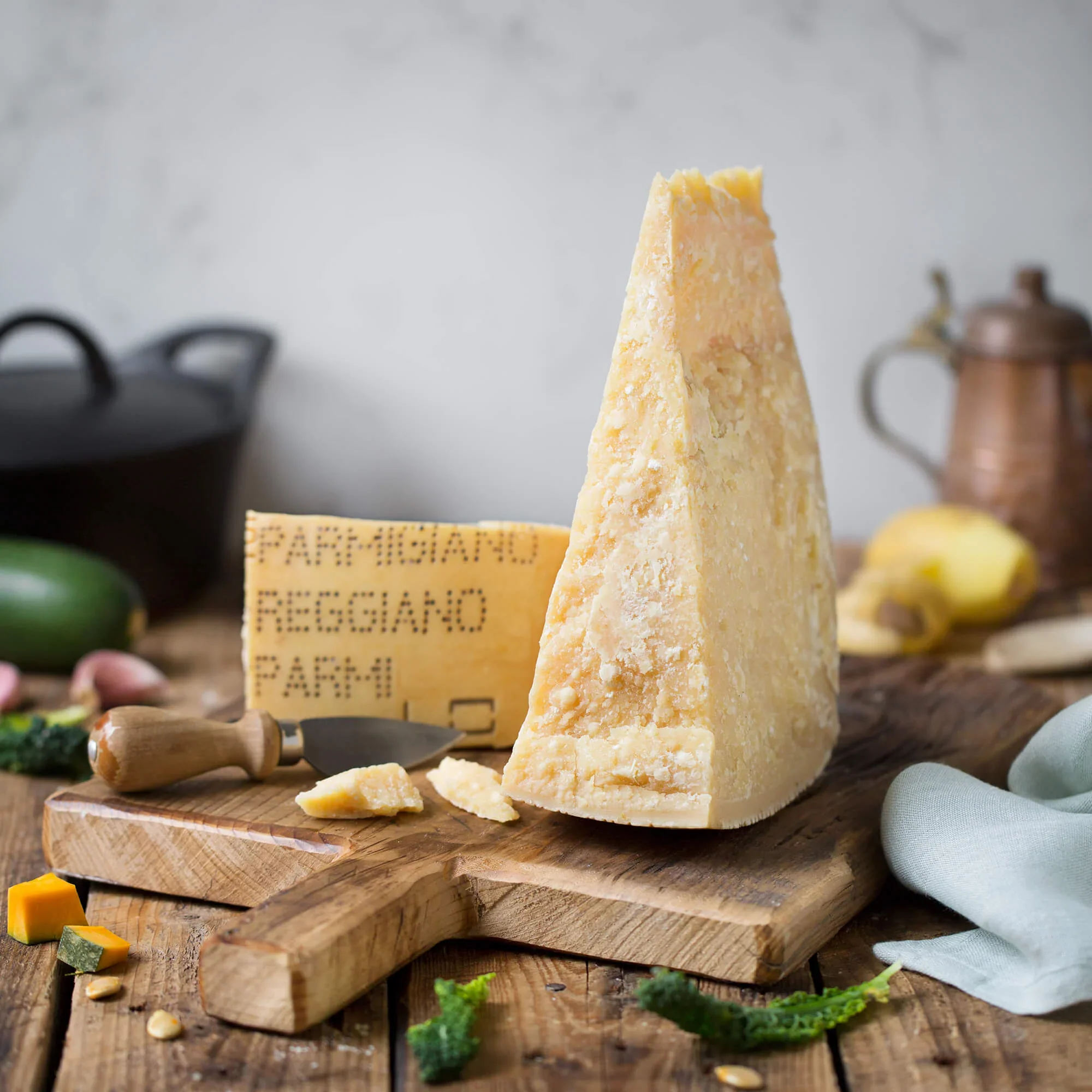
What is Parmigiano Reggiano?
A granular hard cheese from a strictly defined area of Emilia-Romagna — Parma, Reggio Emilia, Modena, and parts of Mantua and Bologna — made from raw, partly skimmed cow’s milk with no additives. Produced in 30–40 kg wheels and aged for a minimum of 12 months, with Vecchio (18–24 months) and Stravecchio (24–36 months) versions widely considered superior. One of the foods with the highest natural glutamate concentrations, giving it intense umami depth.
Taste, aroma, and texture
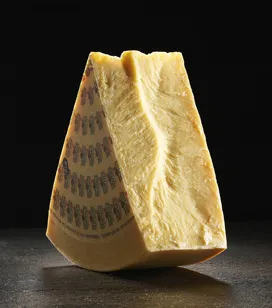
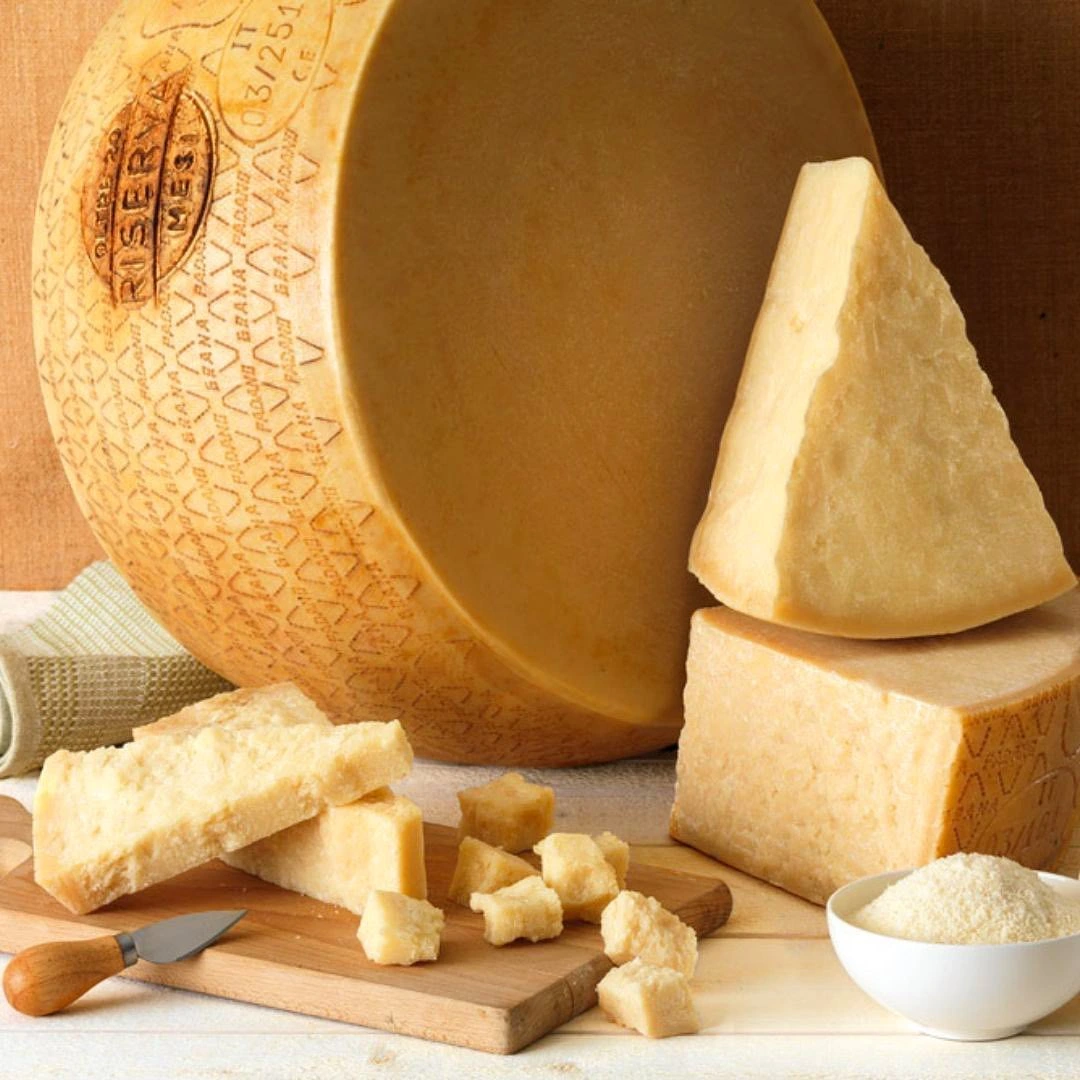
Hard and granular, with visible white protein crystals (tyrosine) that crack and fracture cleanly. Pale straw-yellow interior. The natural drum-shaped rind is hard, dark amber-brown, and embossed with PDO marks. Wheels weigh 30–40 kg. Never sliced; traditionally broken or crumbled.
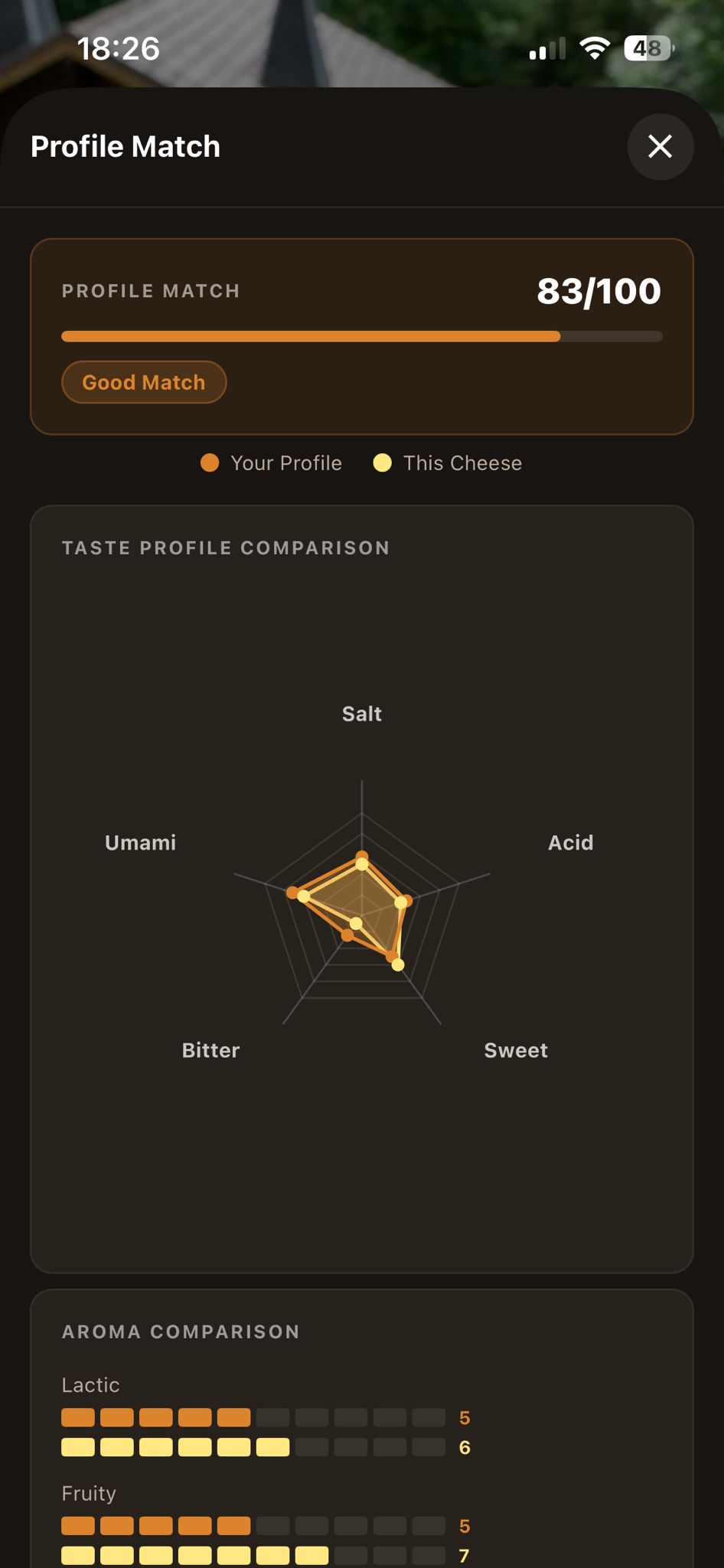
Fruity and lactic notes are equally dominant. Earthy and herbal notes are equally noticeable, while animal notes remain faint. No smoky character. A strong savoury umami runs through the fruity dimension, with roasted nuts, dried fruit, and browned butter notes intensifying with age.
Cheesepedia taste profile
The values below are the structured baseline in the Cheesepedia app. Your personal match is calculated separately from your own taste profile.
A general profile can describe Parmigiano Reggiano, but it cannot know how closely the cheese fits your preferences. Cheesepedia Premium compares this profile with your personal taste profile and lets you evaluate cheeses side by side.
See your personal matchHow to enjoy it
- Grated over pasta, risotto, soups, or salads.
- Shaved over carpaccio, roasted vegetables, or grain bowls.
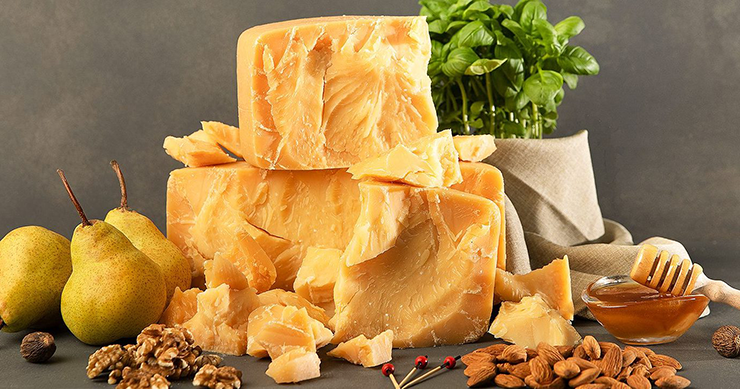
- Served in chunks with nuts, honey, or fruit.
What pairs with Parmigiano Reggiano?
Classic serving companions from the Cheesepedia catalog.
- Languedoc White (Costières de Nîmes)
- Fresh Figs
- Walnuts
- Honey
- Chestnut Bread
Find the right wine in Cheesepedia
Cheesepedia uses an expert-designed algorithm that compares the cheese's taste, intensity, and production profile with the wine's body, acidity, tannin, and sweetness. Wine pairings are not generated by AI.
See wine pairings for Parmigiano ReggianoStory and origin
First produced by Benedictine monks in the Po Valley during the Middle Ages, with documentation dating back to at least the 13th century. The same production method has been preserved for over 800 years. One of the world’s most strictly protected cheeses, with the entire process from milk production to finished wheel taking place within the defined zone. It has held PDO status since 1996.
Storage and serving
- Store in the fridge, wrapped or vacuum-packed.
- Air travel: suitable, especially if vacuum-packed.
Profile sources and methodology
This page uses the same curated record as the Cheesepedia mobile app. Production-style and designation references provide context; they do not imply endorsement of Cheesepedia.
- Official designation
- Protected Designation of Origin (PDO)
- Registered name
- Parmigiano Reggiano
- Register reference
- PDO-IT-0016 · EUGI00000012998
European Commission eAmbrosia