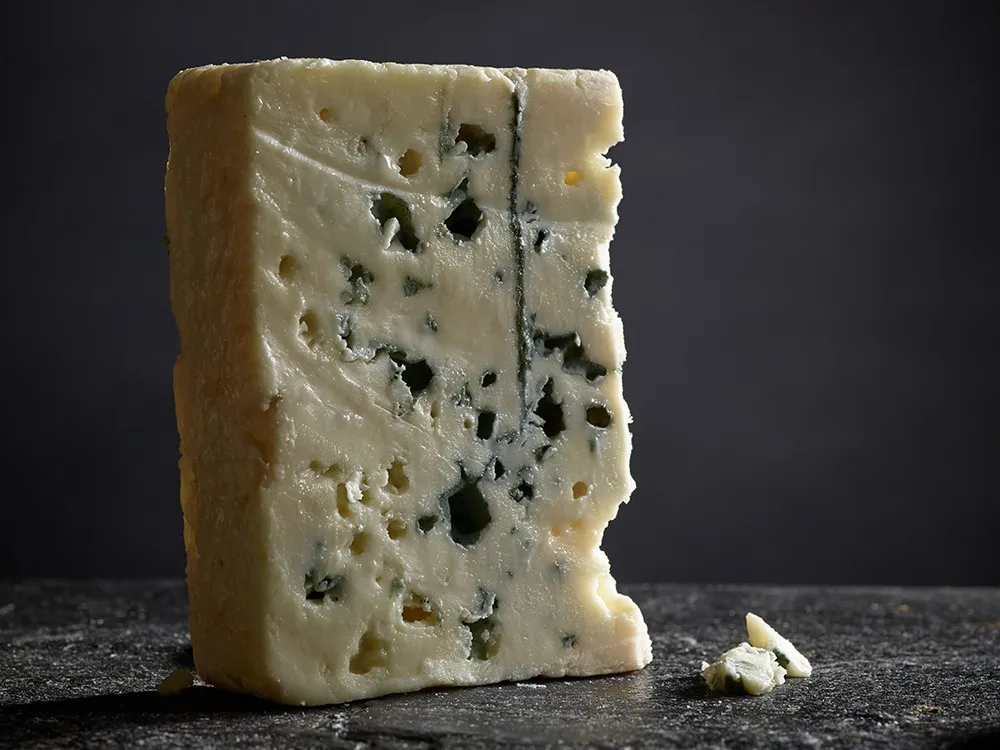
What is Roquefort?
A raw sheep’s milk blue cheese from the Combalou caves near Roquefort-sur-Soulzon in Aveyron — one of the world’s great blue cheeses. Made exclusively from the milk of Lacaune ewes and aged in the natural Combalou cave system, where constant cool, humid conditions and endemic Penicillium roqueforti create its characteristic flavour. Aged for a minimum of 3 months.
Taste, aroma, and texture
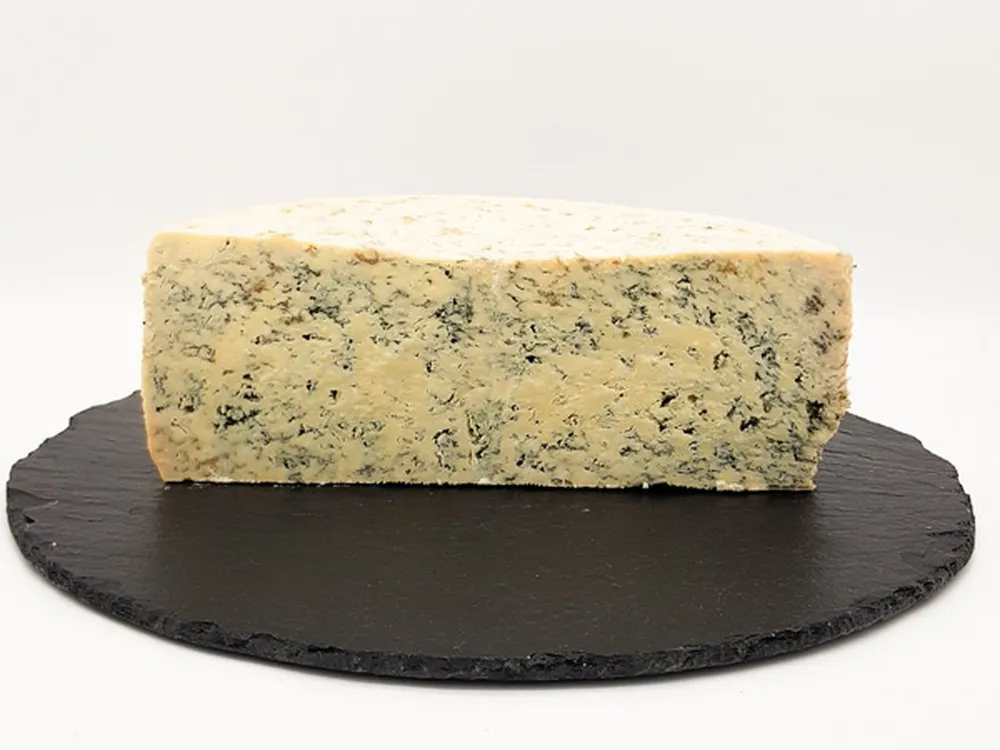
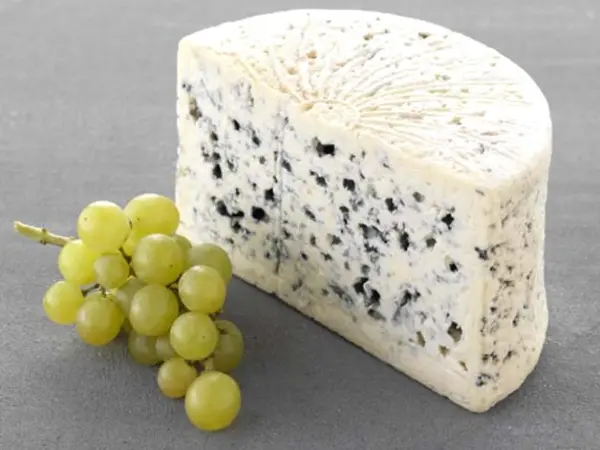
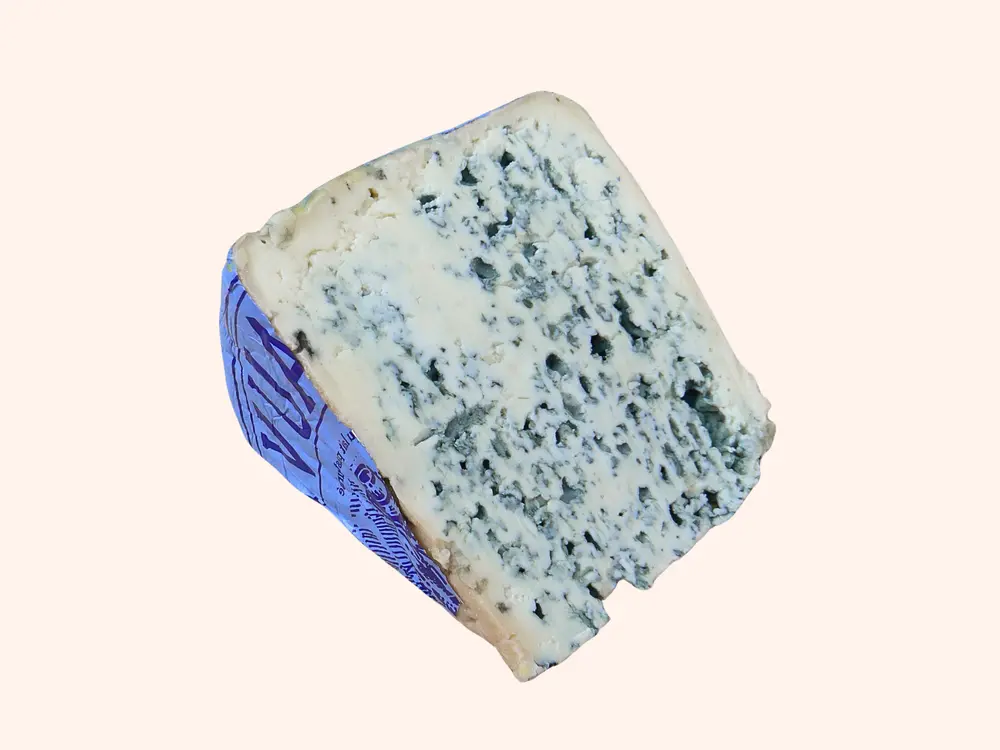
Moist and crumbly, with no rind — the exterior breaks as easily as the interior. The ivory-to-cream paste is marked by distinctive blue-green veining from the Penicillium mould. Slightly pasty and melt-in-the-mouth. Wheels weigh 2.5–3 kg and are always wrapped in foil.
Earthy notes are strongly dominant, with damp cave and Penicillium roqueforti character. Animal notes are strongly present, while fruity notes are noticeable. Lactic notes remain faint, and herbal and smoky notes are barely perceptible. One of the most complex aromatic profiles in cheesemaking.
Cheesepedia taste profile
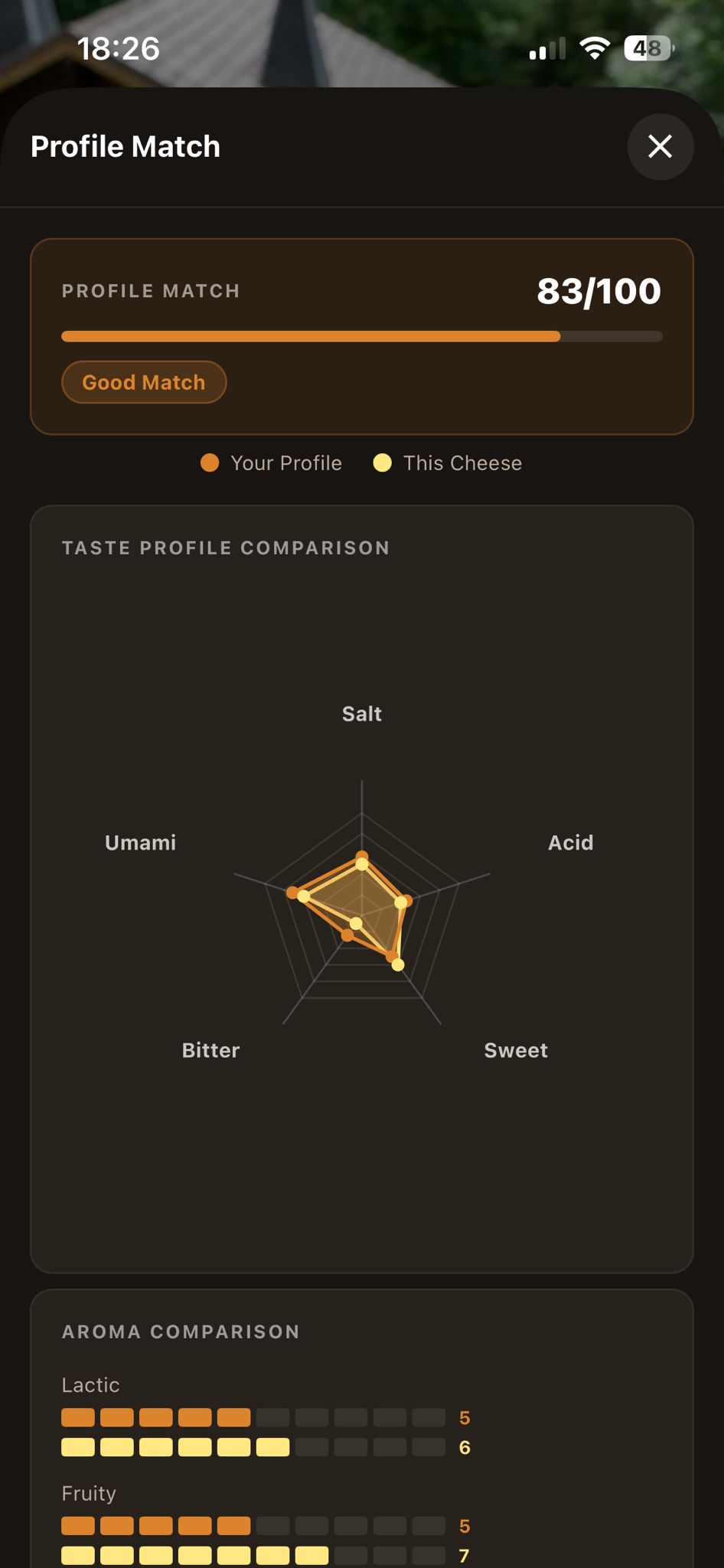
The values below are the structured baseline in the Cheesepedia app. Your personal match is calculated separately from your own taste profile.
A general profile can describe Roquefort, but it cannot know how closely the cheese fits your preferences. Cheesepedia Premium compares this profile with your personal taste profile and lets you evaluate cheeses side by side.
See your personal matchHow to enjoy it
- Crumbled over salads, steaks, or roasted vegetables.
- Melted into strong blue cheese sauces.
- Used in dressings, dips, or savoury tart fillings.
What pairs with Roquefort?
Classic serving companions from the Cheesepedia catalog.
- Czech Pilsner Beer (A must-have pairing)
- Dark Rye Bread
- Raw Onion Slices
- Paprika & Caraway Seeds
- Butter (to balance the intensity)
Find the right wine in Cheesepedia
Cheesepedia uses an expert-designed algorithm that compares the cheese's taste, intensity, and production profile with the wine's body, acidity, tannin, and sweetness. Wine pairings are not generated by AI.
See wine pairings for RoquefortStory and origin
Legends trace its creation to the Middle Ages, when a shepherd supposedly left his cheese in the Combalou caves. Documented references date back to at least the 11th century, and Charles VI granted the village of Roquefort exclusive production rights in 1411. In 1925, Roquefort became the first French cheese to receive formal geographical indication protection, preceding the modern AOC/PDO system. Its PDO status was confirmed in 1996.
Storage and serving
- Store in the fridge, wrapped in cheese paper.
- Air travel: suitable only for short trips if sealed and kept cold.
Profile sources and methodology
This page uses the same curated record as the Cheesepedia mobile app. Production-style and designation references provide context; they do not imply endorsement of Cheesepedia.
- Official designation
- Protected Designation of Origin (PDO)
- Registered name
- Roquefort
- Register reference
- PDO-FR-0131 · EUGI00000012914
European Commission eAmbrosia