What is Queijo São Jorge?
One of Portugal’s most celebrated hard cheeses, produced on São Jorge Island in the Azores from raw cow’s milk. Known for its large 8–12 kg wheels and a minimum ageing period of 3 months, with several maturity stages: Curado (3–7 months), Extra Curado (7+ months), and Velho (9+ months). The volcanic island’s Atlantic climate and rich pastures give it a bold, spicy character that stands apart among Portuguese cheeses.
Taste, aroma, and texture
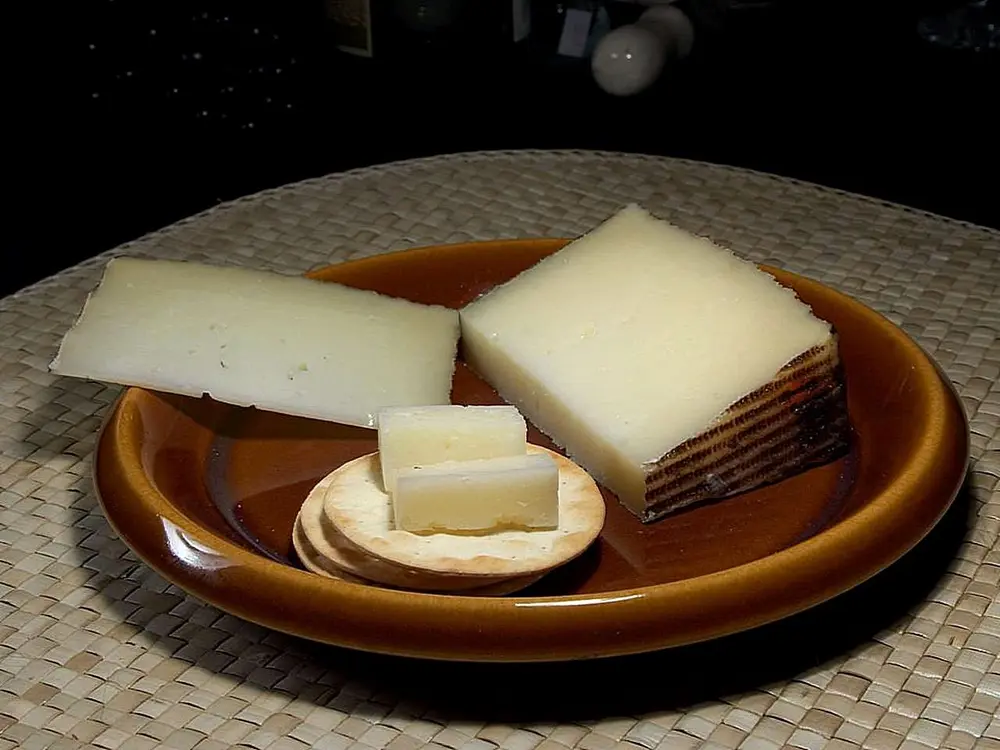
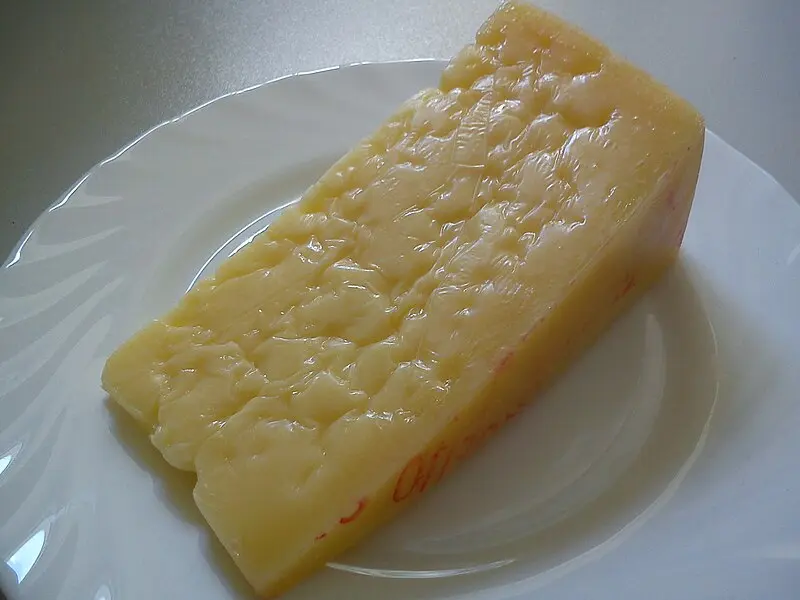
Hard, brittle, and crumbly, with a dense, compact structure and occasional small fermentation eyes. Fine protein crystals may develop at advanced ages. Natural rind is hard and dark golden-brown. Wheels weigh 8–12 kg.
Earthy and lactic notes are equally dominant. Fruity and herbal notes are equally noticeable, with sharp, spicy undertones shaped by the Atlantic volcanic terroir. Animal notes are present. No smoky character. Intensity and spicy complexity increase significantly with ageing.
Cheesepedia taste profile
The values below are the structured baseline in the Cheesepedia app. Your personal match is calculated separately from your own taste profile.
A general profile can describe Queijo São Jorge, but it cannot know how closely the cheese fits your preferences. Cheesepedia Premium compares this profile with your personal taste profile and lets you evaluate cheeses side by side.
See your personal matchHow to enjoy it
- Sliced into cheese boards, sandwiches, or snack plates.
- Grated over soups, pasta, or baked vegetables.
- Melted into toasties, omelettes, or potato dishes.
What pairs with Queijo São Jorge?
Classic serving companions from the Cheesepedia catalog.
- Piedmont Hazelnuts
- Acacia Honey
- Fresh Pears
- Rye Crackers
Find the right wine in Cheesepedia
Cheesepedia uses an expert-designed algorithm that compares the cheese's taste, intensity, and production profile with the wine's body, acidity, tannin, and sweetness. Wine pairings are not generated by AI.
See wine pairings for Queijo São JorgeStory and origin
The origins of São Jorge cheese date back to the late 15th century, when Flemish settlers arrived in the Azores and brought advanced cheesemaking traditions with them. Over more than 500 years, the cheese adapted to the island’s volcanic terroir and Atlantic conditions, developing a character entirely distinct from its European origins. It has held PDO status since 1996.
Storage and serving
- Store in the fridge, wrapped or vacuum-packed.
- Air travel: suitable, especially if vacuum-packed.
Profile sources and methodology
This page uses the same curated record as the Cheesepedia mobile app. Production-style and designation references provide context; they do not imply endorsement of Cheesepedia.