What is Asiago Stagionato?
A firm aged cheese from the Asiago plateau in Veneto, produced from partly skimmed cow’s milk in wheels weighing 8–12 kg. Sold at several ageing stages: Mezzano (3–8 months), Vecchio (9–18 months), and Stravecchio (18+ months). Its character ranges from mild and buttery to sharp, complex, and deeply savoury. Distinct from fresh Asiago Pressato, which is a separate softer style.
Taste, aroma, and texture
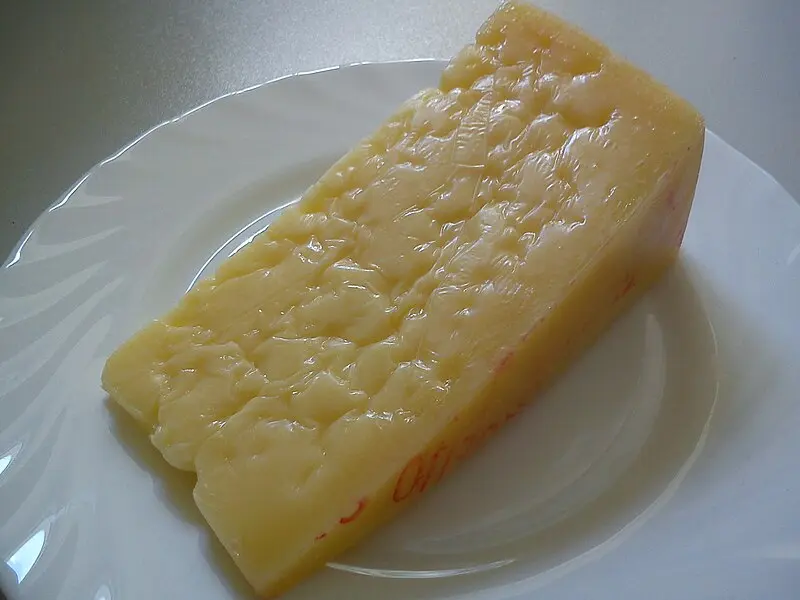
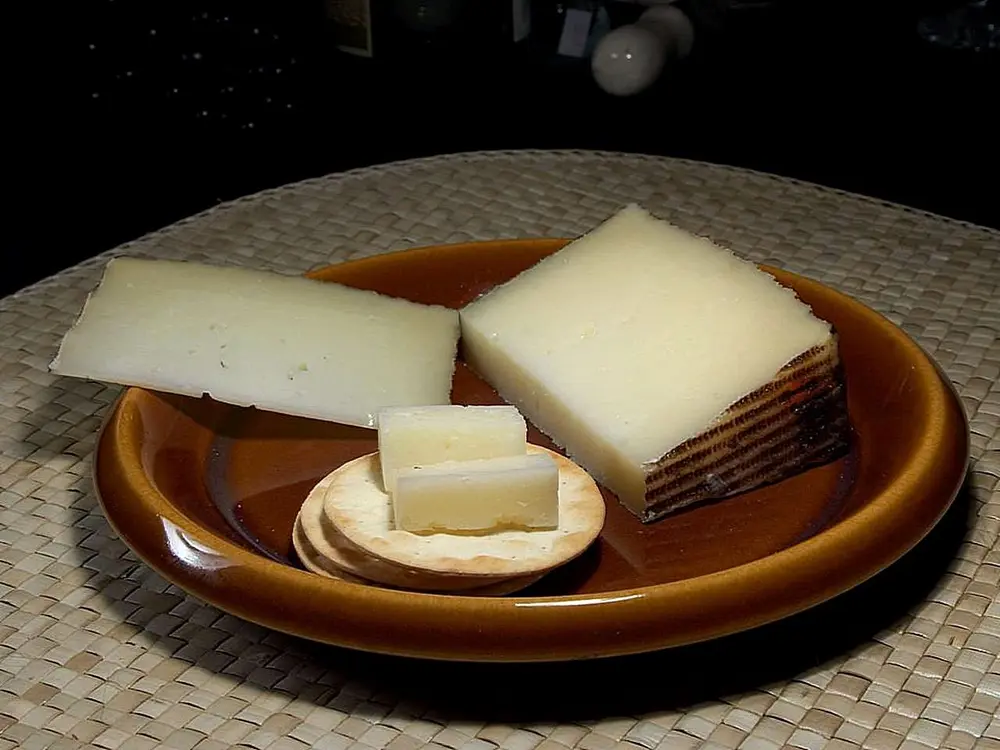
Semi-hard to hard and granular, developing a crystalline structure at advanced ages. Small scattered holes appear in an amber-yellow to straw-coloured paste. The rind is hard and golden-brown. Wheels weigh 8–12 kg. With extended ageing, it becomes progressively more crumbly and brittle.
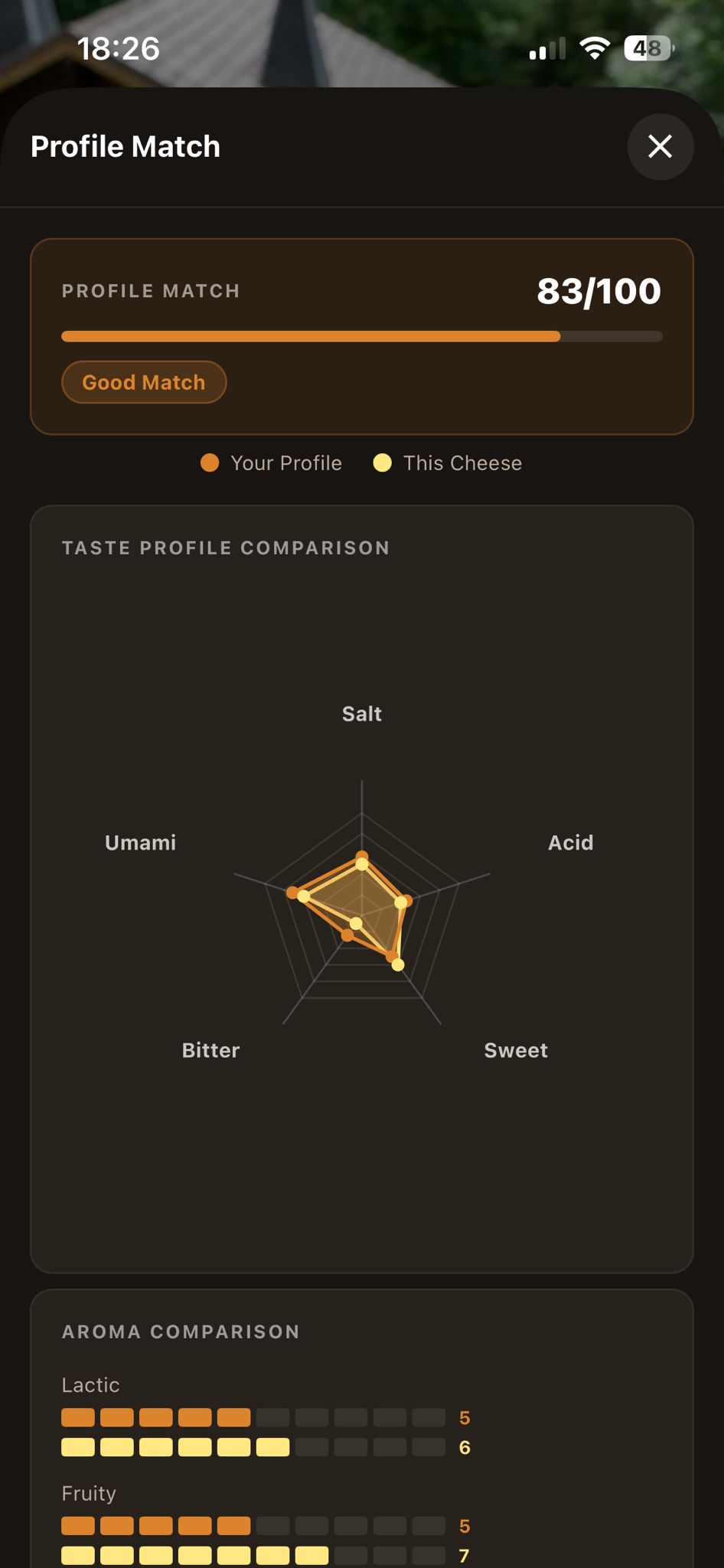
Fruity and lactic notes are equally dominant. Herbal and earthy notes are equally noticeable, while animal notes remain faint. No smoky character. The fruity dimension includes dried pineapple and tropical fruit nuances that intensify with age.
Cheesepedia taste profile
The values below are the structured baseline in the Cheesepedia app. Your personal match is calculated separately from your own taste profile.
A general profile can describe Asiago Stagionato, but it cannot know how closely the cheese fits your preferences. Cheesepedia Premium compares this profile with your personal taste profile and lets you evaluate cheeses side by side.
See your personal matchHow to enjoy it
- Sliced into sandwiches, panini, or cheese boards.
- Grated over pasta, risotto, or soups when aged.
- Melted into gratins, polenta, or baked vegetables.
What pairs with Asiago Stagionato?
Classic serving companions from the Cheesepedia catalog.
- Butter Cracker
- Whole Wheat Cracker
- Walnut Cracker
- Grissini
- Mini Sesame Bagel
Find the right wine in Cheesepedia
Cheesepedia uses an expert-designed algorithm that compares the cheese's taste, intensity, and production profile with the wine's body, acidity, tannin, and sweetness. Wine pairings are not generated by AI.
See wine pairings for Asiago StagionatoStory and origin
Named after the Asiago plateau in Veneto, where cheesemaking has been documented since the 10th century. Originally made from sheep’s milk, it shifted to cow’s milk around the 16th century following changes in local farming practices. It has held PDO status since 1996.
Storage and serving
- Store in the fridge, wrapped or vacuum-packed.
- Air travel: suitable, especially if vacuum-packed.
Profile sources and methodology
This page uses the same curated record as the Cheesepedia mobile app. Production-style and designation references provide context; they do not imply endorsement of Cheesepedia.