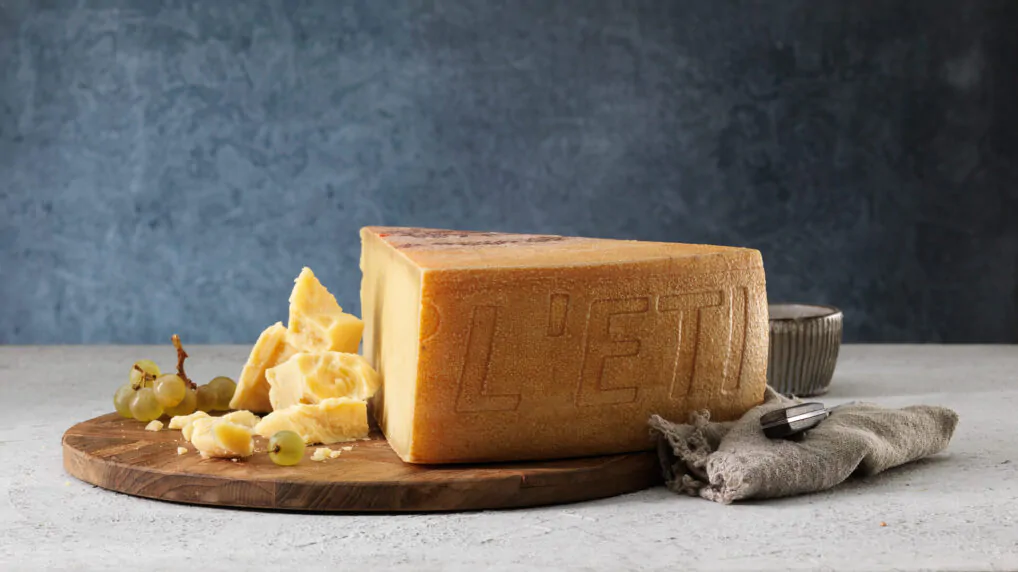
What is L'Etivaz?
A hard raw-milk cheese from the Pays-d’Enhaut region of canton Vaud, produced exclusively between 10 May and 10 October, when cows graze on alpine pastures above 1,000 metres. The milk is processed on-site the same day and heated in copper cauldrons over open wood fires — a traditional method that imparts a subtle smoky note. Aged for a minimum of 5 months on spruce boards; the finest wheels may be matured for up to 3 years to become Hobelkäse.
Taste, aroma, and texture
Texture
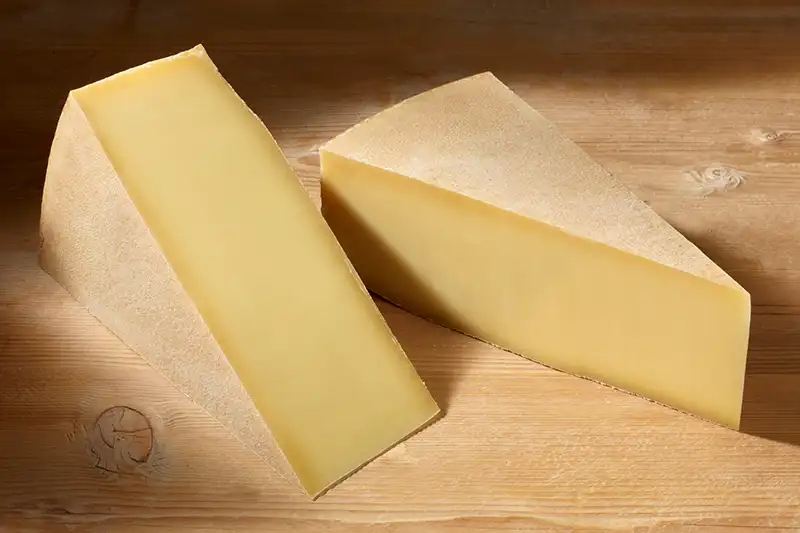
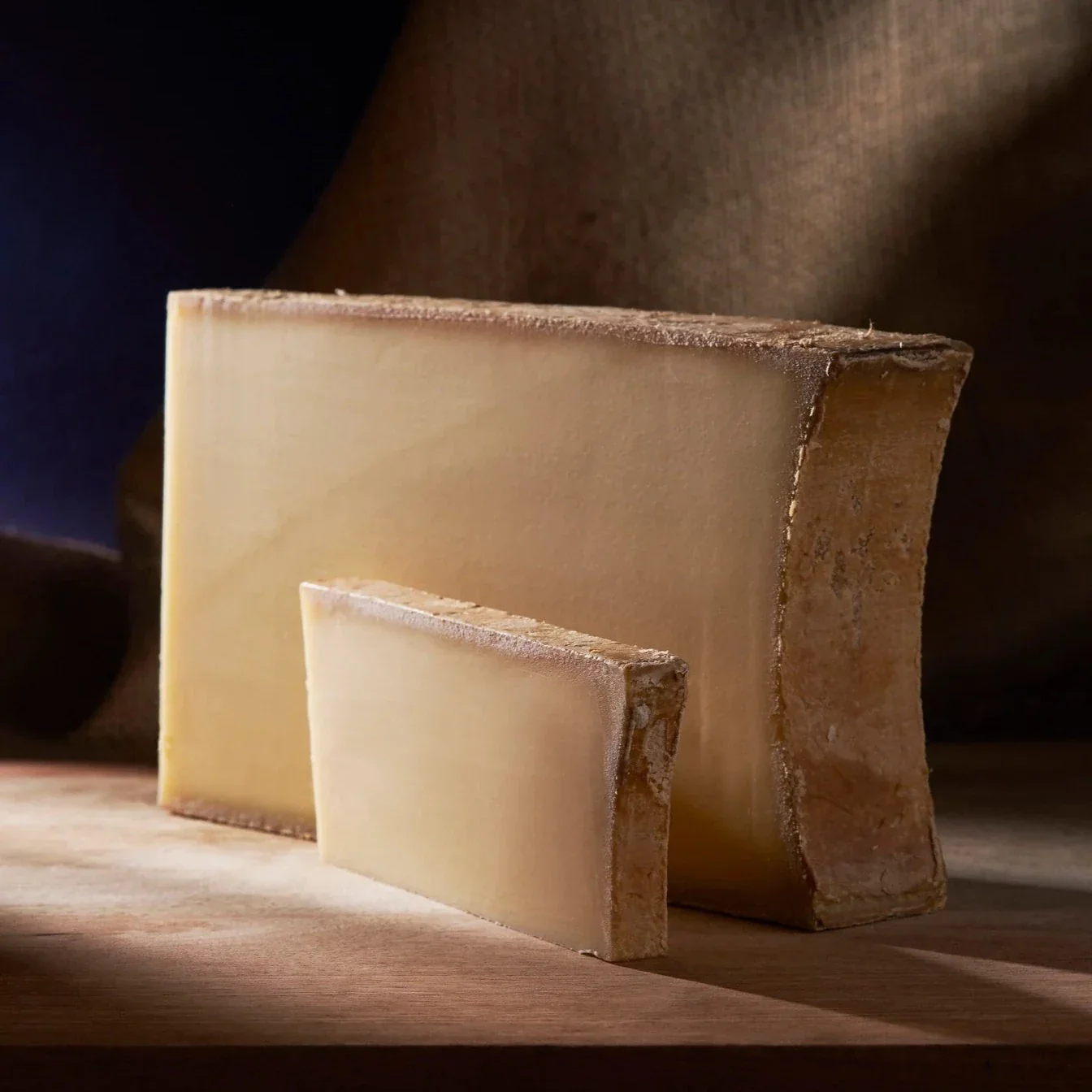
Firm and smooth with a rich, fatty mouthfeel. Compact, non-porous paste ranging from ivory to straw-yellow. The natural rind develops a golden-brown hue. Long-aged wheels become harder and more crystalline, ideal for shaving.
Aroma
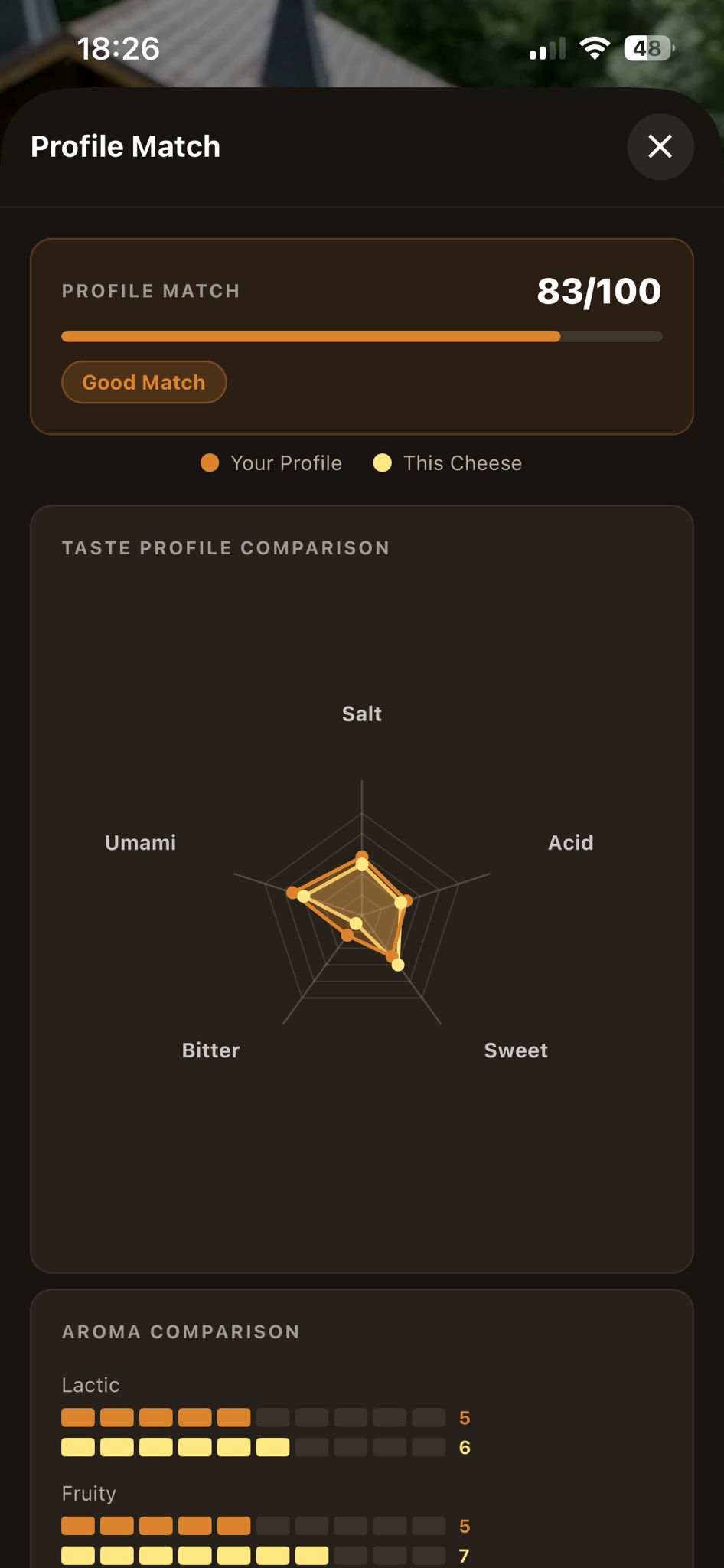
Herbal notes are dominant, supported by lactic, fruity, and earthy layers. A distinct yet subtle smoky note from the wood-fire production sets it apart from other alpine cheeses. Faint animal undertones.
Cheesepedia taste profile
These values are the structured baseline in the Cheesepedia app. Your personal match is calculated separately from your own taste profile.
How to enjoy it
- 01
Served in thin slices on alpine-style cheese boards.
- 02
Melted into fondue or rustic potato dishes.
- 03
Paired with cured meats, pickles, and mountain bread.
- 04
Shaved over salads or warm vegetables when well aged.
What pairs with L'Etivaz?
Classic serving companions from the Cheesepedia catalog.
- Salted Cracker
- Grissini
- Butter Cracker
- Whole Wheat Cracker
- Sesame Cracker
Story and origin
Mountain cheesemaking in Pays-d’Enhaut dates back to the 17th century. In 1932, 76 Gruyère producers, concerned that modern regulations were compromising traditional quality, formed a cooperative and created L’Etivaz, following historical Gruyère methods. It received AOP status in 1999.
Storage and serving
- Store in the fridge, wrapped or vacuum-packed.
- Air travel: suitable, especially if vacuum-packed.
Profile sources and methodology
This page uses the same curated record as the Cheesepedia mobile app. Production-style and designation references provide context; they do not imply endorsement of Cheesepedia.