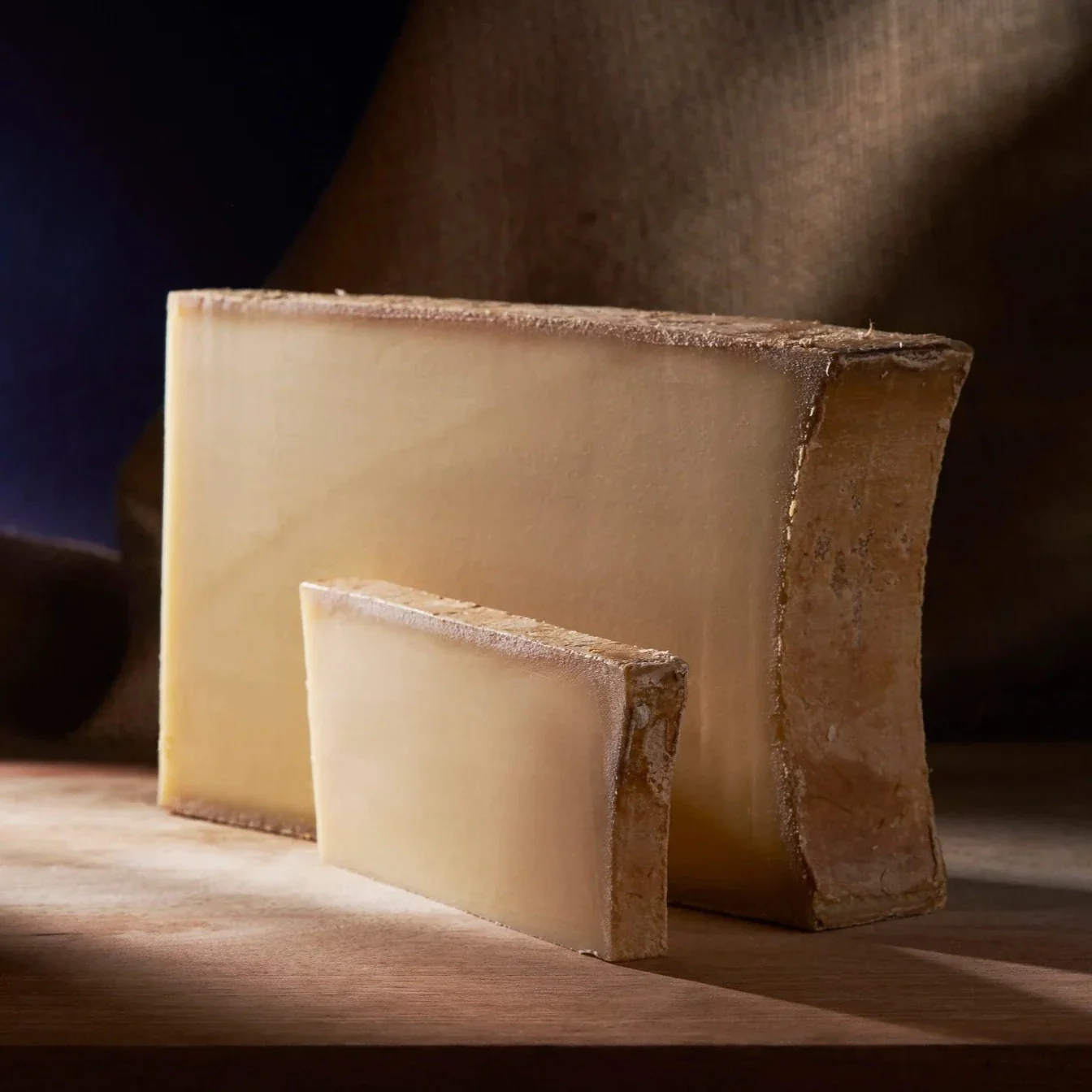
What is Beaufort?
A large, pressed and cooked raw-milk cheese from the Savoie Alps, produced in distinctive 20–70 kg wheels with concave sides and a smooth rind. Made exclusively from the milk of Tarine and Abondance cattle grazing on high alpine pastures, it is produced in copper cauldrons and aged for a minimum of 5 months. Beaufort d’Alpage and Beaufort Chalet d’Alpage are considered premium versions. Brillat-Savarin famously called it the “Prince of Gruyères.”
Taste, aroma, and texture
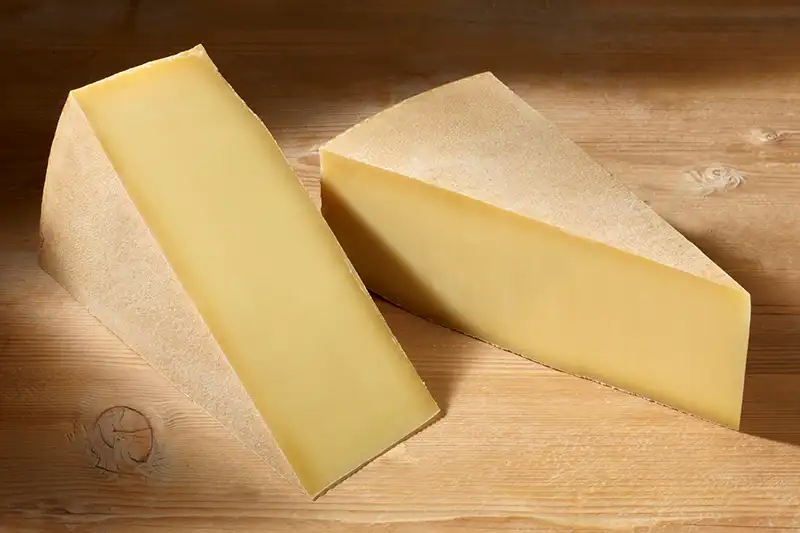
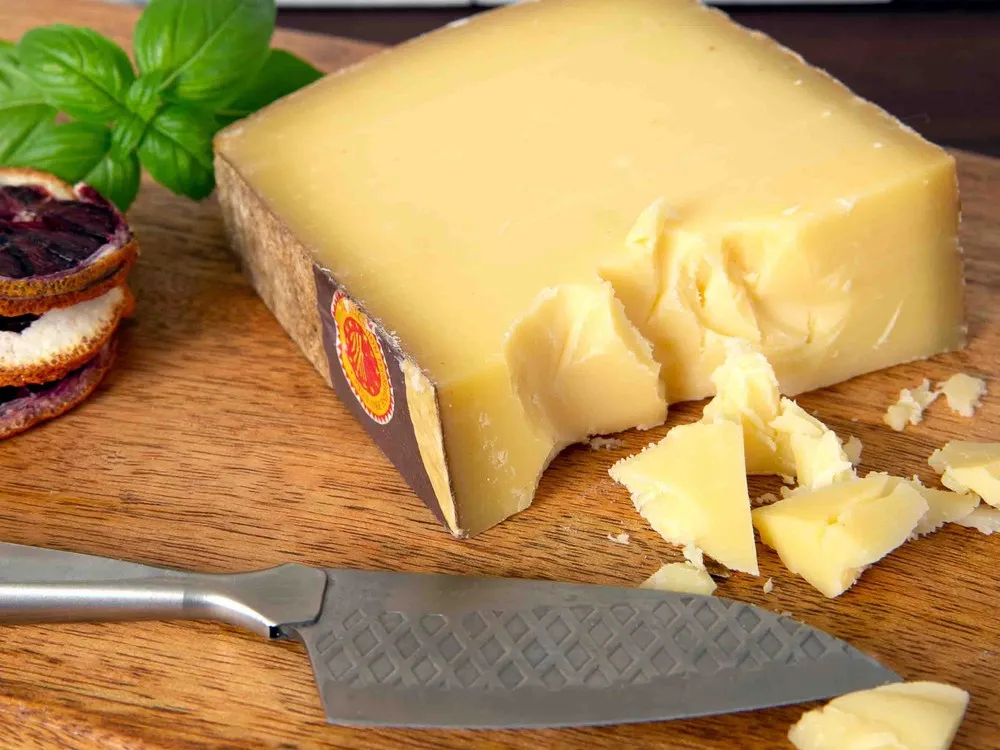
Smooth, dense, and free of holes. The ivory to pale yellow paste is supple and elastic. The concave sides are the wheel’s most recognisable visual feature. Excellent melting properties make it ideal for fondue and gratins.
Fruity and herbal notes are jointly dominant, evoking alpine flora and dried fruit. Lactic notes are strongly present, with a notable earthy undertone. Animal and smoky notes remain faint.
Cheesepedia taste profile
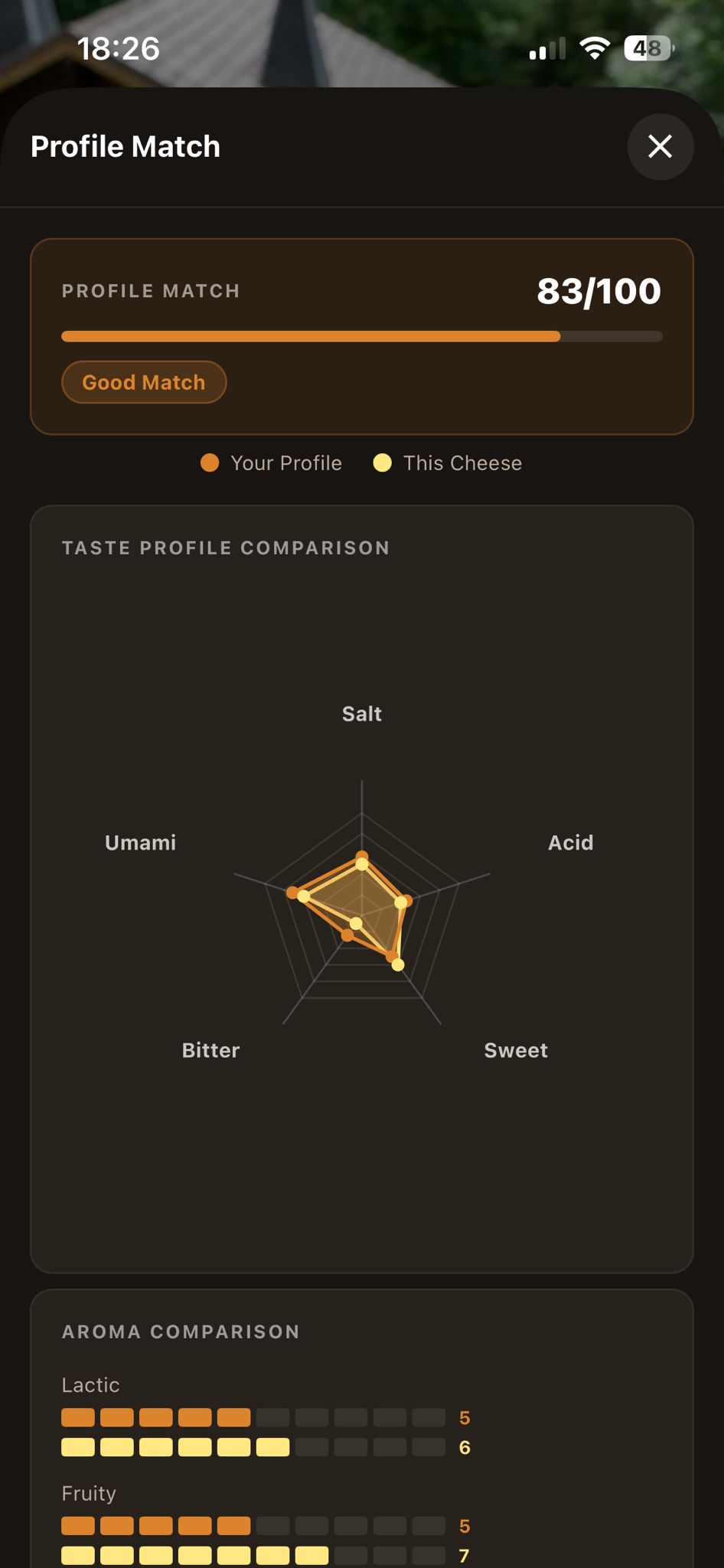
The values below are the structured baseline in the Cheesepedia app. Your personal match is calculated separately from your own taste profile.
A general profile can describe Beaufort, but it cannot know how closely the cheese fits your preferences. Cheesepedia Premium compares this profile with your personal taste profile and lets you evaluate cheeses side by side.
See your personal matchHow to enjoy it
- Melted into fondue, gratins, or croque-style sandwiches.
- Served in slices with mountain ham and pickles.
- Grated into soups, pasta, or potato dishes.
What pairs with Beaufort?
Classic serving companions from the Cheesepedia catalog.
- Butter Cracker
- Grissini
- Salted Cracker
- Mini Sesame Bagel
- Whole Wheat Cracker
Find the right wine in Cheesepedia
Cheesepedia uses an expert-designed algorithm that compares the cheese's taste, intensity, and production profile with the wine's body, acidity, tannin, and sweetness. Wine pairings are not generated by AI.
See wine pairings for BeaufortStory and origin
Produced in the high mountain valleys of Savoie since at least the 18th century, though alpine cheesemaking in the region is much older. It was one of the first French cheeses to receive geographical indication protection, with AOC status granted in 1968. The name comes from the Beaufort valley in Savoie.
Storage and serving
- Store in the fridge, wrapped or vacuum-packed.
- Air travel: suitable, especially if vacuum-packed.
Profile sources and methodology
This page uses the same curated record as the Cheesepedia mobile app. Production-style and designation references provide context; they do not imply endorsement of Cheesepedia.