What is Chabichou du Poitou?
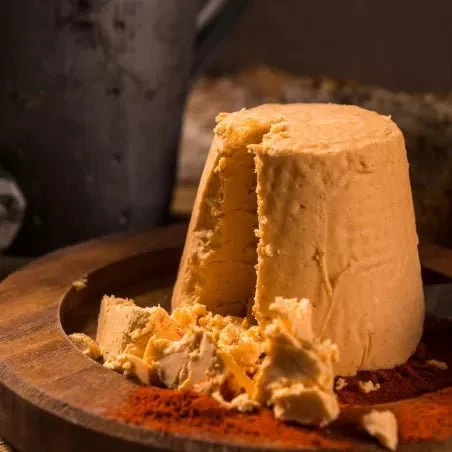
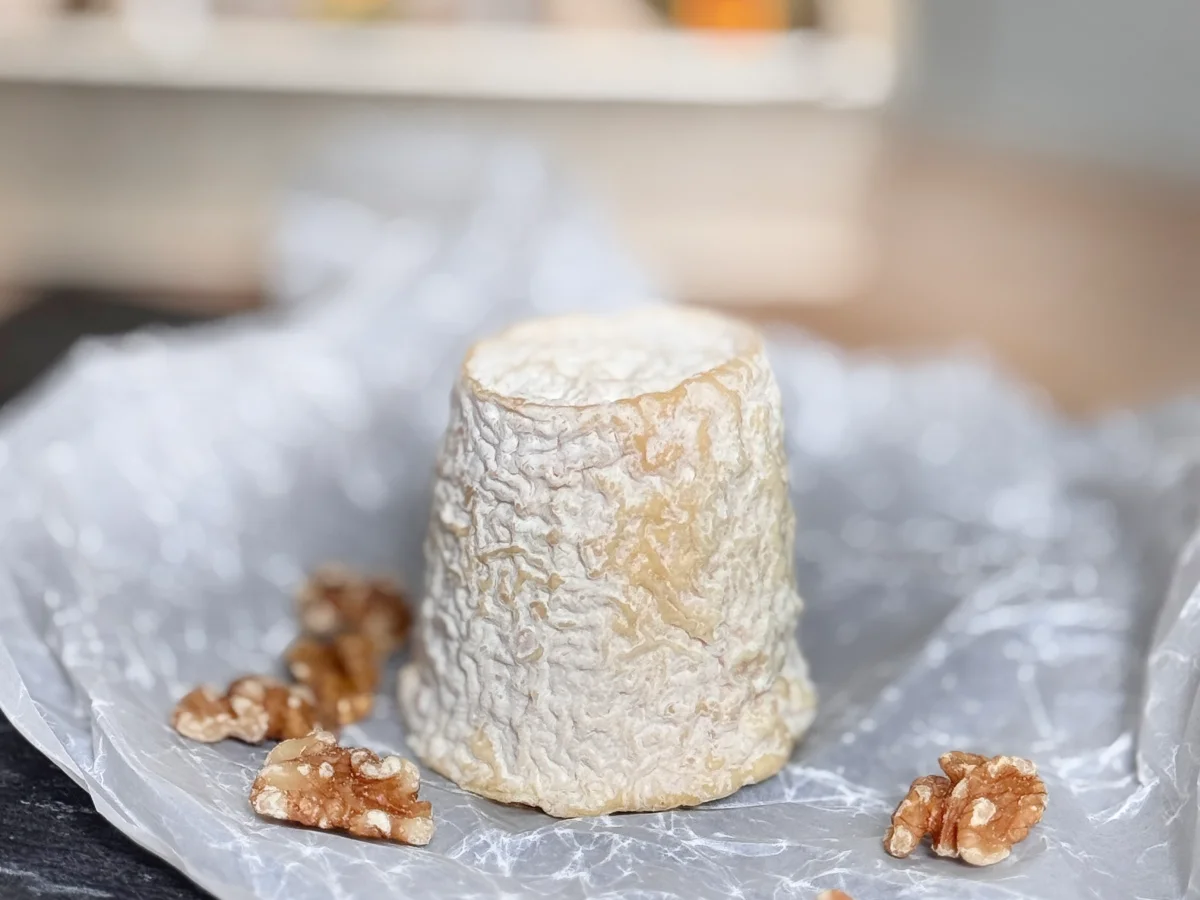
A small cylindrical raw goat’s milk cheese from the Poitou region, weighing around 150 g and produced in a distinctive truncated cylinder (bonde) shape. It develops a natural wrinkled rind with blue-grey mould. Aged for a minimum of 10 days, with flavour evolving from mild and fresh to more assertive and tangy over time.
Taste, aroma, and texture
Firm yet moist and smooth beneath the delicate wrinkled rind. The interior is homogeneous, white, and compact. With ageing, it becomes drier and more crumbly.
Lactic and herbal notes are equally dominant. Animal notes are clearly present, while earthy notes are noticeable. Fruity notes remain faint. No smoky character.
Cheesepedia taste profile
The values below are the structured baseline in the Cheesepedia app. Your personal match is calculated separately from your own taste profile.
A general profile can describe Chabichou du Poitou, but it cannot know how closely the cheese fits your preferences. Cheesepedia Premium compares this profile with your personal taste profile and lets you evaluate cheeses side by side.
See your personal matchHow to enjoy it
- Served on cheese boards with figs, honey, or walnuts.
- Crumbled over salads or roasted vegetables.
- Baked on toast as warm goat cheese.
What pairs with Chabichou du Poitou?
Classic serving companions from the Cheesepedia catalog.
- Butter Cracker
- Grissini
- Lavash Chips
- Salted Cracker
- Mini Sesame Bagel
Find the right wine in Cheesepedia
Cheesepedia uses an expert-designed algorithm that compares the cheese's taste, intensity, and production profile with the wine's body, acidity, tannin, and sweetness. Wine pairings are not generated by AI.
See wine pairings for Chabichou du PoitouStory and origin
One of France’s oldest goat cheeses, with origins possibly linked to Moorish herders who remained in the region after the Battle of Tours in 732. The name is believed to derive from the Arabic word chebli (goat). It has held AOC status since 1990 and PDO status since 1996.
Storage and serving
- Store in the fridge, wrapped in cheese paper or parchment.
- Air travel: suitable for short trips if sealed and kept cool.
Profile sources and methodology
This page uses the same curated record as the Cheesepedia mobile app. Production-style and designation references provide context; they do not imply endorsement of Cheesepedia.