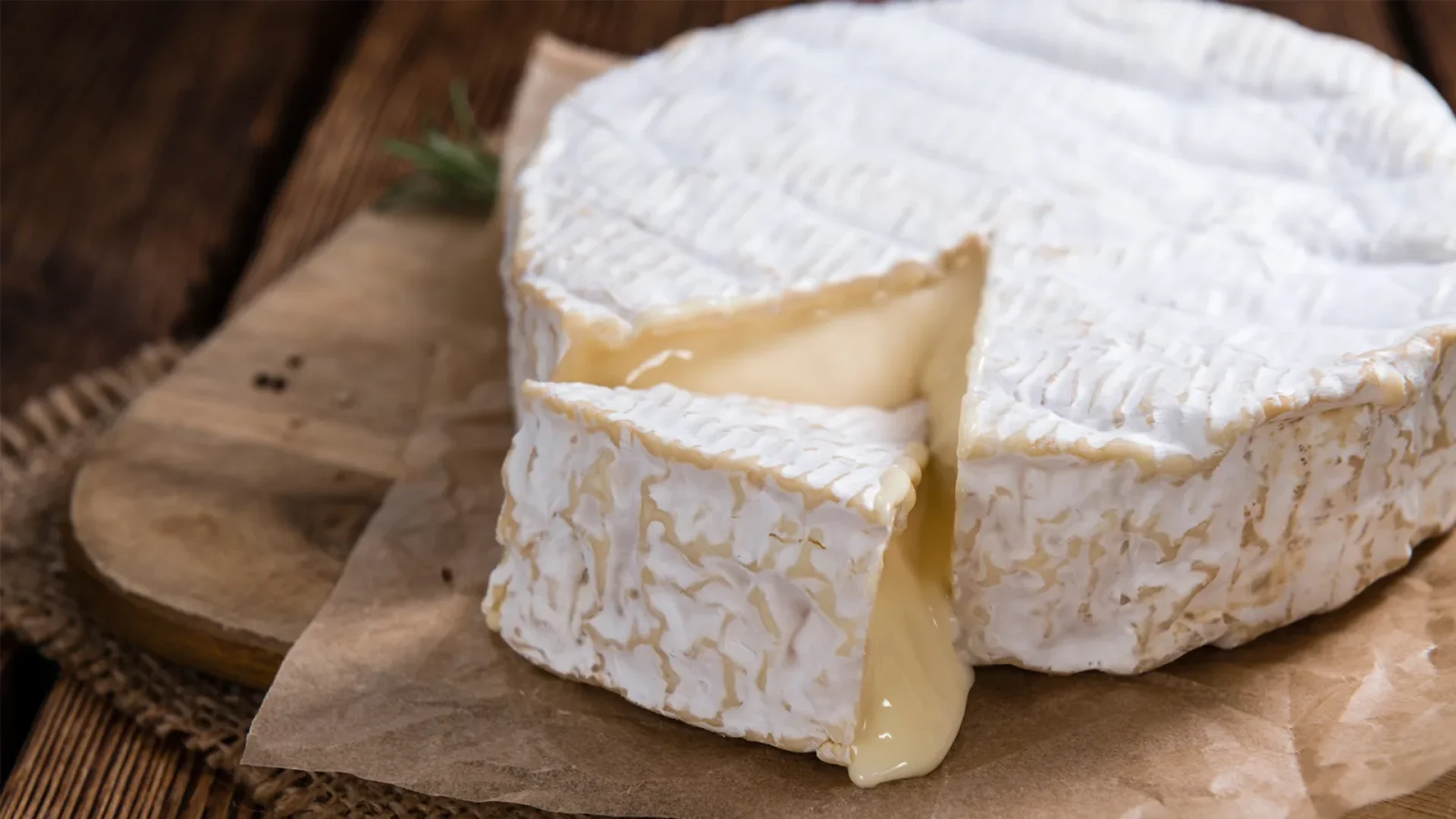
What is Camembert de Normandie?
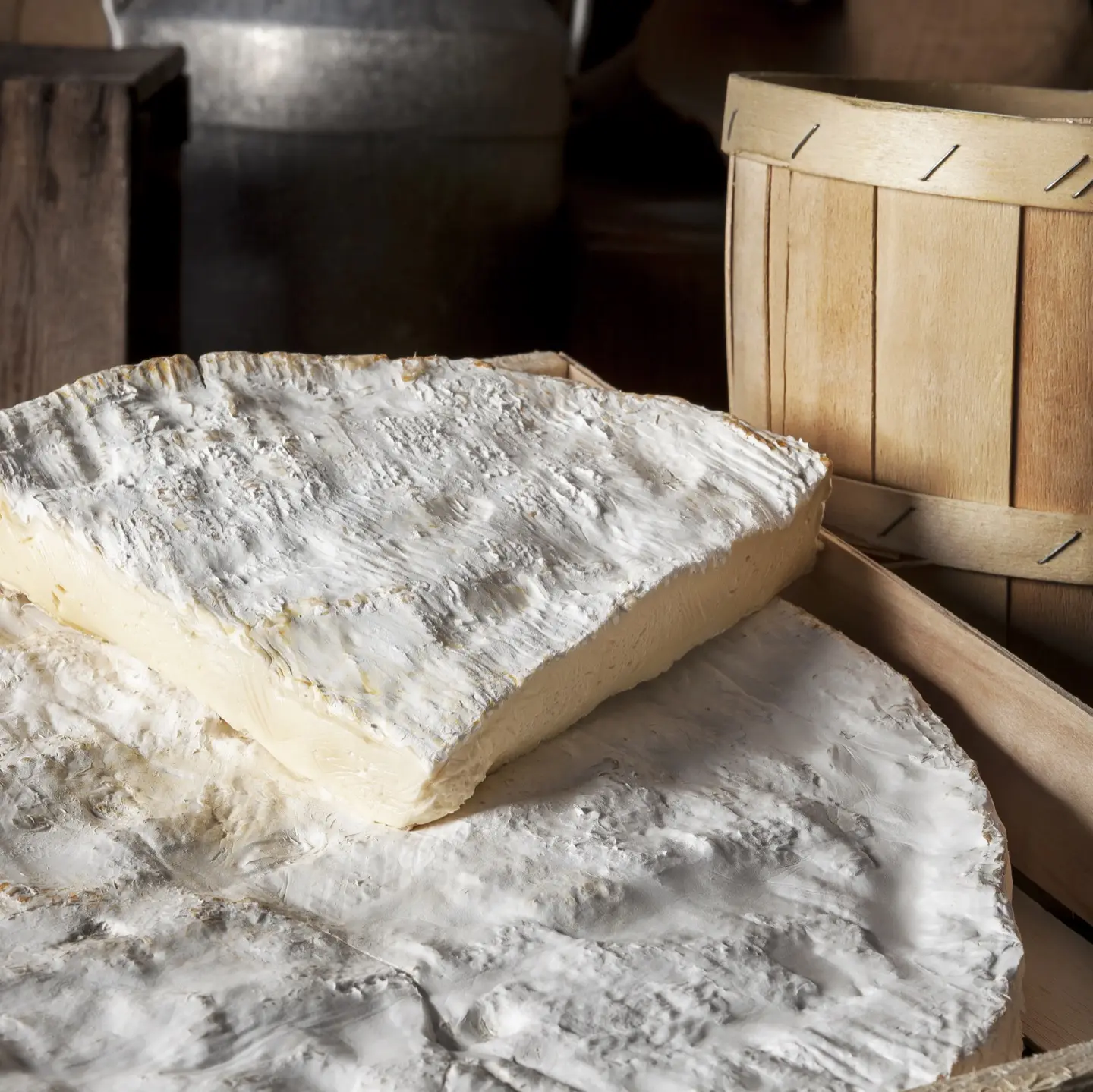
A soft, bloomy-rind raw-milk cheese from Normandy, produced in small 250 g wheels measuring about 11 cm in diameter. What distinguishes it from industrial Camembert is the traditional hand-ladling technique: the curd is never mechanically cut or poured but carefully scooped and layered by hand into moulds in at least five stages. The milk must come exclusively from Normande cows grazing within the designated Normandy area. Aged for a minimum of 21 days.
Taste, aroma, and texture
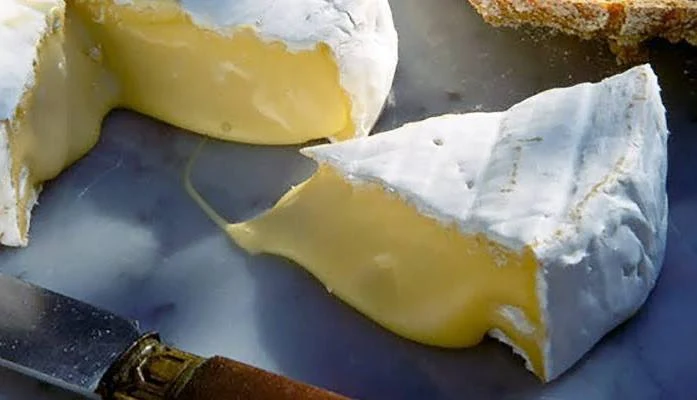
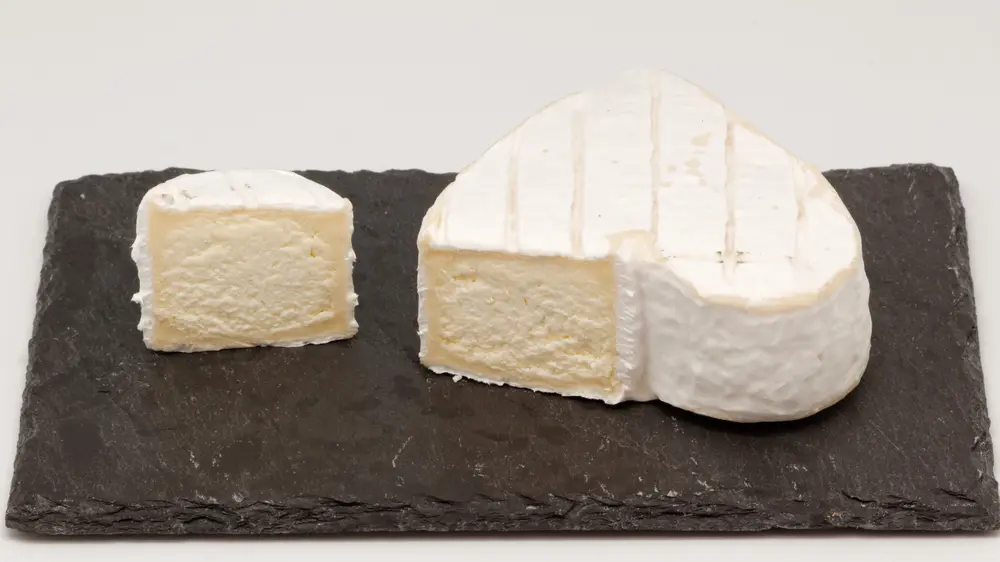
Soft and supple with a velvety white bloomy rind. At full ripeness, the interior becomes flowing and nearly liquid beneath the rind, while the centre may remain slightly firmer. The edible rind adds a delicate mushroom-like chew.
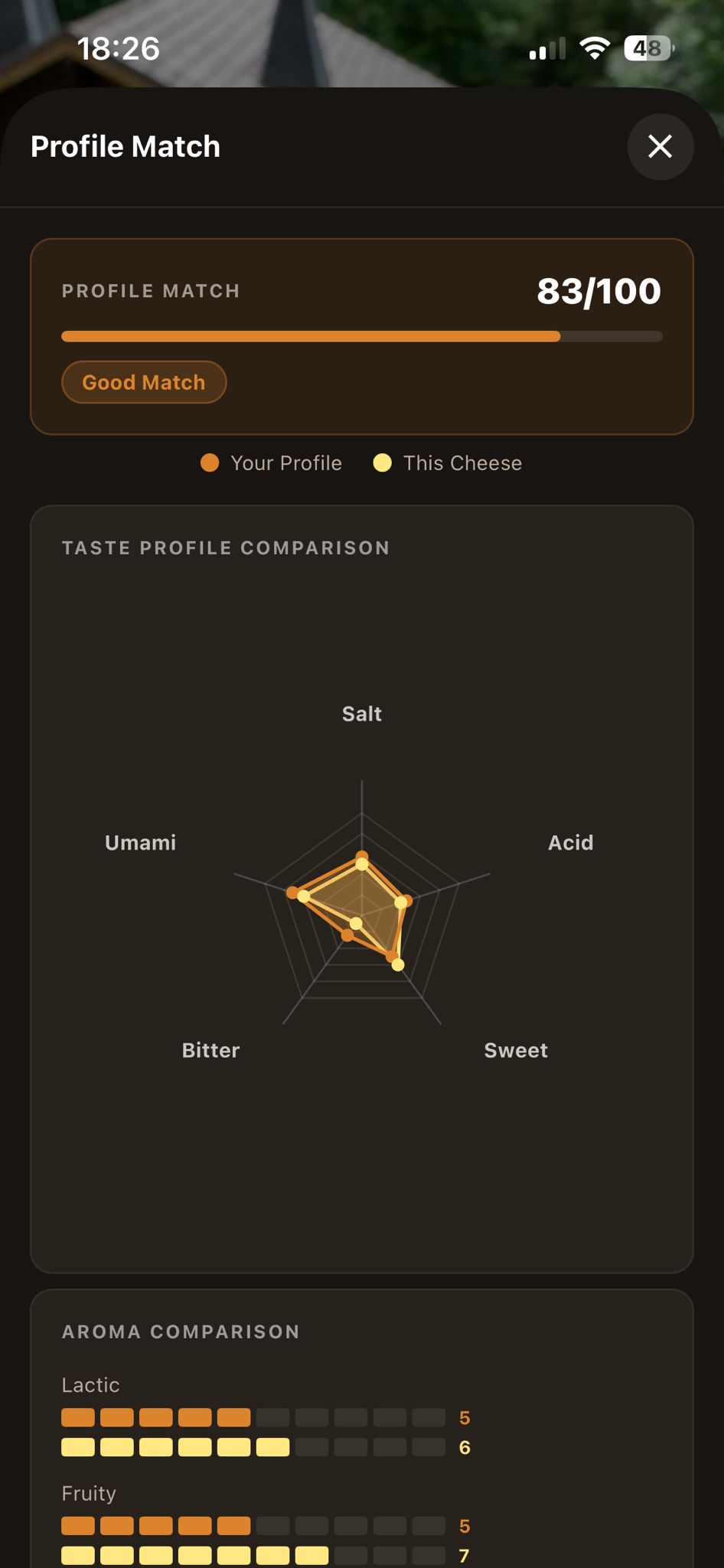
Lactic and animal notes are equally present and clearly noticeable. Earthy notes are pronounced, with classic mushroom and cellar nuances. Fruity notes are present, while herbal notes remain faint. No smoky character.
Cheesepedia taste profile
The values below are the structured baseline in the Cheesepedia app. Your personal match is calculated separately from your own taste profile.
A general profile can describe Camembert de Normandie, but it cannot know how closely the cheese fits your preferences. Cheesepedia Premium compares this profile with your personal taste profile and lets you evaluate cheeses side by side.
See your personal matchHow to enjoy it
- Served on cheese boards with apples, grapes, or walnuts.
- Baked whole with honey, herbs, or garlic.
- Spread on baguette, sourdough, or rustic bread.
- Used in sandwiches, tartines, or savoury pastries.
What pairs with Camembert de Normandie?
Classic serving companions from the Cheesepedia catalog.
- Salted Cracker
- Grissini
- Butter Cracker
- Whole Wheat Cracker
- Sesame Cracker
Find the right wine in Cheesepedia
Cheesepedia uses an expert-designed algorithm that compares the cheese's taste, intensity, and production profile with the wine's body, acidity, tannin, and sweetness. Wine pairings are not generated by AI.
See wine pairings for Camembert de NormandieStory and origin
Legend attributes its creation to Marie Harel in 1791, in the village of Camembert, with guidance from a priest from Brie. It became a national symbol after World War I, when it was included in soldiers’ rations. The designation “Camembert de Normandie” was formalised to distinguish the traditional raw-milk version from industrial Camembert. It has held AOC status since 1983 and PDO status since 1996.
Storage and serving
- Store in the fridge, wrapped in cheese paper or parchment.
- Air travel: suitable for short trips if sealed and kept cool.
Profile sources and methodology
This page uses the same curated record as the Cheesepedia mobile app. Production-style and designation references provide context; they do not imply endorsement of Cheesepedia.
- Official designation
- Protected Designation of Origin (PDO)
- Registered name
- Camembert de Normandie
- Register reference
- PDO-FR-0112 · EUGI00000012895
European Commission eAmbrosia