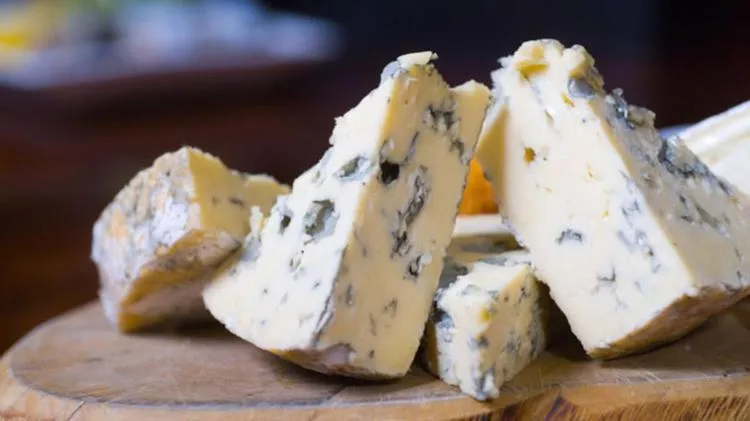
What is Bükdere Küflü Katık Peyniri?
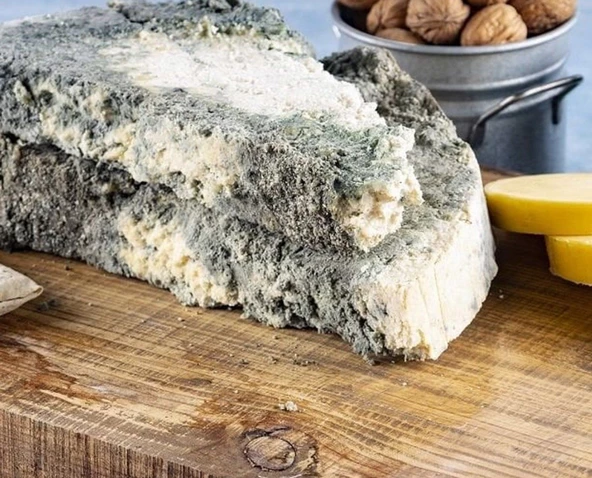
A blue-veined, skin-aged cheese from Bükdere village in Kepsut, Balıkesir, made from strained goat and sheep yogurt. The yogurt is salted and packed into goat skins tanned with karataş stones and mazi oak. Natural Penicillium mould develops during the long ageing period. It is one of Turkey’s rarest and most pungent traditional cheeses, with no industrial equivalent.
Taste, aroma, and texture
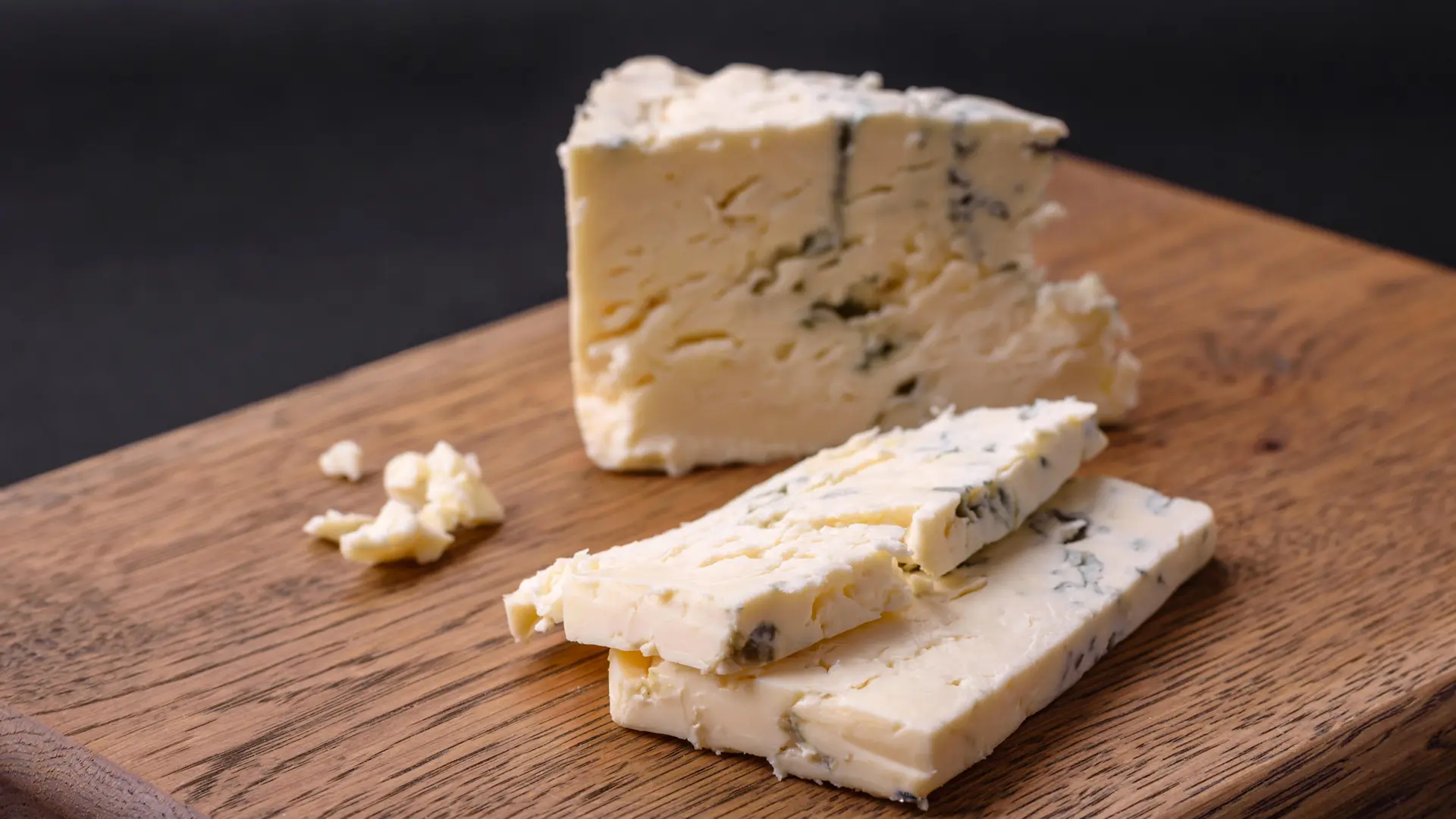
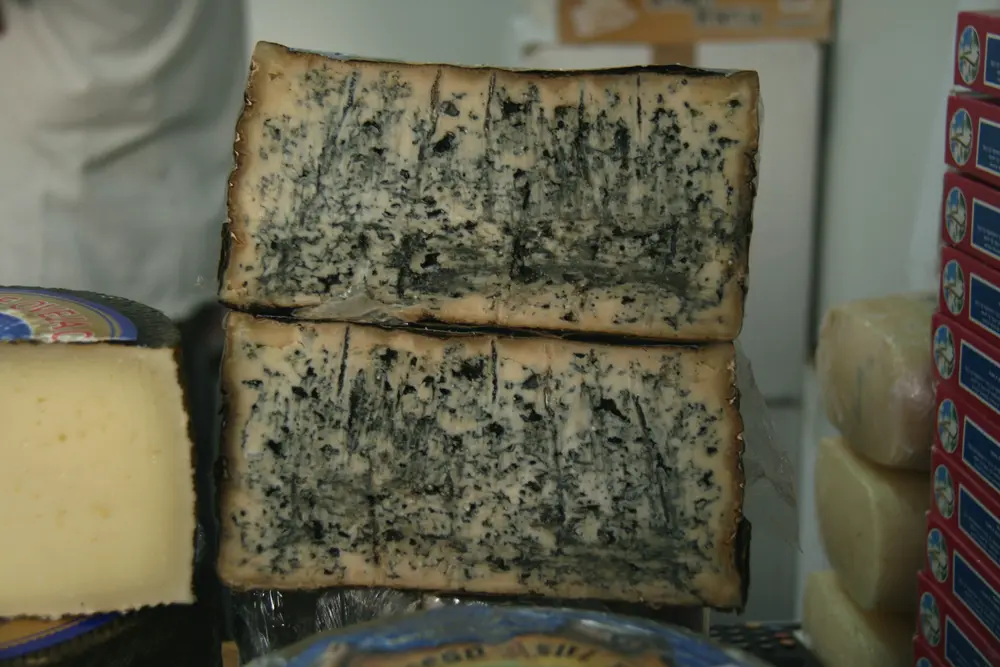
Granular and crumbly, with irregular blue-green mould veins throughout. It breaks apart easily under pressure. Despite its crumbly nature, the body is dense and compact. The veining pattern varies from batch to batch.
Animal notes are strongly dominant, making it one of Turkey’s most pungent cheeses. Earthy notes are strongly present from the natural mould and oak-tanned skin. Herbal and fruity notes are equally notable. Lactic notes are faint. No smoky character.
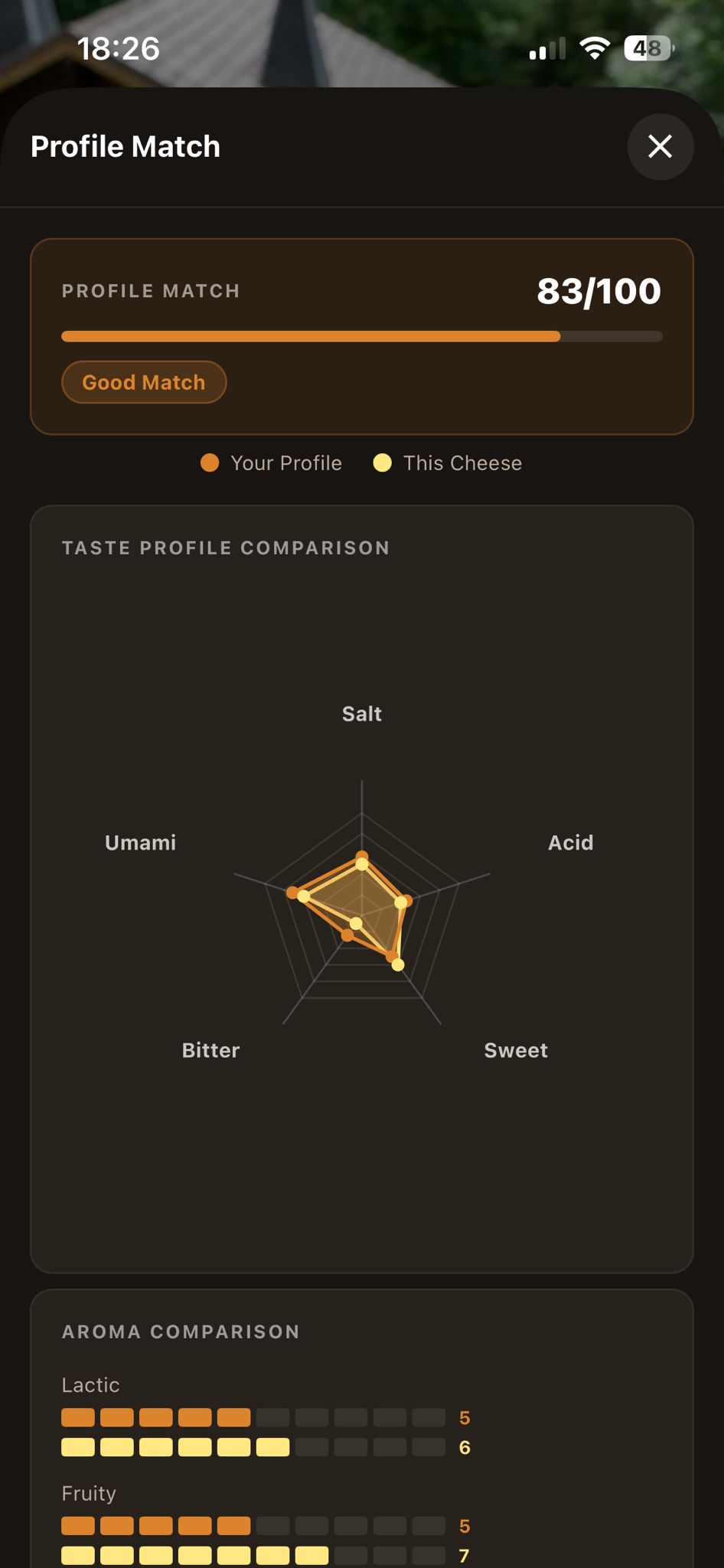
Cheesepedia taste profile
The values below are the structured baseline in the Cheesepedia app. Your personal match is calculated separately from your own taste profile.
A general profile can describe Bükdere Küflü Katık Peyniri, but it cannot know how closely the cheese fits your preferences. Cheesepedia Premium compares this profile with your personal taste profile and lets you evaluate cheeses side by side.
See your personal matchHow to enjoy it
- Served in very small portions on strong cheese plates.
- Used sparingly in spreads, dips, or meze-style appetisers.
- Crumbled over warm potatoes or rustic flatbreads.
What pairs with Bükdere Küflü Katık Peyniri?
Classic serving companions from the Cheesepedia catalog.
- Butter Cracker
- Grissini
- Lavash Chips
- Salted Cracker
- Mini Sesame Bagel
Find the right wine in Cheesepedia
Cheesepedia uses an expert-designed algorithm that compares the cheese's taste, intensity, and production profile with the wine's body, acidity, tannin, and sweetness. Wine pairings are not generated by AI.
See wine pairings for Bükdere Küflü Katık PeyniriStory and origin
Produced for generations only in Bükdere village, where karataş stones, mazi oak shrubs, and local spring water used in tanning the skins create conditions for natural mould development. The recipe and tanning technique have been passed down within village families. Registered as a geographical indication in Turkey.
Storage and serving
- Store in the fridge, wrapped in cheese paper.
- Air travel: suitable only for short trips if sealed and kept cold.
Profile sources and methodology
This page uses the same curated record as the Cheesepedia mobile app. Production-style and designation references provide context; they do not imply endorsement of Cheesepedia.