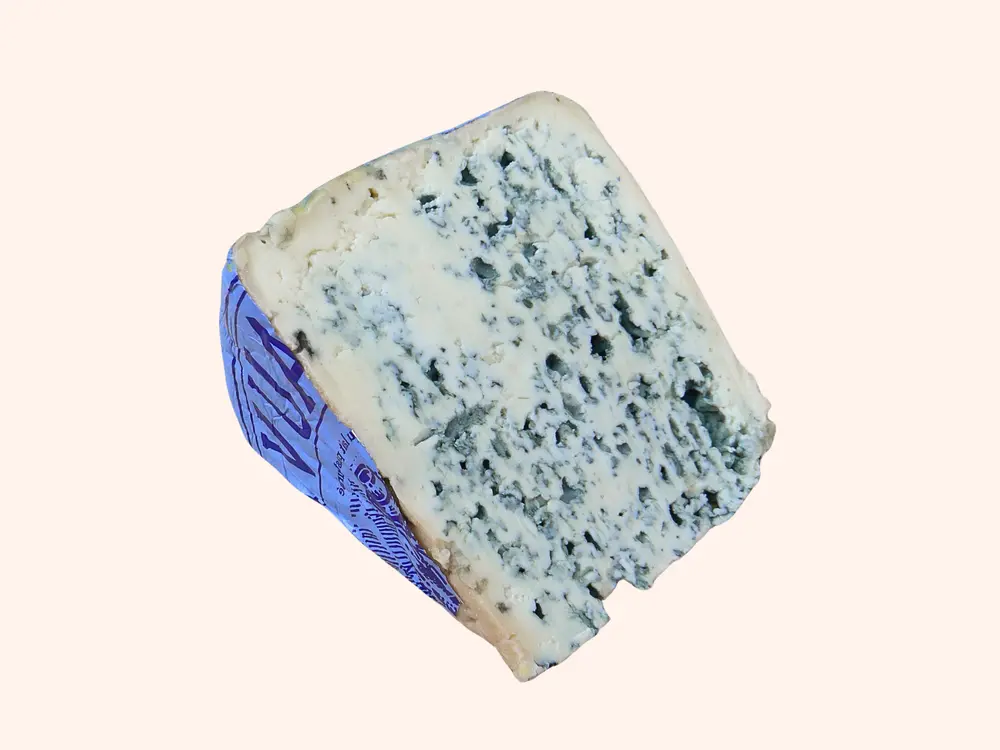
What is Bleu d'Auvergne?
A blue-veined cow’s milk cheese from the volcanic Massif Central of Auvergne, produced in cylinders of approximately 2–3 kg. Made by inoculating the curd with Penicillium roqueforti and piercing it during ageing to allow mould development. Aged for a minimum of 4 weeks in cool, humid cellars. One of France’s most recognisable blue cheeses, creamier and less salty than Roquefort.
Taste, aroma, and texture
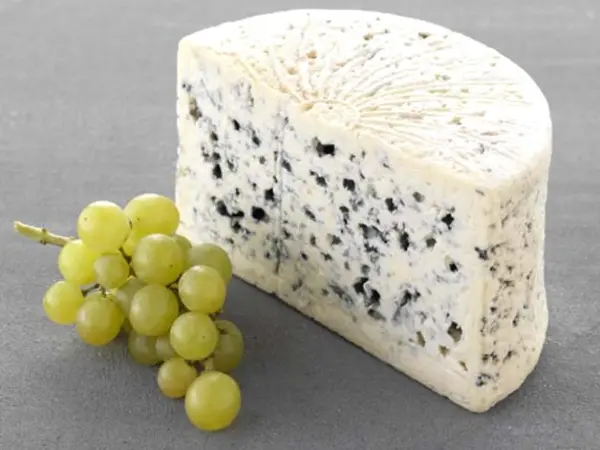
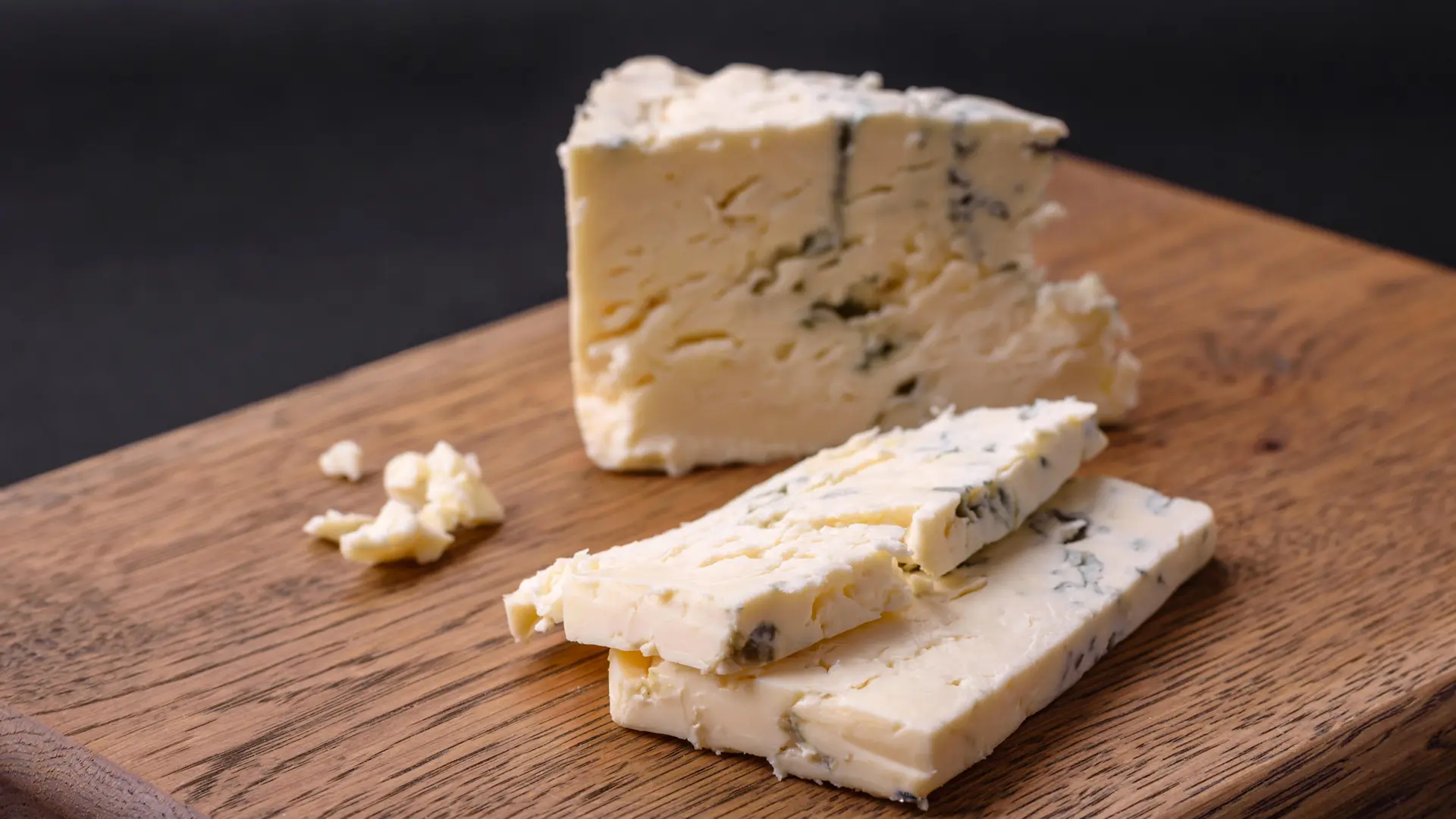
Semi-soft and creamy, with a moist, slightly sticky rind. The interior ranges from ivory to pale cream and is densely marbled with blue-green veins and small air pockets. It crumbles easily at room temperature but becomes smooth and spreadable when warmed.
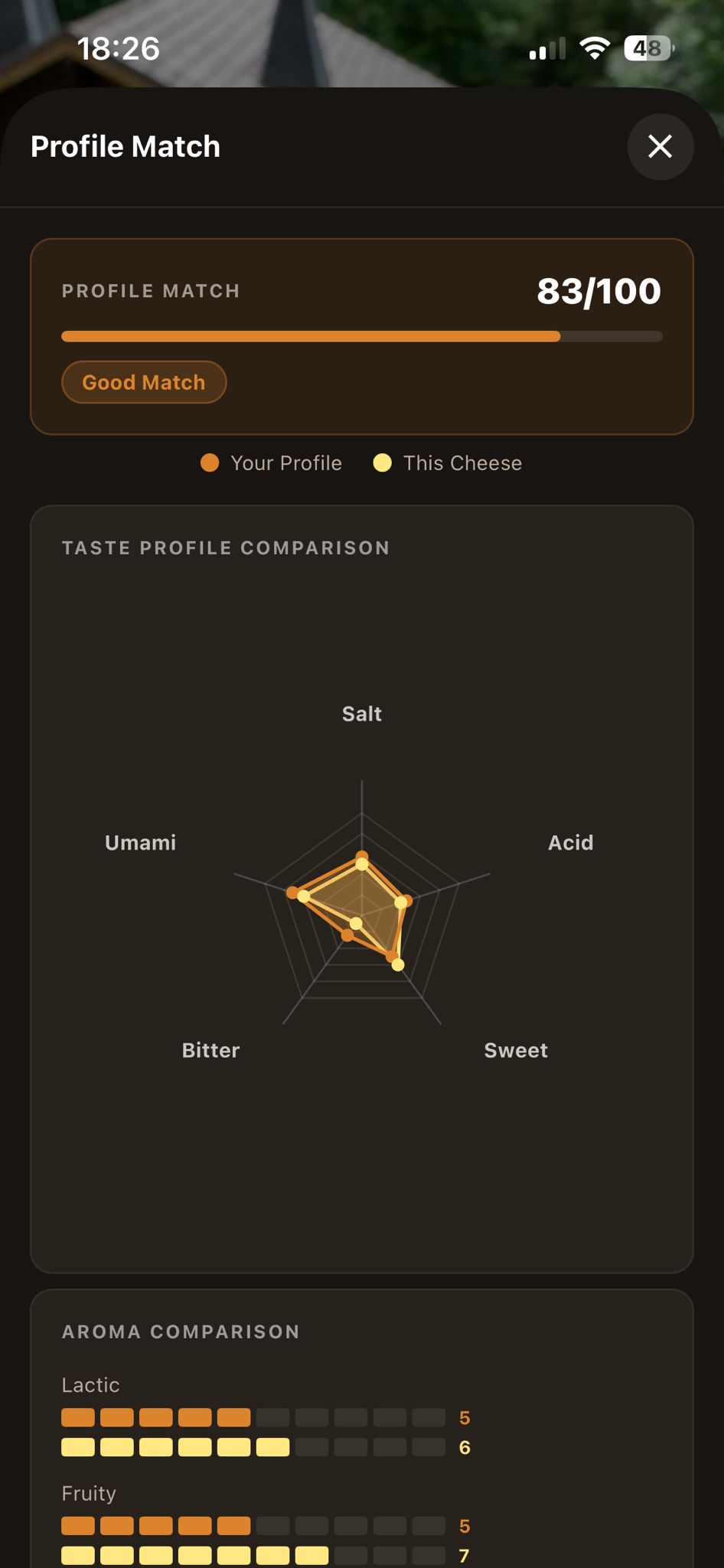
Earthy notes are dominant, shaped by Penicillium roqueforti and cellar ageing. Animal notes are clearly present, with a notable fruity undertone. Lactic notes remain faint. No herbal or smoky character.
Cheesepedia taste profile
The values below are the structured baseline in the Cheesepedia app. Your personal match is calculated separately from your own taste profile.
A general profile can describe Bleu d'Auvergne, but it cannot know how closely the cheese fits your preferences. Cheesepedia Premium compares this profile with your personal taste profile and lets you evaluate cheeses side by side.
See your personal matchHow to enjoy it
- Crumbled over salads, steaks, or burgers.
- Melted into creamy blue cheese sauces.
- Served with pears, walnuts, or fruit preserves.
- Used in savoury tarts, dips, or cheese spreads.
What pairs with Bleu d'Auvergne?
Classic serving companions from the Cheesepedia catalog.
- Butter Cracker
- Grissini
- Salted Cracker
- Olive Cracker
- Mini Sesame Bagel
Find the right wine in Cheesepedia
Cheesepedia uses an expert-designed algorithm that compares the cheese's taste, intensity, and production profile with the wine's body, acidity, tannin, and sweetness. Wine pairings are not generated by AI.
See wine pairings for Bleu d'AuvergneStory and origin
Developed in the 1850s by farmer Antoine Roussel, who discovered that mould from rye bread added to cheese curd created characteristic blue veining. He also found that needle-piercing encouraged even mould distribution. His techniques quickly spread throughout the region. It received AOC status in 1975 and PDO status in 1996.
Storage and serving
- Store in the fridge, wrapped in cheese paper.
- Air travel: suitable only for short trips if sealed and kept cold.
Profile sources and methodology
This page uses the same curated record as the Cheesepedia mobile app. Production-style and designation references provide context; they do not imply endorsement of Cheesepedia.