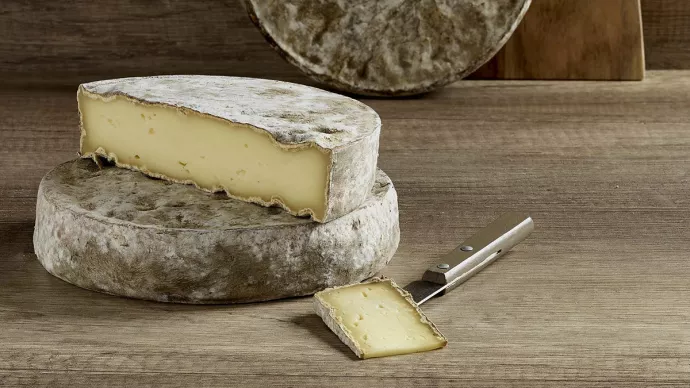
What is Tome des Bauges?
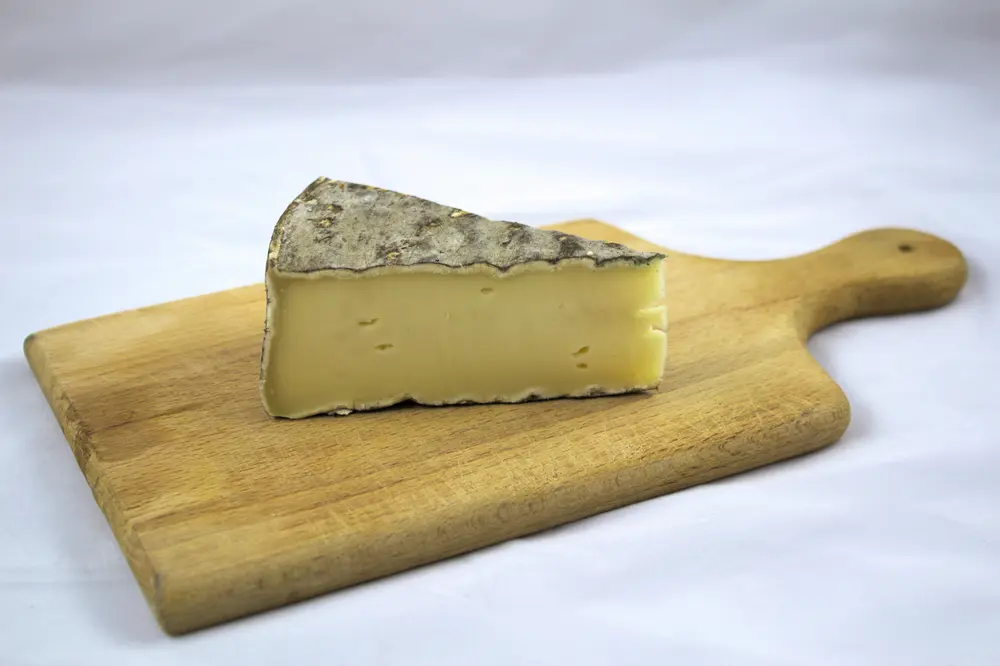
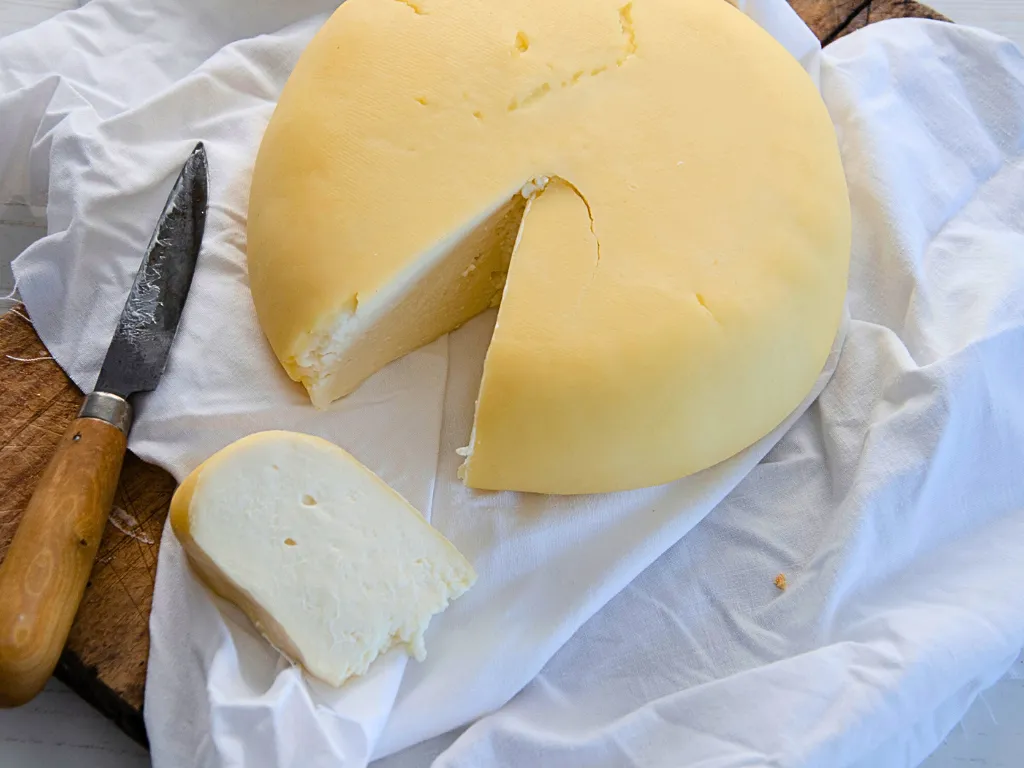
A rustic semi-hard pressed raw-milk cheese from the Bauges Massif in the Savoie Alps, produced in flat discs weighing 1.3–2.2 kg. Made from the milk of Abondance, Montbéliarde, or Tarine cows grazing on the steep Bauges slopes. It has a grey, flowery natural rind and a yellow-ivory paste beneath. Aged for a minimum of 5 weeks. Historically a farmhouse cheese made for daily household consumption.
Taste, aroma, and texture
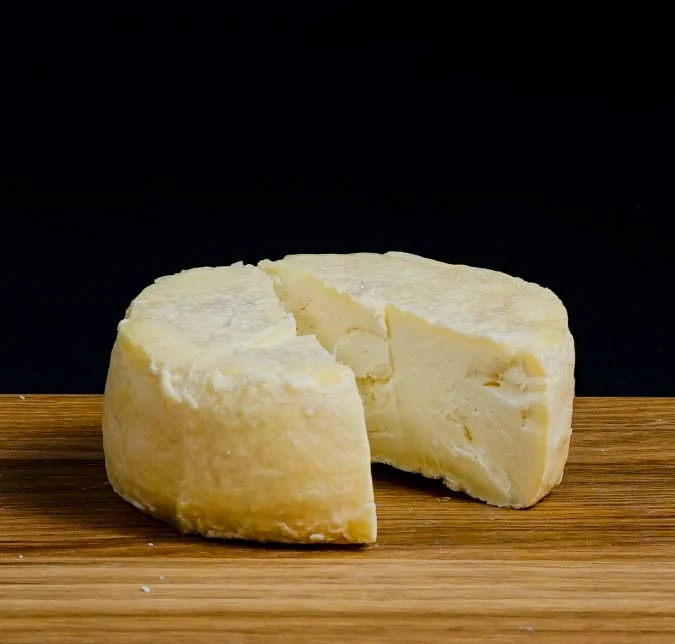
Supple, smooth, and firm, with small irregular eyes. The grey flowery rind is distinctive and typically covered with moulds that create a mottled appearance. The yellow-ivory paste yields easily on the palate. Slight crumbliness may develop with extended ageing.
Earthy notes are dominant, with cellar and mushroom nuances. Herbal and lactic notes are strongly present in equal measure. Fruity and animal notes are equally noticeable. No smoky character.
Cheesepedia taste profile
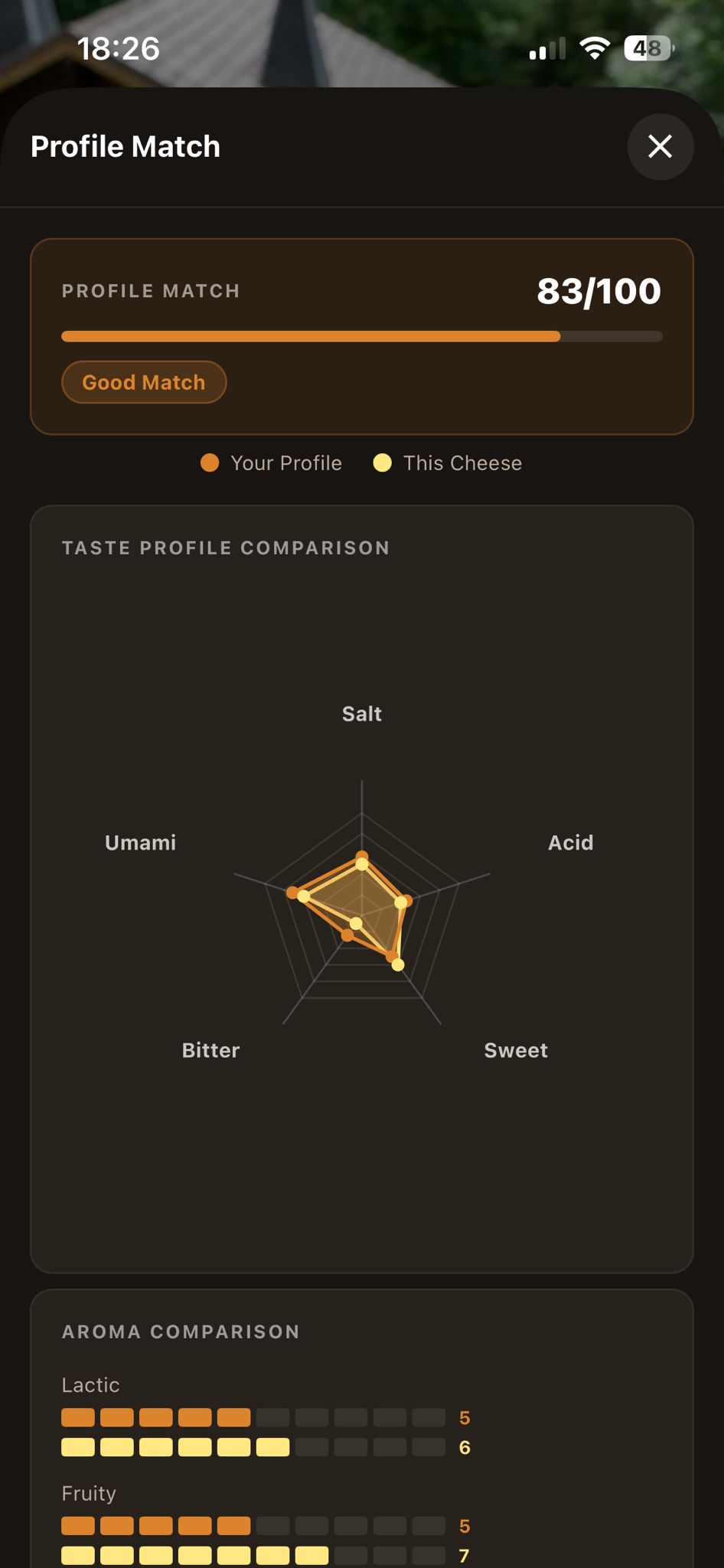
The values below are the structured baseline in the Cheesepedia app. Your personal match is calculated separately from your own taste profile.
A general profile can describe Tome des Bauges, but it cannot know how closely the cheese fits your preferences. Cheesepedia Premium compares this profile with your personal taste profile and lets you evaluate cheeses side by side.
See your personal matchHow to enjoy it
- Sliced into sandwiches or rustic cheese plates.
- Melted into gratins, potatoes, or baked dishes.
- Served with cured meats, pickles, or country bread.
What pairs with Tome des Bauges?
Classic serving companions from the Cheesepedia catalog.
- Oat Crackers
- Honey or Fresh Figs
- Walnuts
- Butter Cracker
Find the right wine in Cheesepedia
Cheesepedia uses an expert-designed algorithm that compares the cheese's taste, intensity, and production profile with the wine's body, acidity, tannin, and sweetness. Wine pairings are not generated by AI.
See wine pairings for Tome des BaugesStory and origin
Known in the Bauges Massif since the 17th century, it was once referred to as “the poor man’s cheese,” made by farming families for daily sustenance rather than trade. As artisanal production gained recognition, it became valued as a gourmet regional speciality. It has held PDO status since 2002.
Storage and serving
- Store in the fridge, wrapped or vacuum-packed.
- Air travel: suitable, especially if vacuum-packed.
Profile sources and methodology
This page uses the same curated record as the Cheesepedia mobile app. Production-style and designation references provide context; they do not imply endorsement of Cheesepedia.