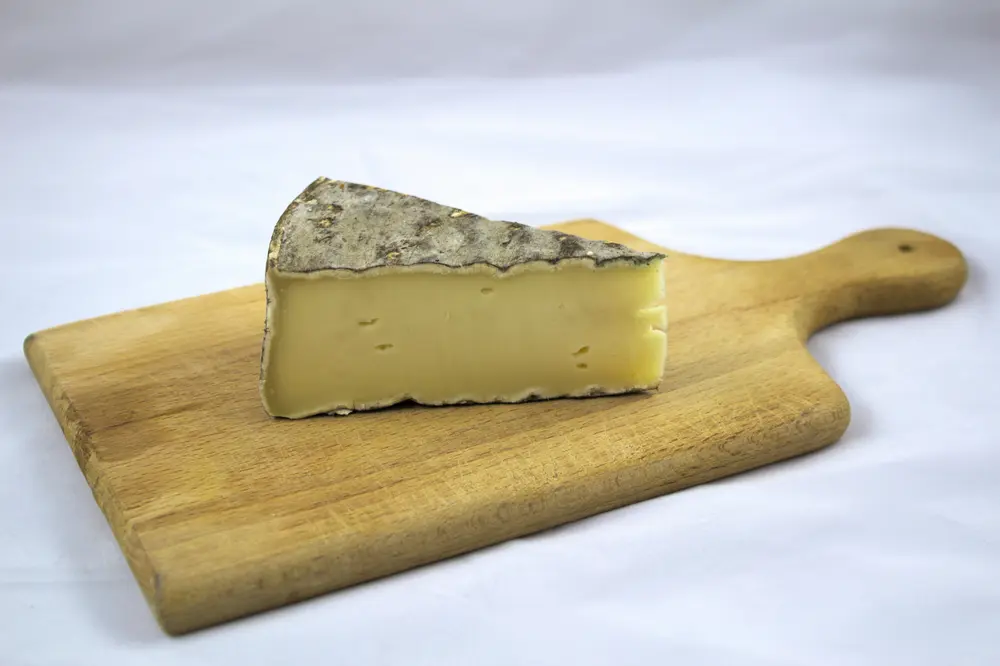
What is Saint-Nectaire?
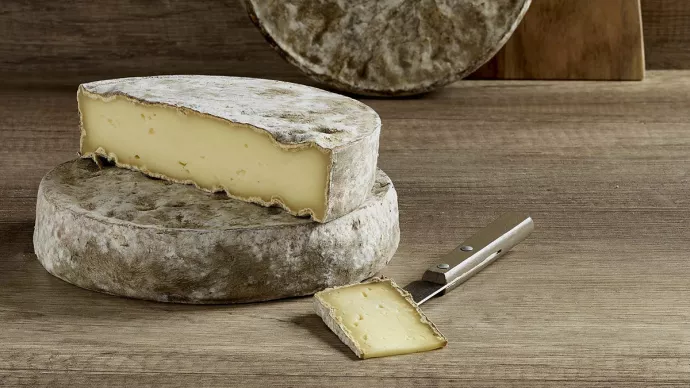
A semi-soft pressed raw-milk cheese from the volcanic plateau of Auvergne, produced in flat discs of approximately 1.7 kg, or 600 g for Petit Saint-Nectaire. Made from Salers or Montbéliarde cow’s milk and aged for at least 28 days on rye straw in humid cellars. Its mottled grey, red, and yellow rind is its most distinctive visual feature, formed by multiple moulds developing during ripening.
Taste, aroma, and texture
Texture
Silky, smooth, and spreadable beneath the distinctive mottled grey-red-yellow rind. The paste is supple and yields easily. Small irregular holes may be present. The mottled rind is caused by multiple mould varieties growing simultaneously and should not be rubbed off.
Aroma
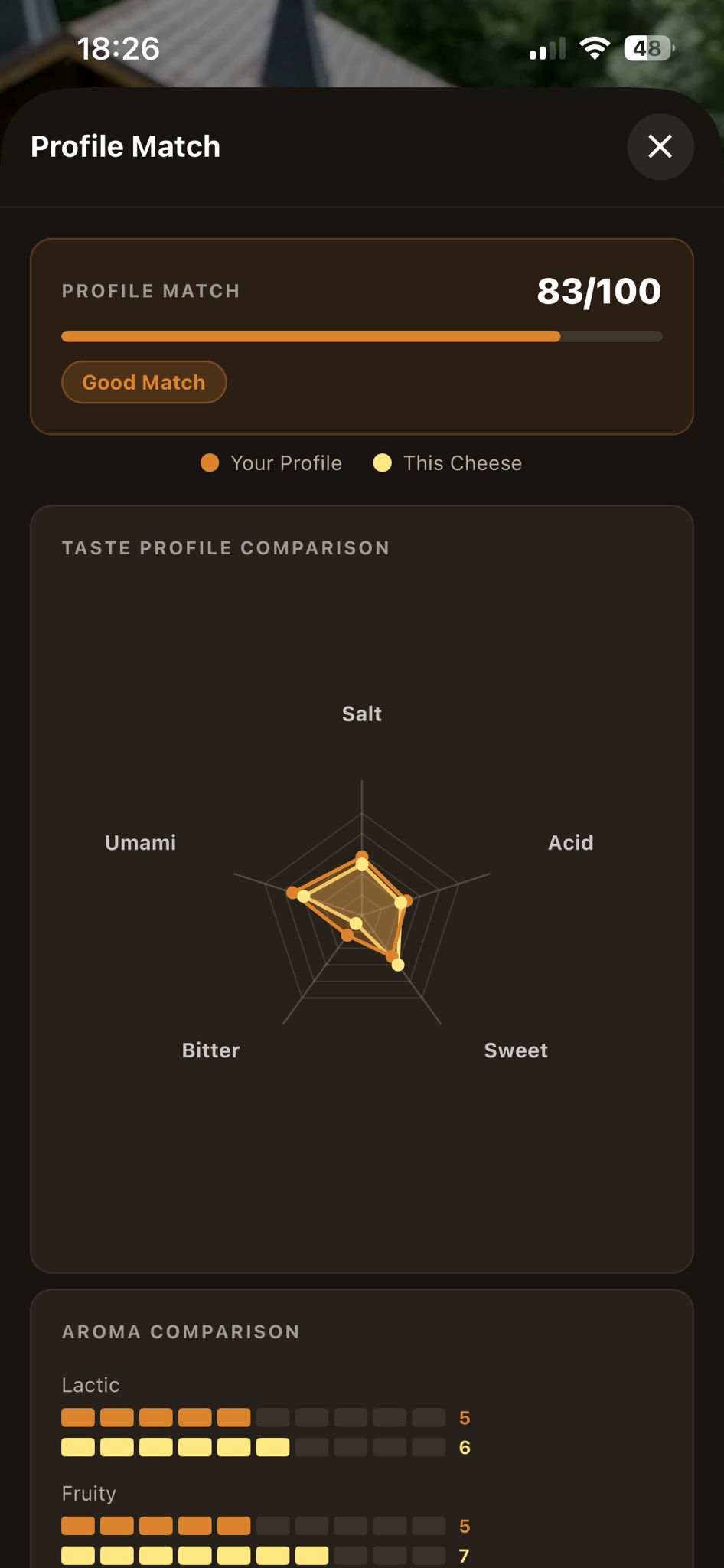
Earthy notes are strongly dominant, making it one of France’s most distinctively earthy cheeses, with mushroom, damp soil, and hay nuances. Lactic and herbal notes are equally noticeable, while animal notes are present. Fruity and smoky notes remain faint.
Cheesepedia taste profile
These values are the structured baseline in the Cheesepedia app. Your personal match is calculated separately from your own taste profile.
How to enjoy it
- 01
Melted into gratins, omelettes, or potato dishes.
- 02
Sliced into sandwiches, toasties, or cheese plates.
- 03
Served with apples, nuts, or rustic bread.
What pairs with Saint-Nectaire?
Classic serving companions from the Cheesepedia catalog.
- Apple or Pear Slices
- Hard Crackers
- Cured Meats (Salami or Prosciutto)
- Whole Wheat Cracker
Story and origin
Produced on the volcanic plateau of Auvergne since at least the 17th century, it was served at the court of Louis XIV and became known as the “cheese of the Sun King.” It is named after the Marquis de Saint-Nectaire. It has held AOC status since 1955 and PDO status since 1996.
Storage and serving
- Store in the fridge, wrapped in cheese paper or parchment.
- Air travel: suitable for short trips if sealed and kept cool.
Profile sources and methodology
This page uses the same curated record as the Cheesepedia mobile app. Production-style and designation references provide context; they do not imply endorsement of Cheesepedia.