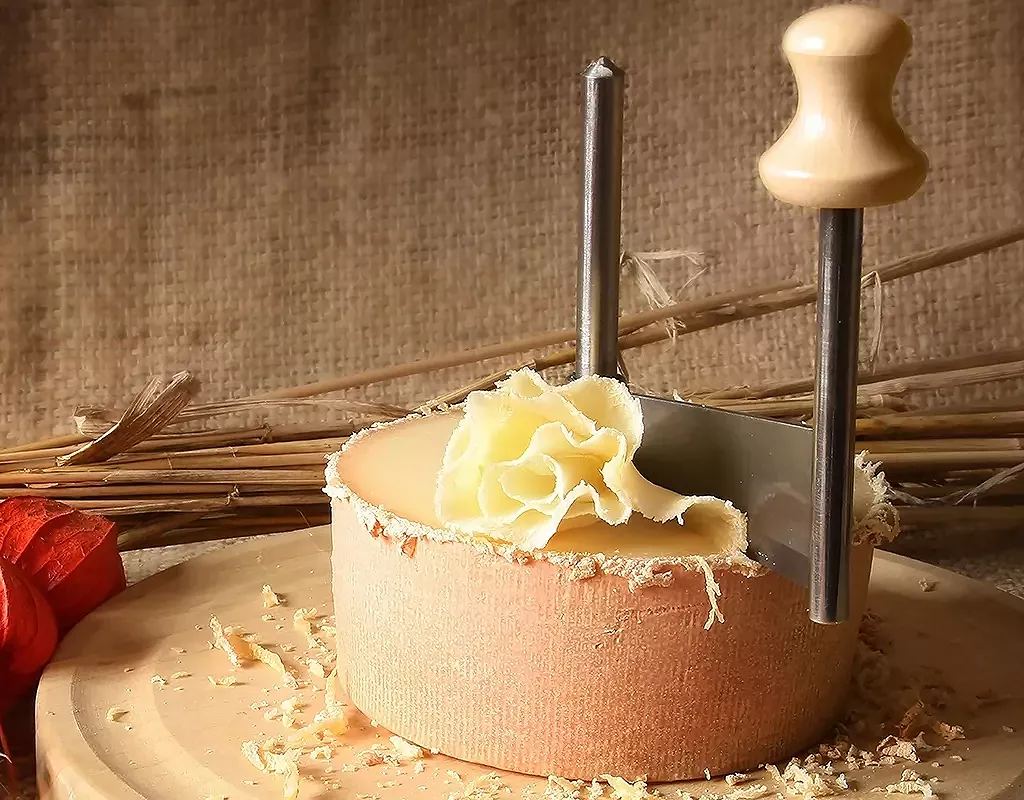
What is Tête de Moine?
A Swiss semi-hard cow’s milk cheese from the Jura region, made in small cylinders. It is traditionally not sliced but shaved into thin rosettes using a girolle or knife. Shaving increases surface area and releases its full flavour.
Taste, aroma, and texture
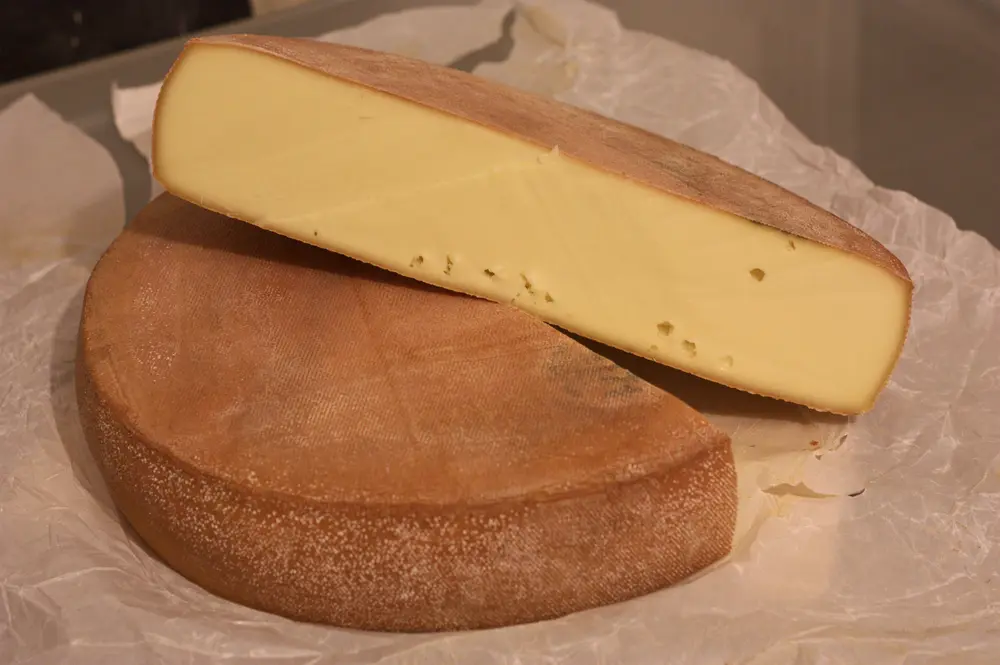
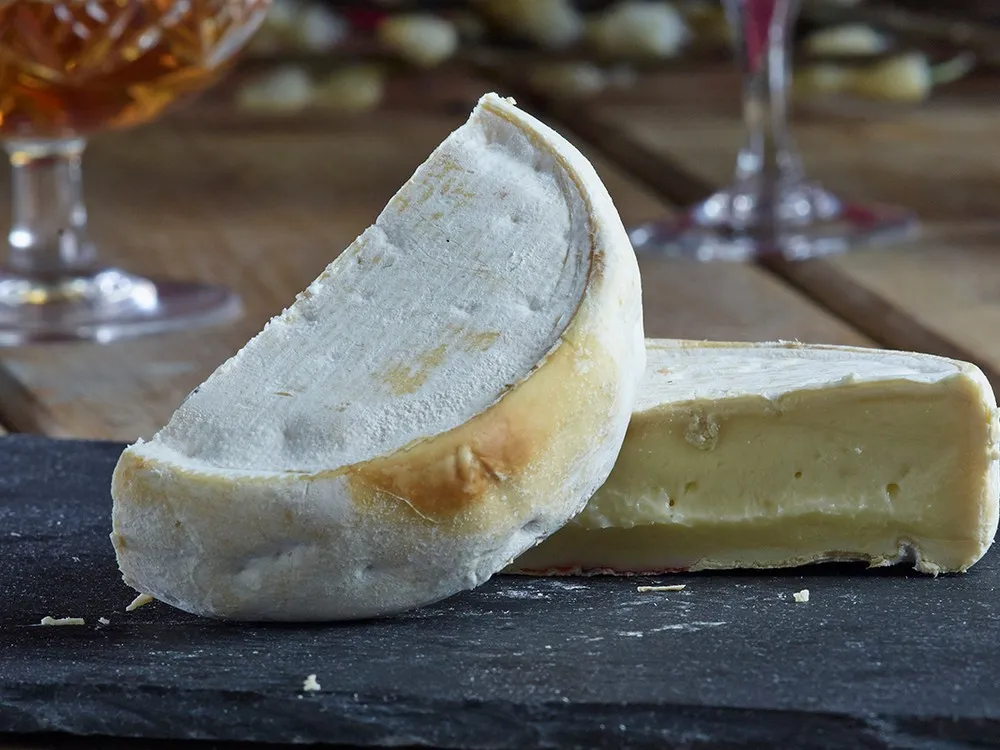
Semi-hard, dense, and smooth. Interior is ivory to pale yellow. Natural rind is firm and brownish. When shaved, the paste curls into thin rosettes with a delicate, melting mouthfeel.
Fruity notes lead, with herbal, lactic, earthy, and animal notes all clearly present. A complex, layered bouquet that becomes significantly more expressive when shaved into rosettes. No smoky character.
Cheesepedia taste profile
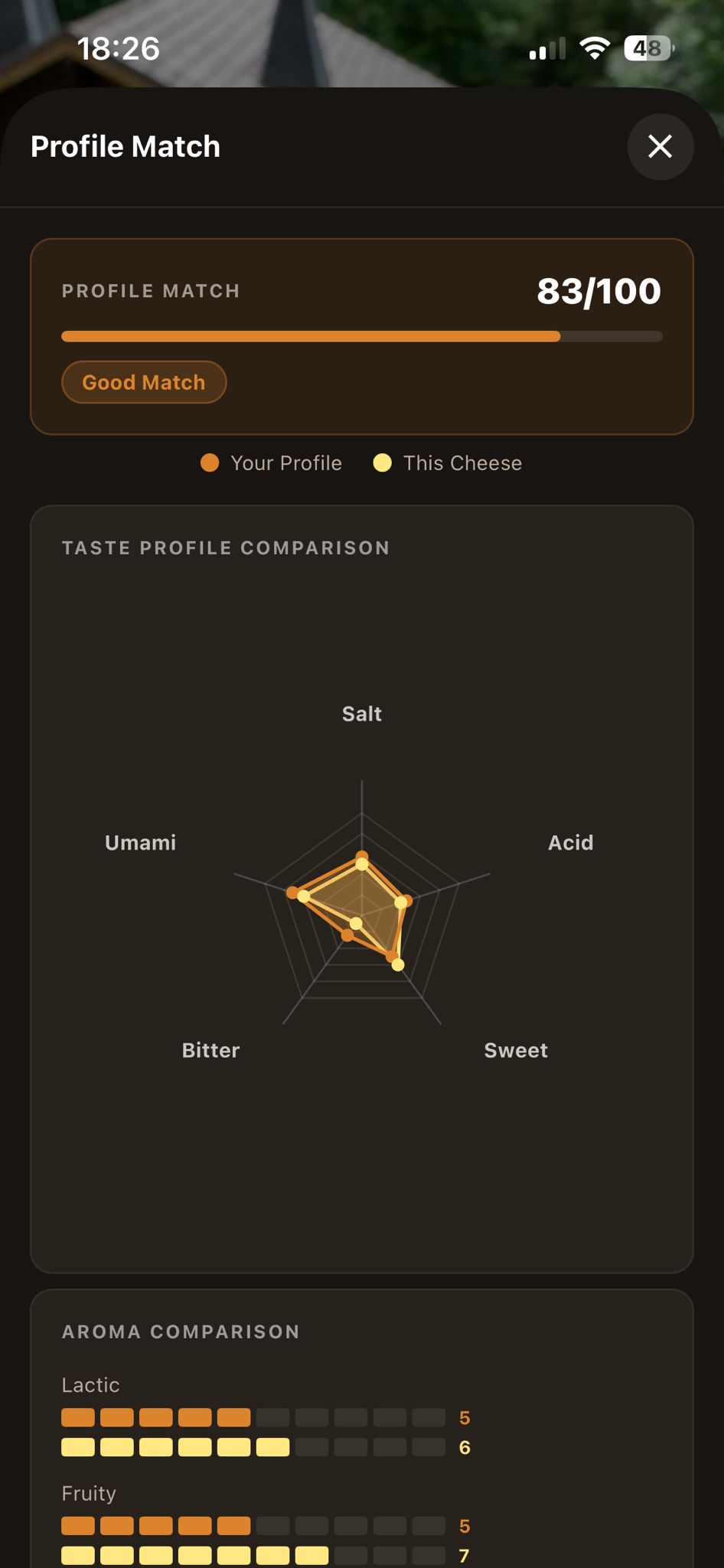
The values below are the structured baseline in the Cheesepedia app. Your personal match is calculated separately from your own taste profile.
A general profile can describe Tête de Moine, but it cannot know how closely the cheese fits your preferences. Cheesepedia Premium compares this profile with your personal taste profile and lets you evaluate cheeses side by side.
See your personal matchHow to enjoy it
- Shaved into rosettes for cheese boards.
- Served with nuts, fruit, or crisp bread.
- Used as a decorative topping for salads or appetisers.
What pairs with Tête de Moine?
Classic serving companions from the Cheesepedia catalog.
- Rye Bread
- Quince Paste (Marmelada)
- Black Olives
- Walnuts
- Walnut Cracker
Find the right wine in Cheesepedia
Cheesepedia uses an expert-designed algorithm that compares the cheese's taste, intensity, and production profile with the wine's body, acidity, tannin, and sweetness. Wine pairings are not generated by AI.
See wine pairings for Tête de MoineStory and origin
Tête de Moine originated at Bellelay Abbey in the Jura mountains, where monks produced the cheese from local mountain milk. The name means “monk’s head” and is linked to monastic traditions and the practice of shaving the cheese.
Storage and serving
- Store in the fridge, wrapped or vacuum-packed.
- Air travel: suitable, especially if vacuum-packed.
Profile sources and methodology
This page uses the same curated record as the Cheesepedia mobile app. Production-style and designation references provide context; they do not imply endorsement of Cheesepedia.