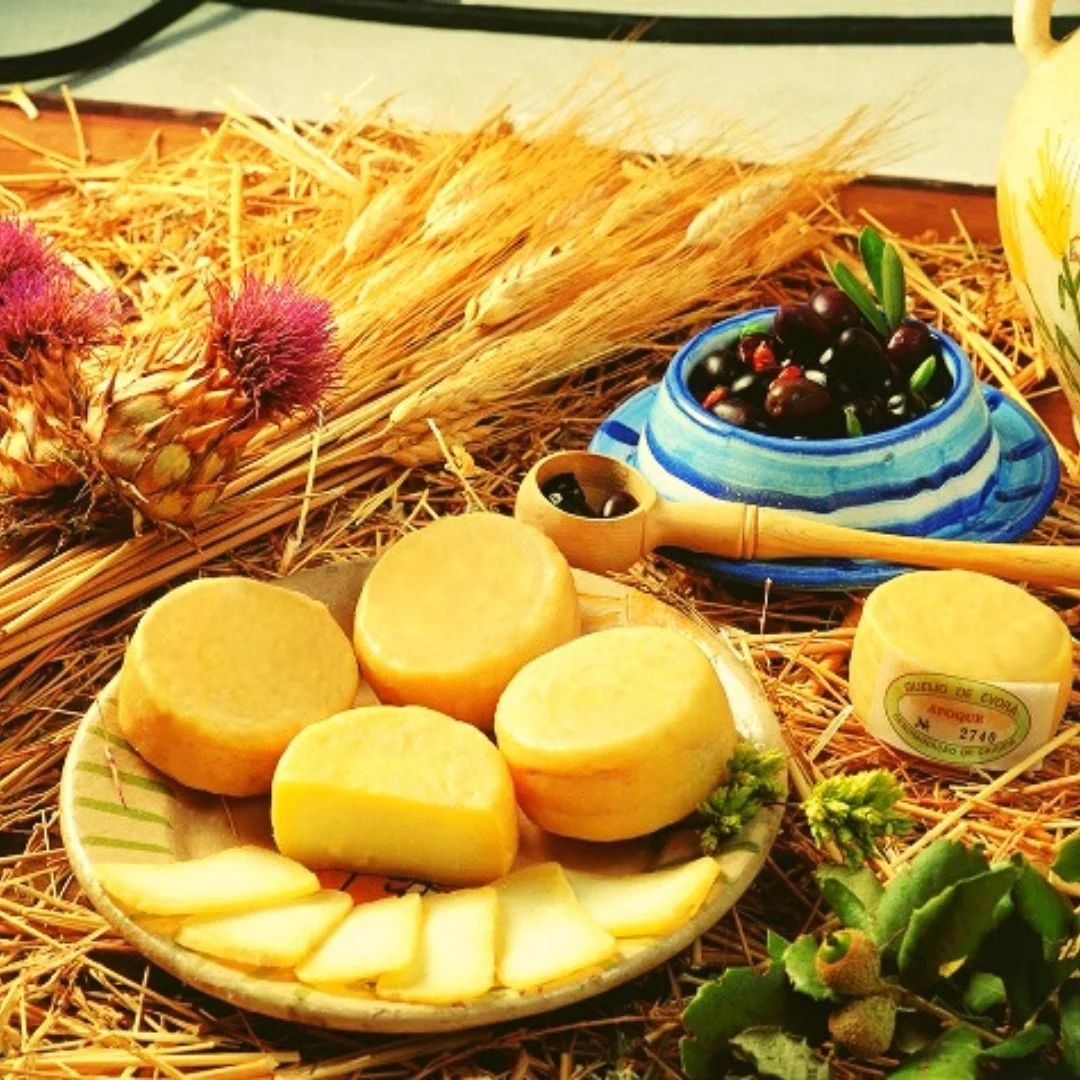
What is Queijo de Évora?
A traditional sheep’s milk cheese from the Alentejo plains, made from the milk of Merina Branca ewes and coagulated with wild thistle. Produced in two styles: Curado, firm and aged for over 60 days, and Extra Curado, very hard and aged for over 90 days. One of the smallest Portuguese protected cheeses, with each round weighing only 60–90 g.
Taste, aroma, and texture
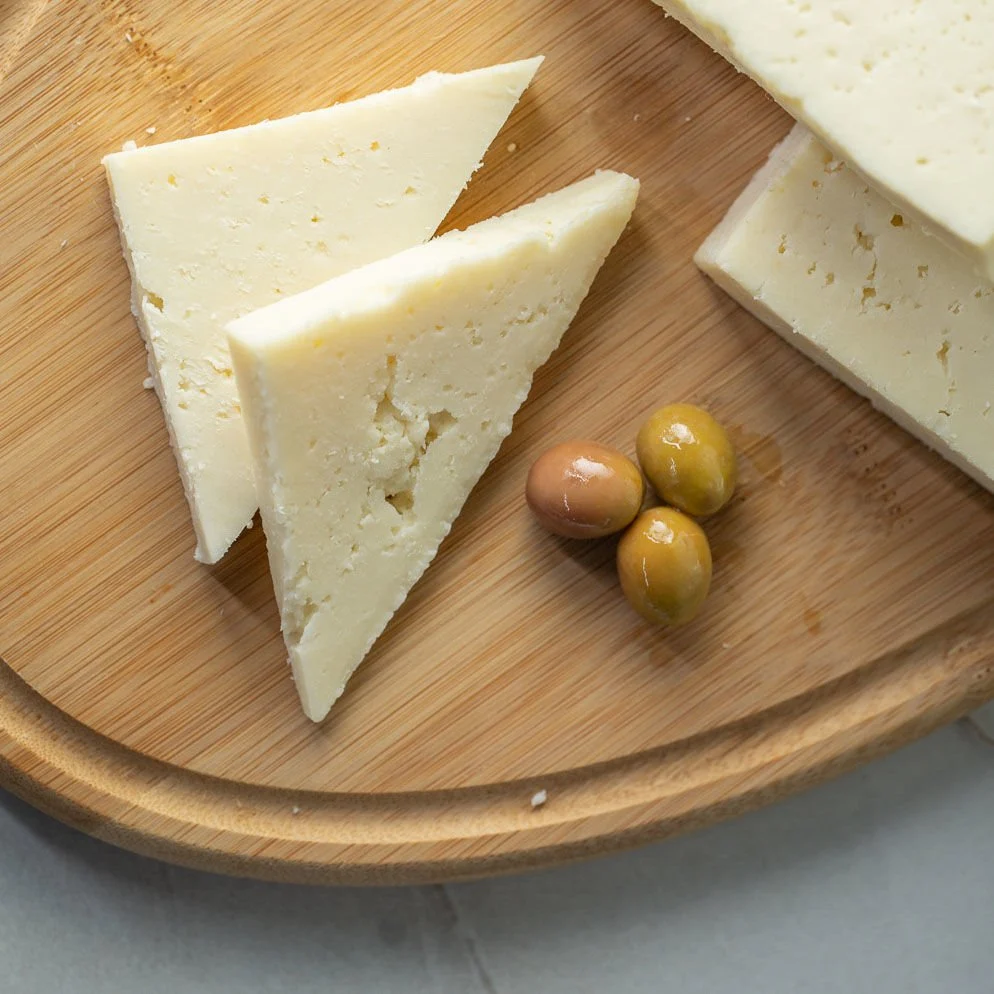
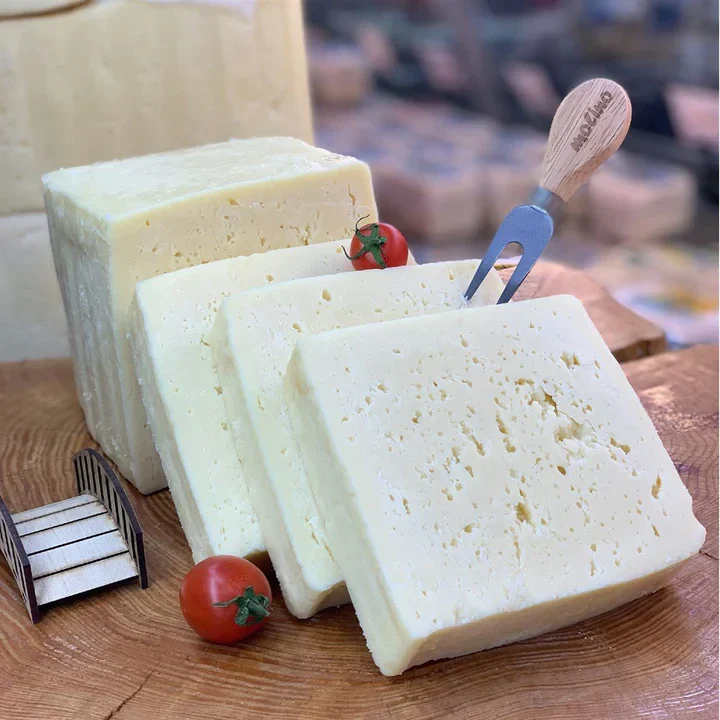
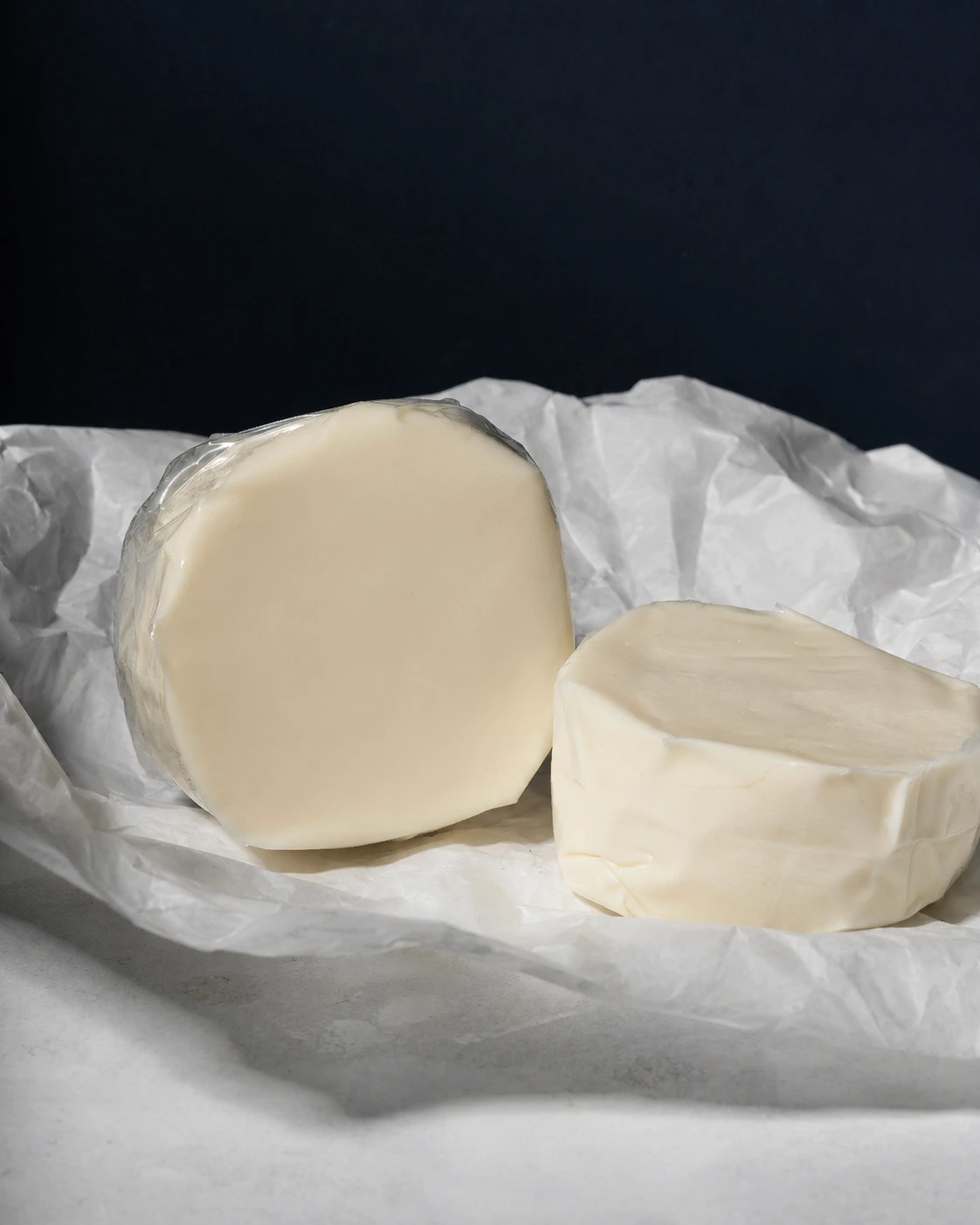
Hard, smooth, and compact, with almost no holes. The paste is brittle and develops a slight crunch as it ripens. Firm enough to grate and break cleanly into pieces. Small rounds weigh 60–90 g. The rind is thin, golden-yellow, and slightly waxy.
Earthy and animal notes are equally dominant, combining thistle rennet with aged sheep’s milk lanolin. Herbal notes are strongly present. Lactic notes are present, while fruity notes remain faint. No smoky character. Intensity increases significantly with extended ageing.
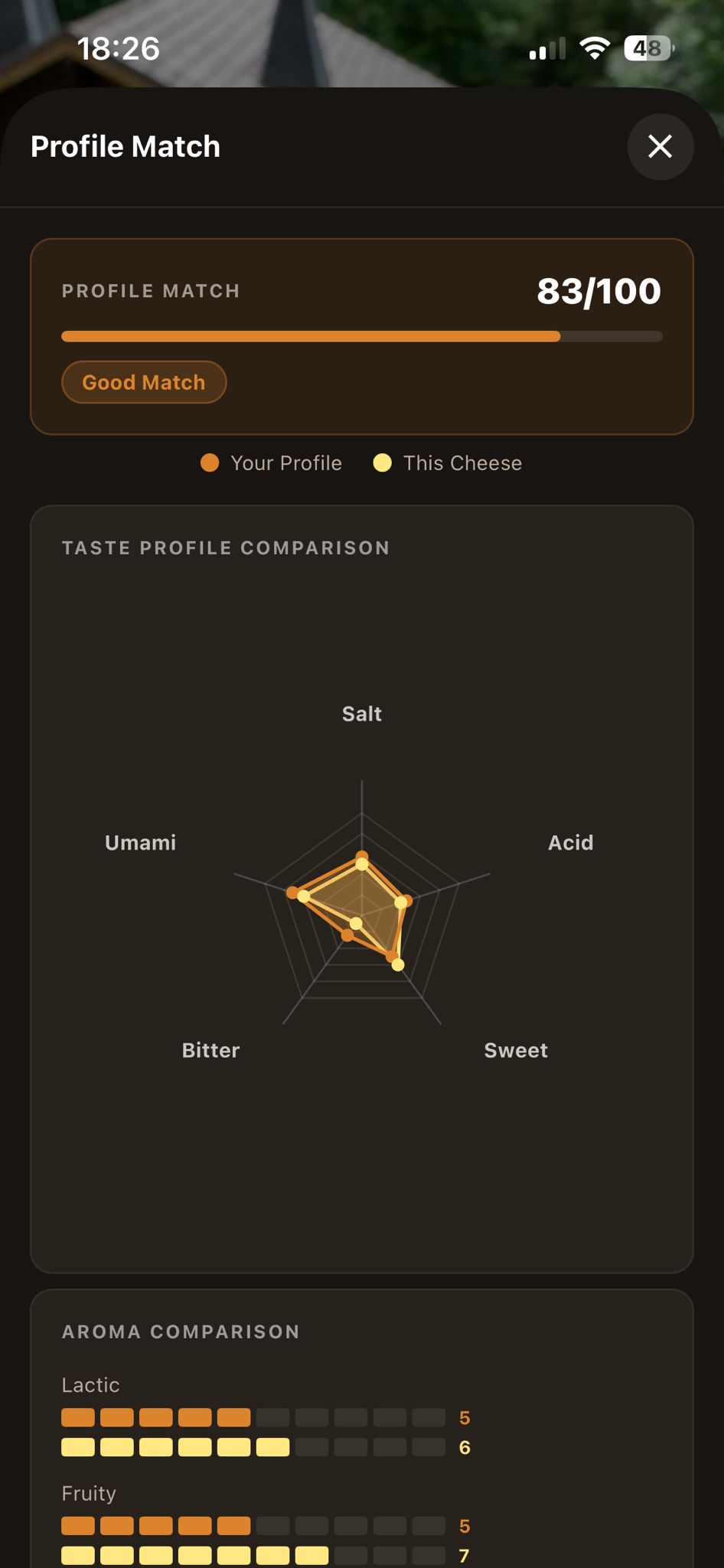
Cheesepedia taste profile
The values below are the structured baseline in the Cheesepedia app. Your personal match is calculated separately from your own taste profile.
A general profile can describe Queijo de Évora, but it cannot know how closely the cheese fits your preferences. Cheesepedia Premium compares this profile with your personal taste profile and lets you evaluate cheeses side by side.
See your personal matchHow to enjoy it
- Served in slices on sheep’s milk cheese boards.
- Grated or shaved over soups, salads, or vegetables when aged.
- Used in rustic appetisers, breads, or savoury fillings.
What pairs with Queijo de Évora?
Classic serving companions from the Cheesepedia catalog.
- Black Cherry or Fig Jam
- Walnuts & Almonds
- Prosciutto di Parma or Spicy Salami
- Sesame Cracker
Find the right wine in Cheesepedia
Cheesepedia uses an expert-designed algorithm that compares the cheese's taste, intensity, and production profile with the wine's body, acidity, tannin, and sweetness. Wine pairings are not generated by AI.
See wine pairings for Queijo de ÉvoraStory and origin
The history of Queijo de Évora is deeply intertwined with the ancient pastoral traditions of the Alentejo, with techniques possibly dating back to the Roman era. Local shepherds developed the small format to make efficient use of limited milk supplies and to carry the cheese easily during long transhumance journeys. It has held PDO status since 1996.
Storage and serving
- Store in the fridge, wrapped or vacuum-packed.
- Air travel: suitable, especially if vacuum-packed.
Profile sources and methodology
This page uses the same curated record as the Cheesepedia mobile app. Production-style and designation references provide context; they do not imply endorsement of Cheesepedia.