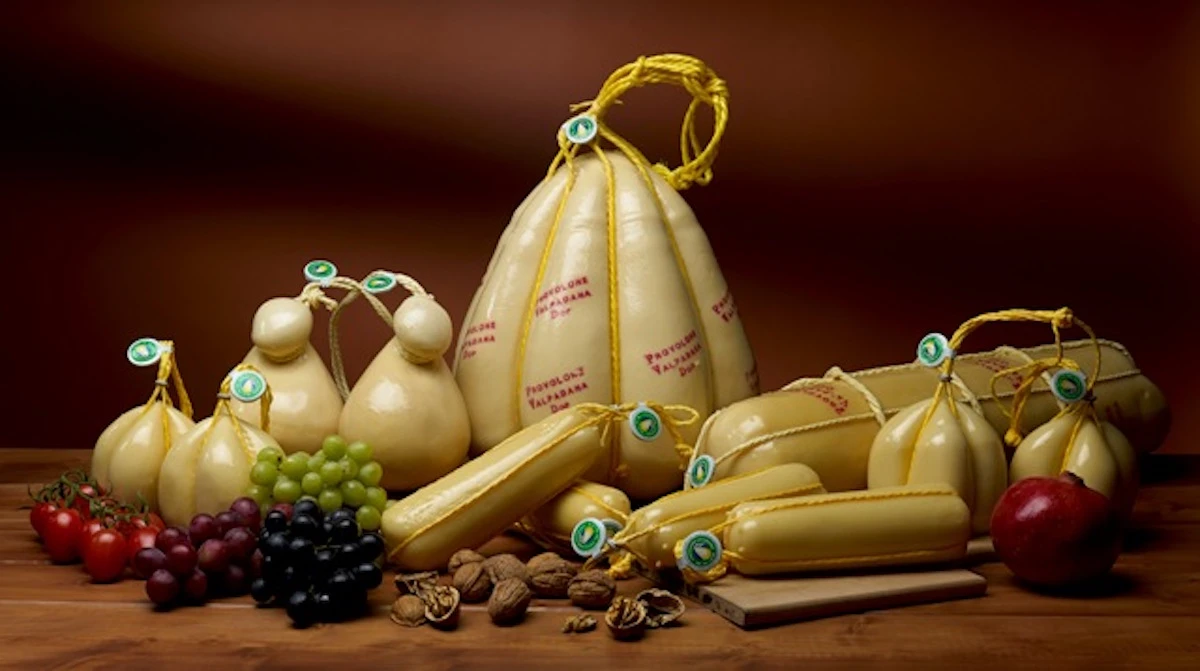
What is Provolone Valpadana?
A protected cheese from the Po Valley — Lombardy, Veneto, Emilia-Romagna, and Trentino — made with the stretched-curd method in two styles: Dolce, aged 2–3 months, is mild and buttery; Piccante, usually aged over 3 months with goat rennet, is firm, sharp, and tangy. The Valpadana name distinguishes this protected version from generic provolone. Made in traditional shapes ranging from 0.5 to 100 kg.
Taste, aroma, and texture
Texture
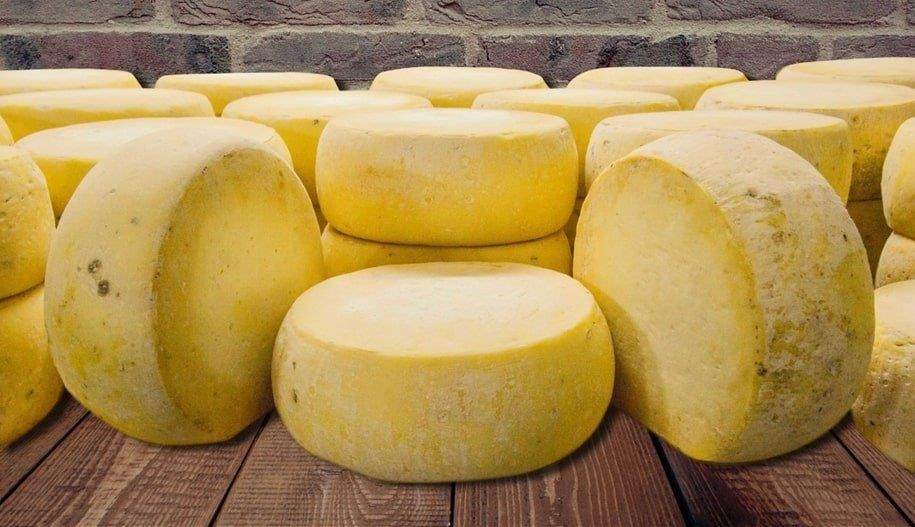
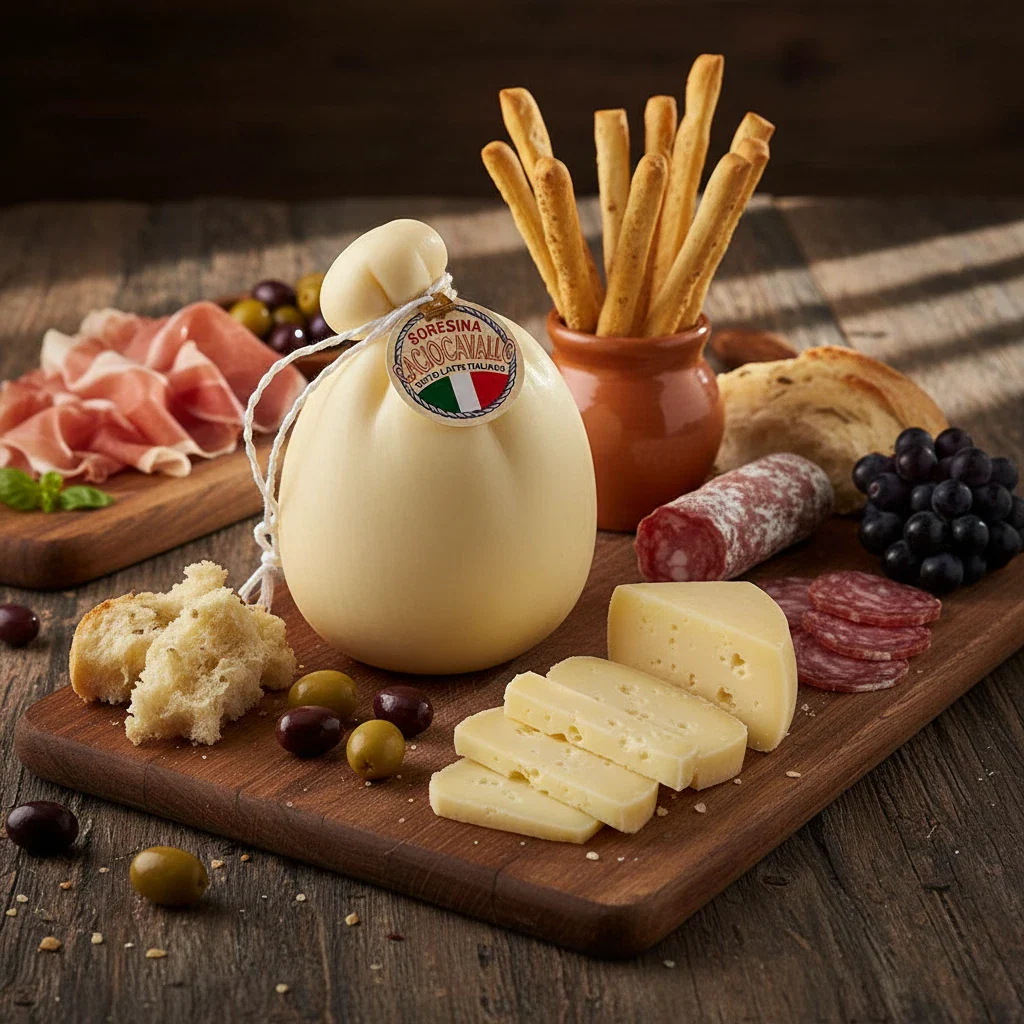
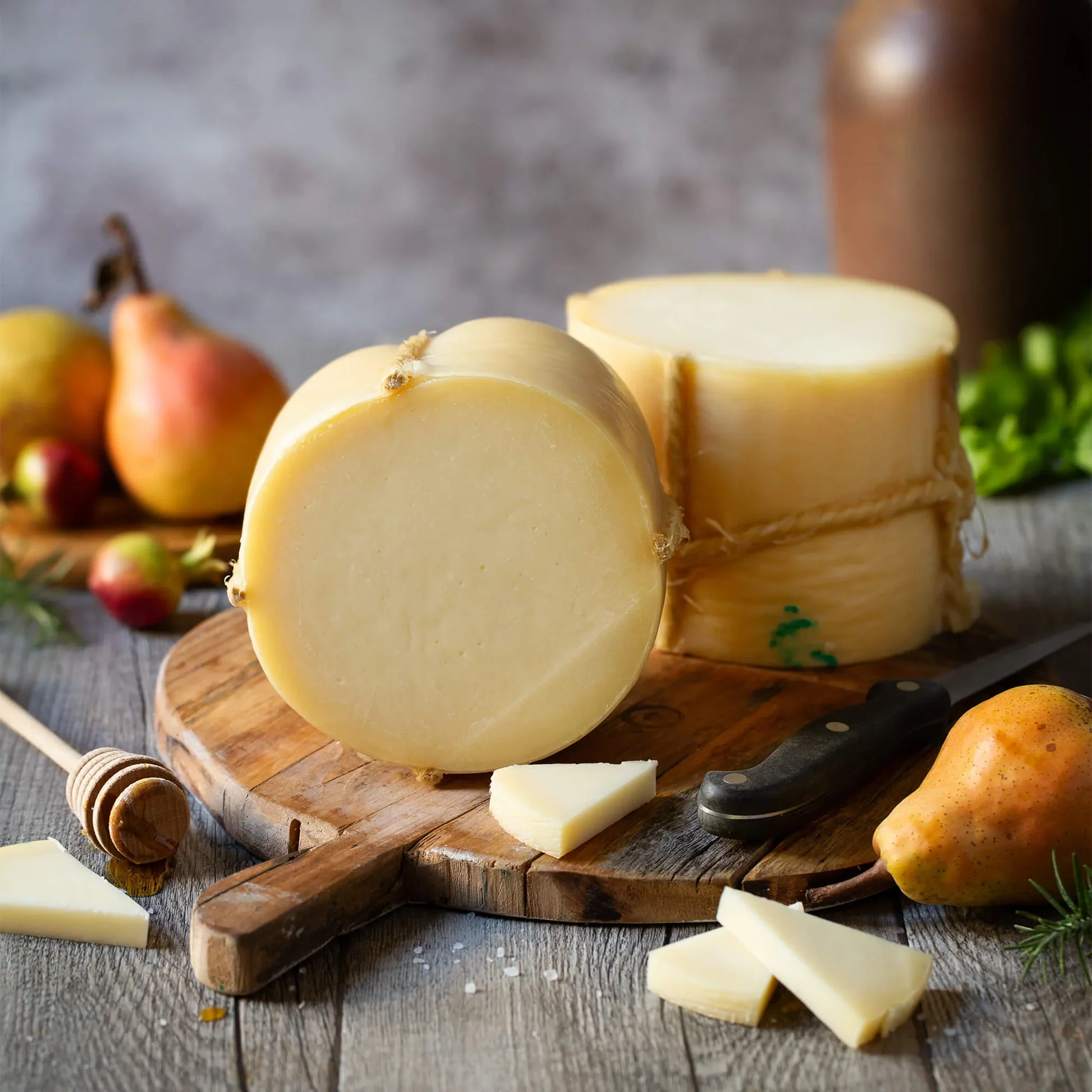
Dolce: smooth, supple, and elastic, with a closed, creamy interior. Piccante: firmer, drier, and more compact. Both have a waxy golden-yellow rind. Traditional shapes such as mandarino, provola, and salame are the most distinctive visual feature. Excellent melting properties in both styles.
Aroma
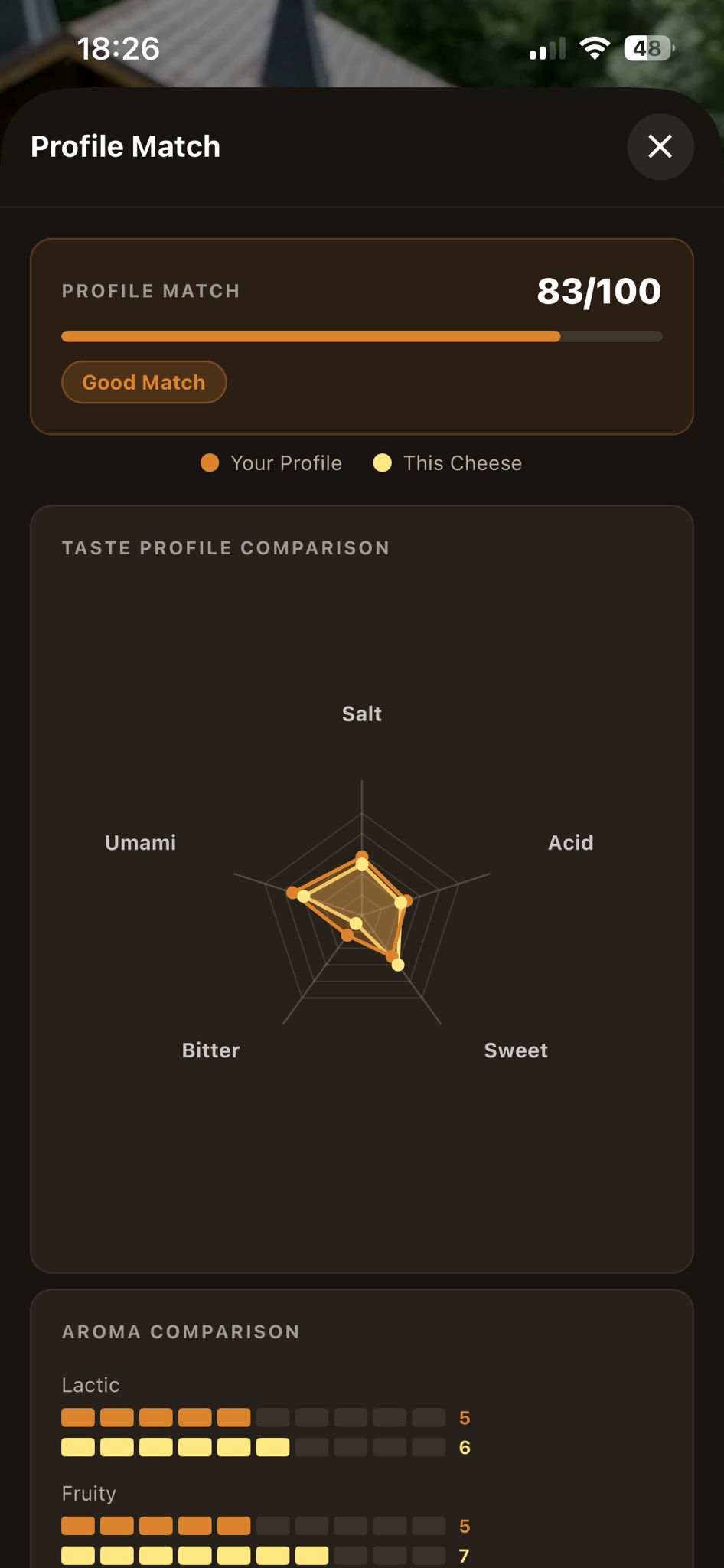
Lactic and fruity notes are equally dominant. Earthy and animal notes are equally noticeable. Smoky notes are present and noticeable in the smoked versions. Herbal notes remain faint. Dolce is mild and fresh; Piccante develops significantly more complexity.
Cheesepedia taste profile
These values are the structured baseline in the Cheesepedia app. Your personal match is calculated separately from your own taste profile.
How to enjoy it
- 01
Melted into sandwiches, panini, or baked pasta.
- 02
Grilled or pan-fried in thick slices.
- 03
Used in casseroles, stuffed vegetables, or savoury pastries.
What pairs with Provolone Valpadana?
Classic serving companions from the Cheesepedia catalog.
- Butter Cracker
- Salted Cracker
- Sun-Dried Tomato
- Olives
- Breadstick
- Fig Jam
Story and origin
Originally from southern Italy, production moved to the Po Valley in the 19th century. The name “Valpadana,” meaning Po Valley, distinguishes this protected version. Traditional shapes include mandarino, provola, salame, pancetta, and the giant gigante, which can reach up to 100 kg. The use of goat rennet for Piccante is a defining traditional specification. It has held PDO status since 1996.
Storage and serving
- Store in the fridge, wrapped or vacuum-packed.
- Air travel: suitable, especially if vacuum-packed.
Profile sources and methodology
This page uses the same curated record as the Cheesepedia mobile app. Production-style and designation references provide context; they do not imply endorsement of Cheesepedia.