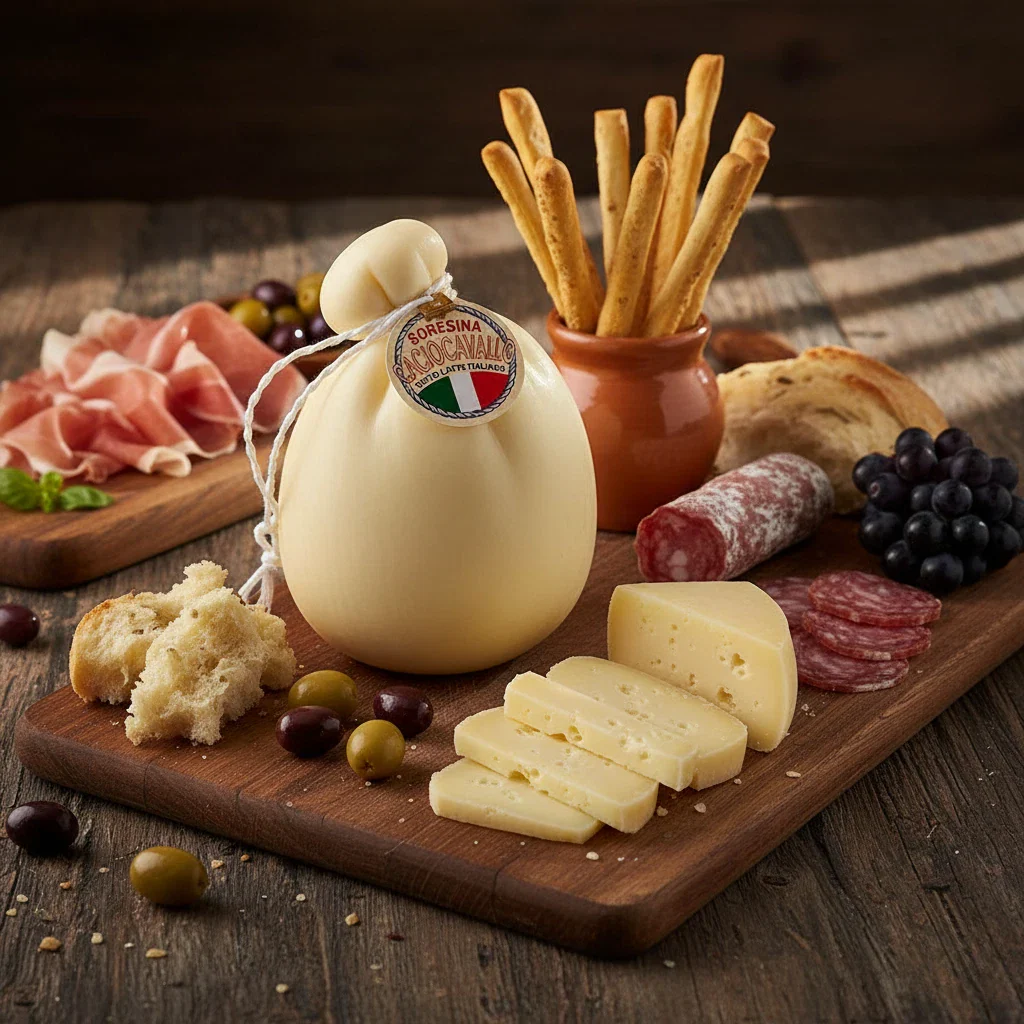
What is Caciocavallo Silano?
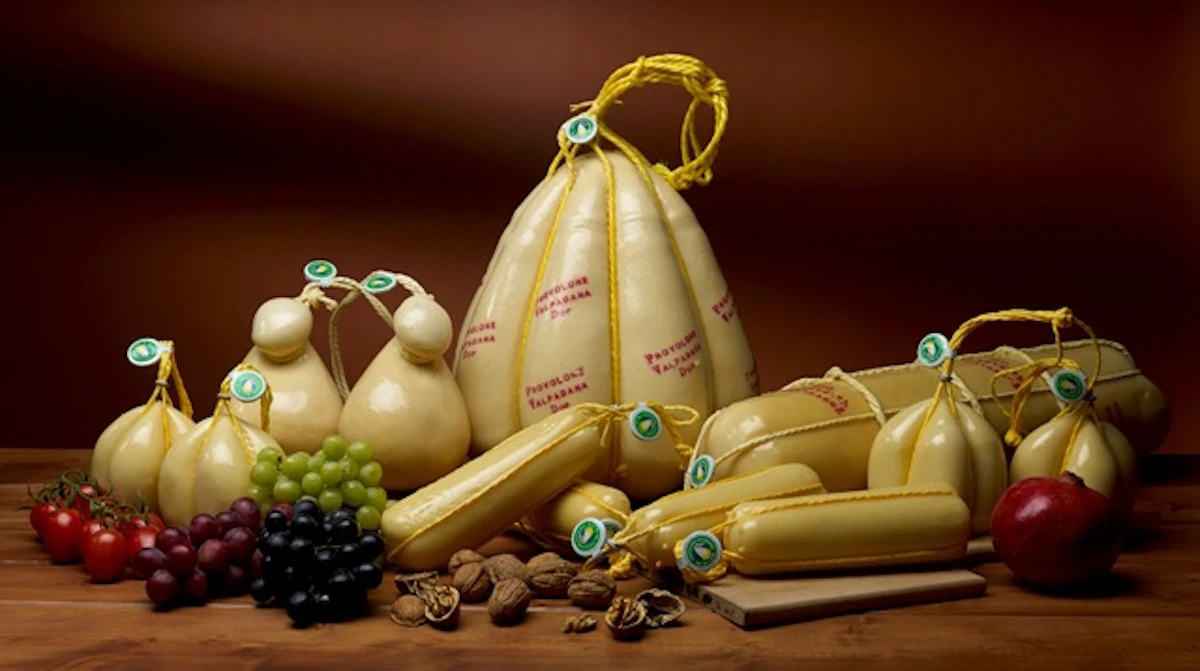
A pasta filata cheese from southern Italy, produced from cow’s milk in a distinctive pear or gourd shape, tied in pairs and hung to age. Produced across Basilicata, Calabria, Campania, Molise, and Puglia. Aged for a minimum of 30 days as a table cheese, or 6 months for grating. One of southern Italy’s oldest pasta filata cheeses.
Taste, aroma, and texture
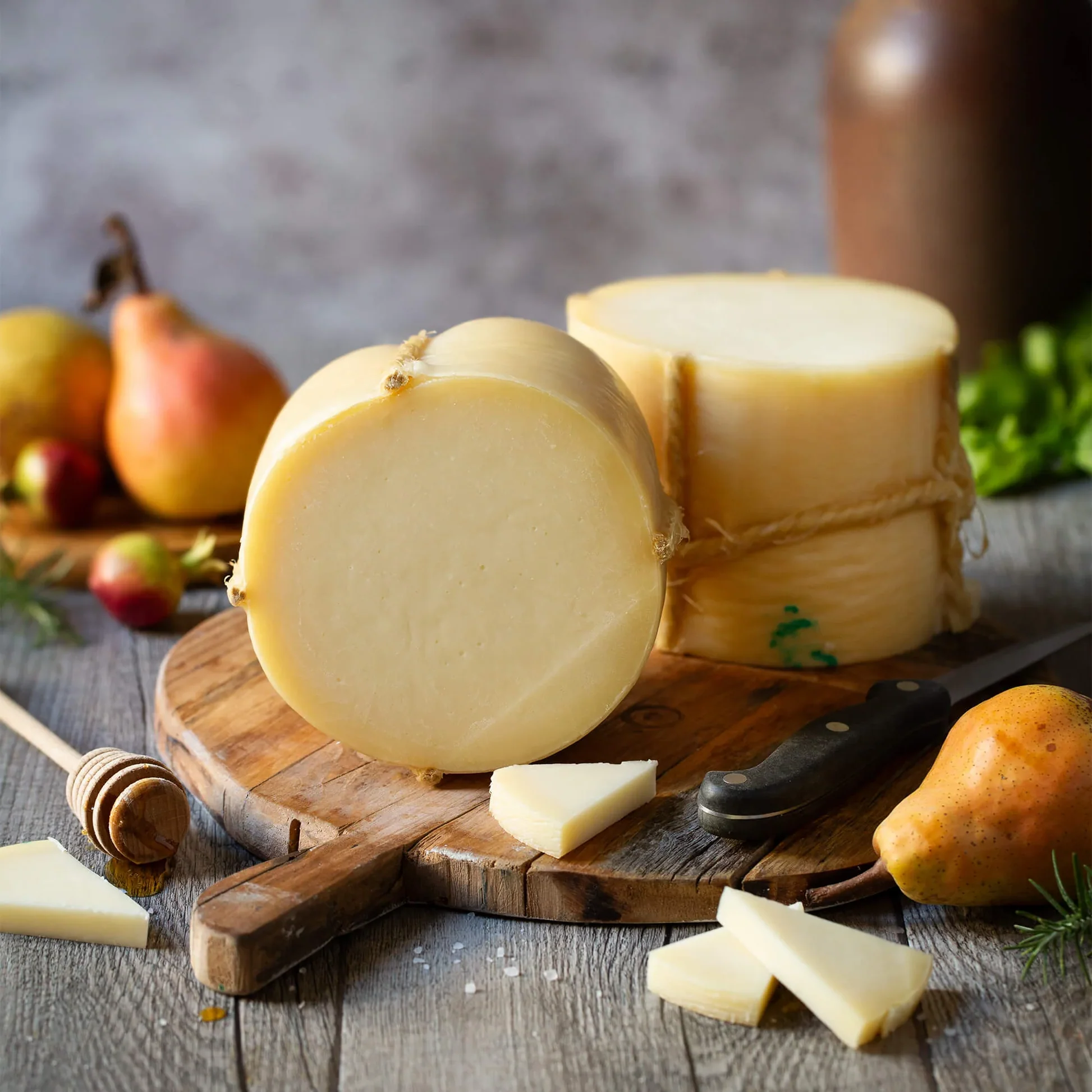
Smooth, firm, and fibrous when young due to its pasta filata structure, becoming slightly more crumbly and compact as it matures. The characteristic pear or gourd shape with a small tied head is immediately recognisable. No holes. Golden-yellow waxy rind. Excellent melting properties when young.
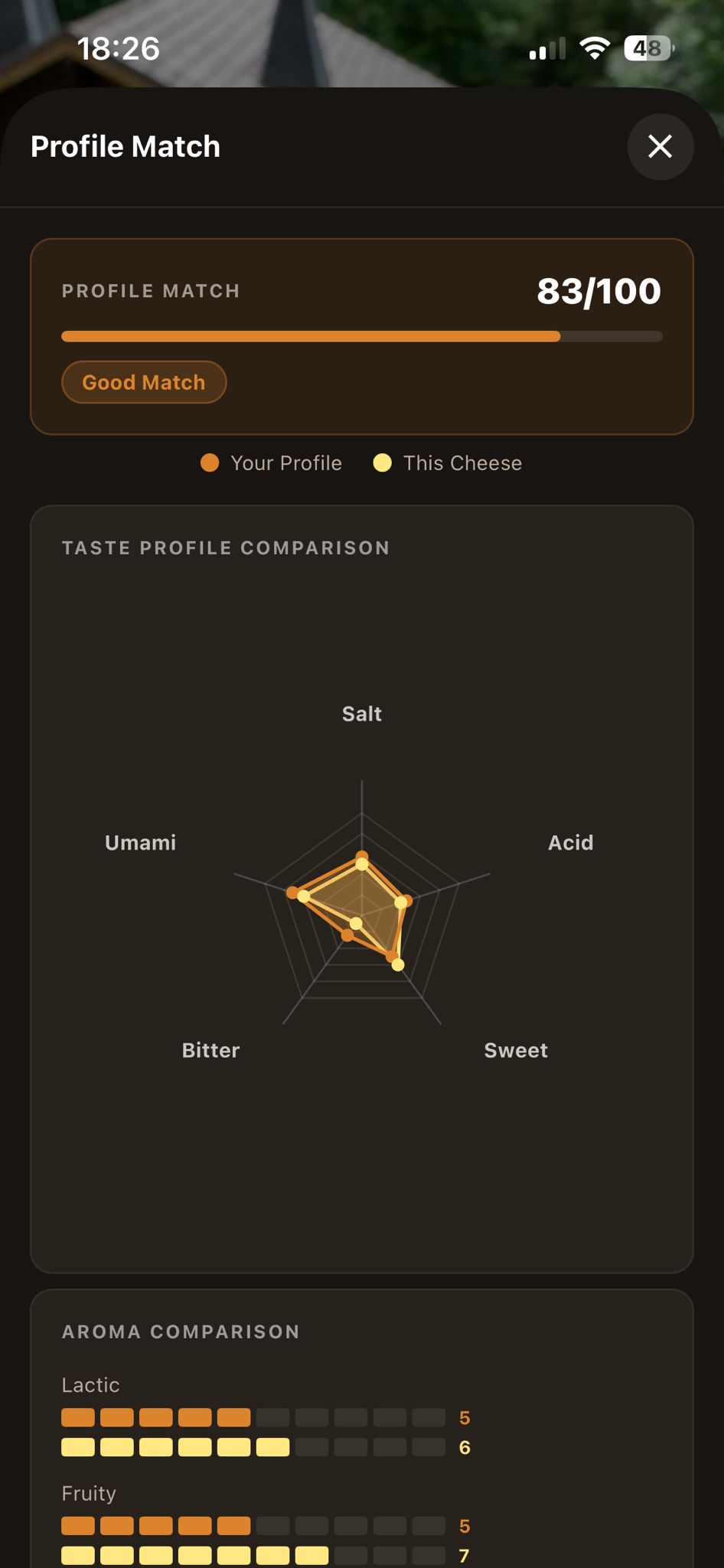
Lactic and earthy notes are equally dominant. Fruity and animal notes are equally noticeable, while subtle smoky nuances may appear from traditional ageing environments. Herbal notes are present. Complexity increases significantly with extended ageing.
Cheesepedia taste profile
The values below are the structured baseline in the Cheesepedia app. Your personal match is calculated separately from your own taste profile.
A general profile can describe Caciocavallo Silano, but it cannot know how closely the cheese fits your preferences. Cheesepedia Premium compares this profile with your personal taste profile and lets you evaluate cheeses side by side.
See your personal matchHow to enjoy it
- Grilled or pan-fried in thick slices.
- Melted into sandwiches, pasta bakes, or stuffed vegetables.
- Sliced into antipasti plates or rustic cheese boards.
What pairs with Caciocavallo Silano?
Classic serving companions from the Cheesepedia catalog.
- Butter Cracker
- Grissini
- Lavash Chips
- Salted Cracker
- Mini Sesame Bagel
Find the right wine in Cheesepedia
Cheesepedia uses an expert-designed algorithm that compares the cheese's taste, intensity, and production profile with the wine's body, acidity, tannin, and sweetness. Wine pairings are not generated by AI.
See wine pairings for Caciocavallo SilanoStory and origin
One of the oldest pasta filata cheeses in southern Italy, with documented production dating back more than 2,500 years. Its distinctive pear shape comes from being tied in pairs and hung over wooden beams to age. This technique gives the cheese its Italian name: cacio meaning cheese and cavallo meaning horse, referring to the practice of hanging the cheese over a horizontal bar like a saddle. It has held PDO status since 1996.
Storage and serving
- Store in the fridge, wrapped or vacuum-packed.
- Air travel: suitable, especially if vacuum-packed.
Profile sources and methodology
This page uses the same curated record as the Cheesepedia mobile app. Production-style and designation references provide context; they do not imply endorsement of Cheesepedia.