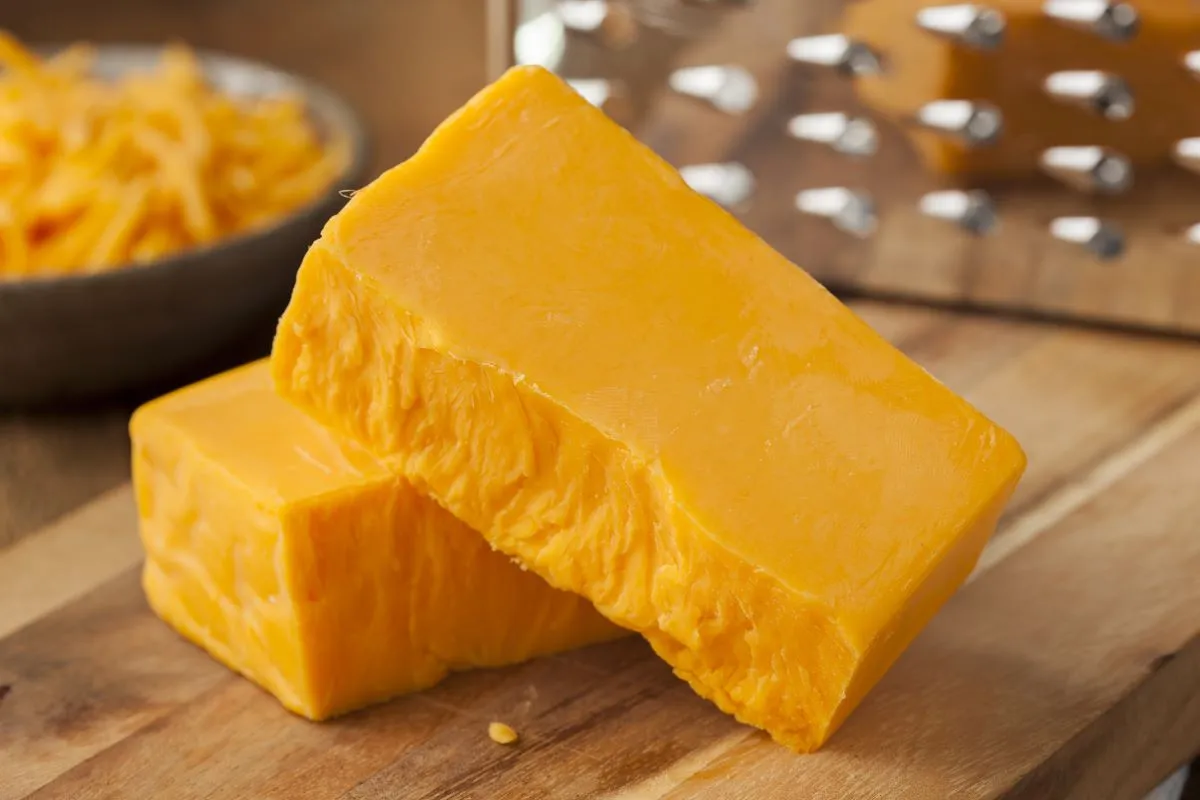
What is Cheddar?
England’s most famous cheese: a firm, pressed cow’s milk cheese originating in the village of Cheddar, Somerset, where it was traditionally aged in limestone caves. The name “Cheddar” is now used globally for a broad family of cheeses made in the same style, from mild young versions to long-aged, crumbly examples.
Taste, aroma, and texture
Texture
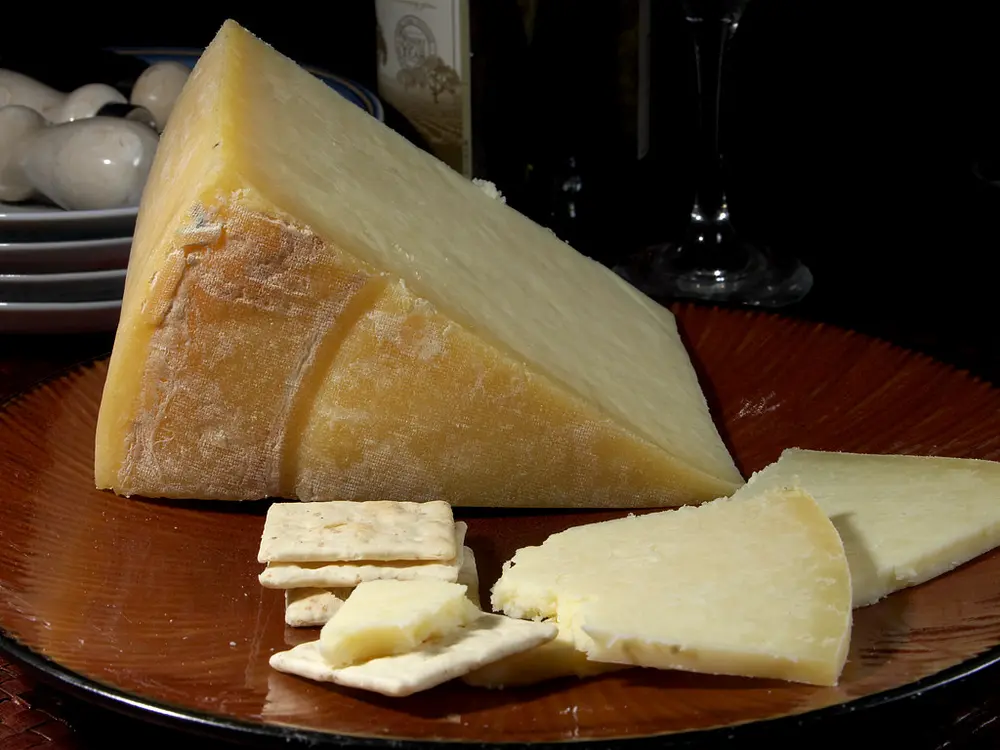
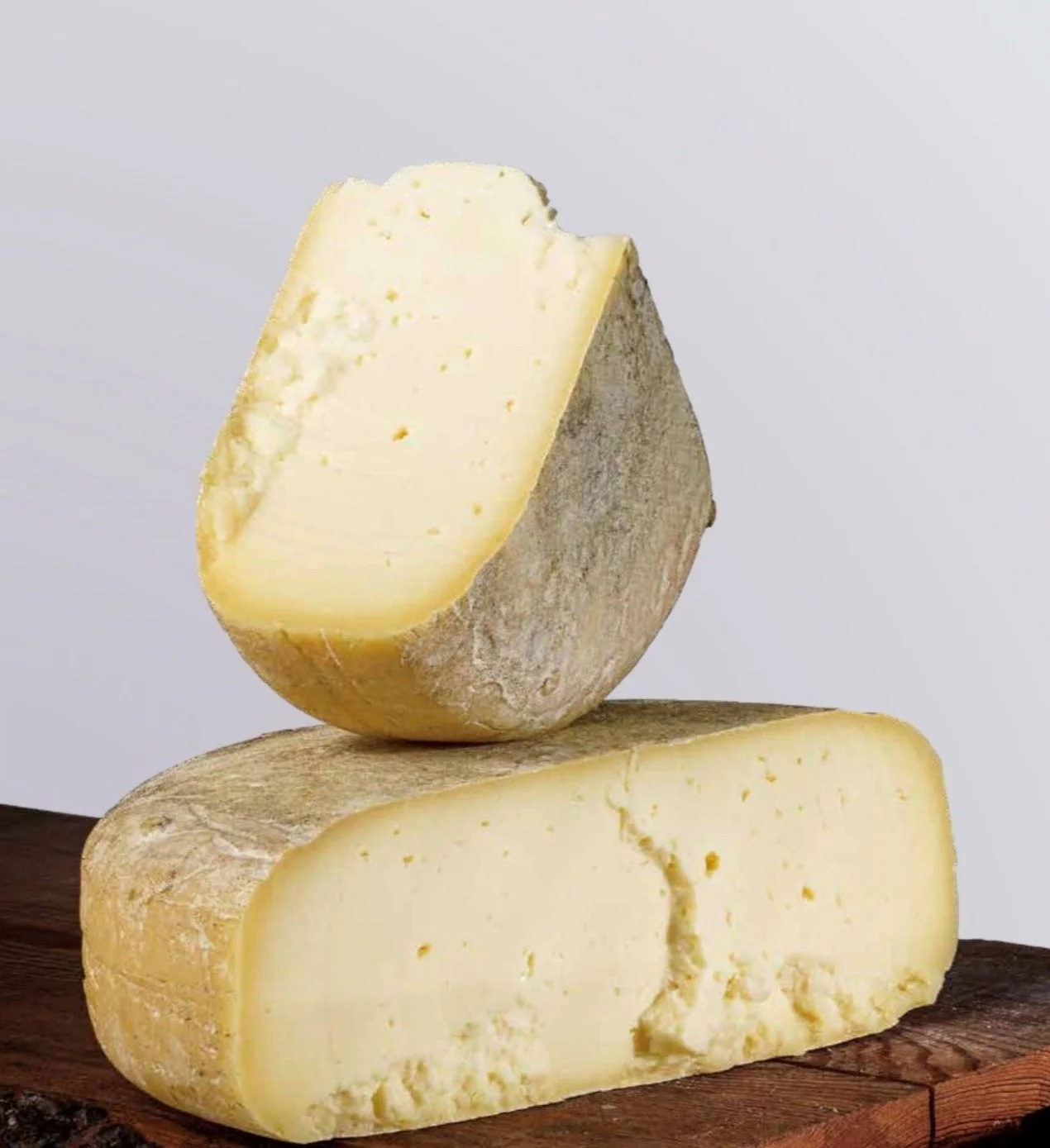
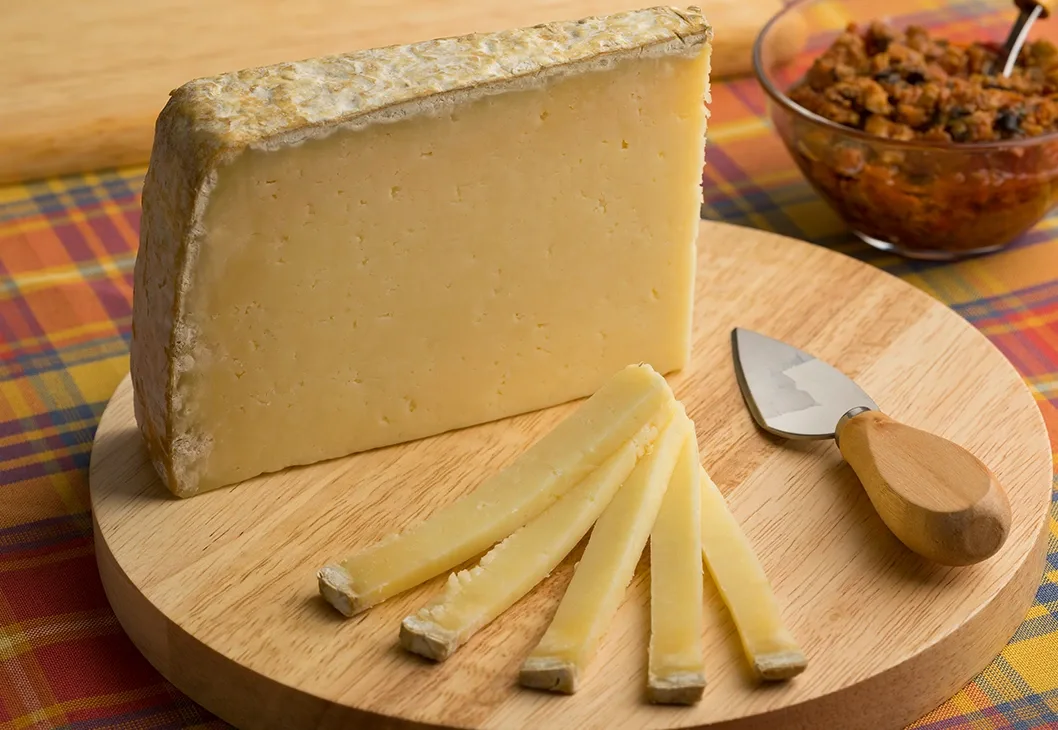
Firm and compact, with a slightly crumbly texture when matured. Close-textured, smooth, and supple when young. The cheddaring process creates a layered, knitted structure visible in cross-section. Natural rind or cloth-bound exterior. Colour ranges from pale to medium straw-yellow.
Aroma
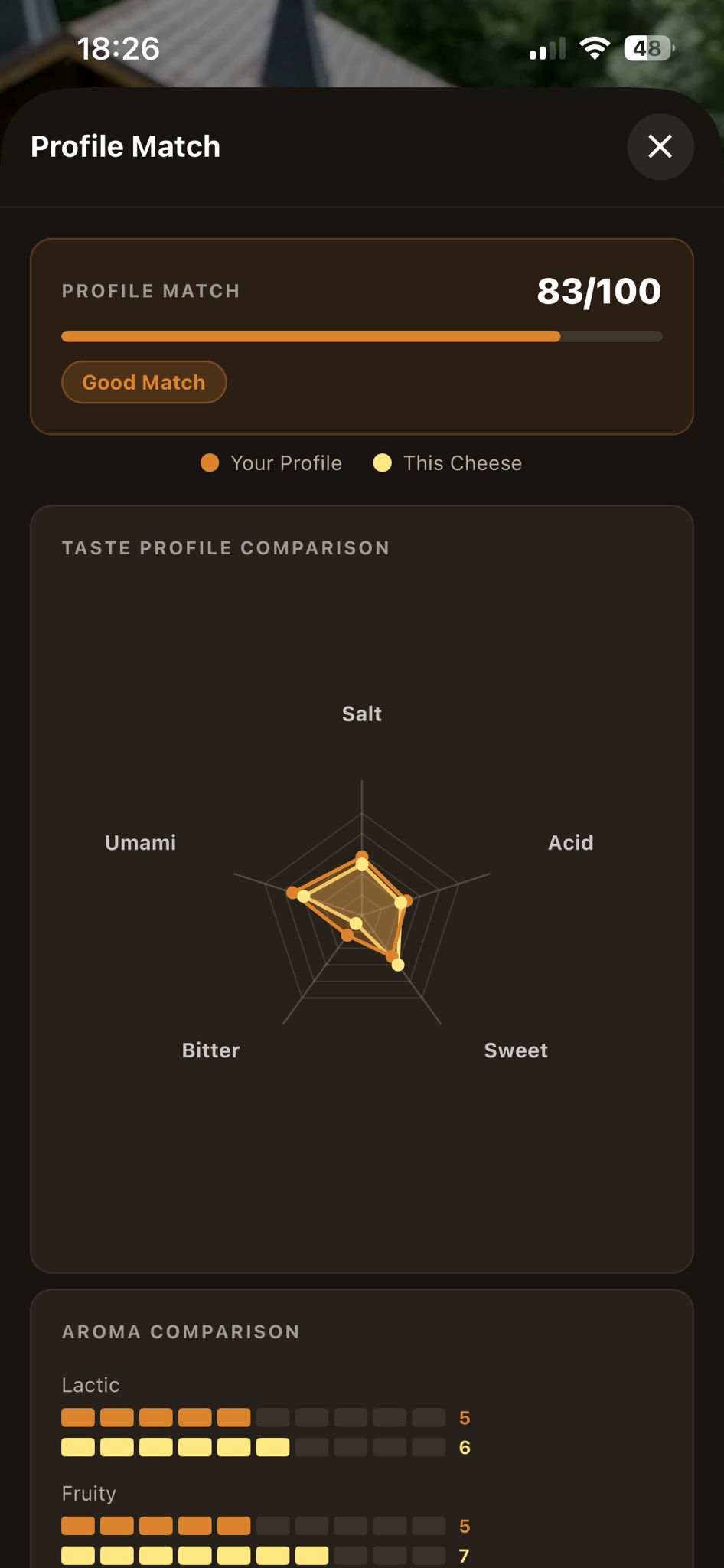
Lactic and earthy notes are equally dominant. Fruity notes are strongly present, alongside buttery and mildly grassy hints. Animal and herbal notes are faint. No smoky character. Intensity increases with ageing.
Cheesepedia taste profile
These values are the structured baseline in the Cheesepedia app. Your personal match is calculated separately from your own taste profile.
How to enjoy it
- 01
Melted into toasties, burgers, or baked sandwiches.
- 02
Grated over pasta, soups, or baked potatoes.
- 03
Used in savoury pies, casseroles, or omelettes.
What pairs with Cheddar?
Classic serving companions from the Cheesepedia catalog.
- Salted Cracker
- Mini Sesame Bagel
- Butter Cracker
- Olive Cracker
- Whole Wheat Cracker
Story and origin
Cheddar production is documented from at least the 12th century. King Henry II is reputed to have purchased 10,240 lb of Cheddar in 1170. The cheddaring technique — stacking and turning curd blocks to expel whey — was refined over centuries in Somerset. Industrial production spread globally in the 19th century, making Cheddar one of the world’s most widely produced cheese styles.
Storage and serving
- Store in the fridge, wrapped or vacuum-packed.
- Air travel: suitable, especially if vacuum-packed.
Profile sources and methodology
This page uses the same curated record as the Cheesepedia mobile app. Production-style and designation references provide context; they do not imply endorsement of Cheesepedia.