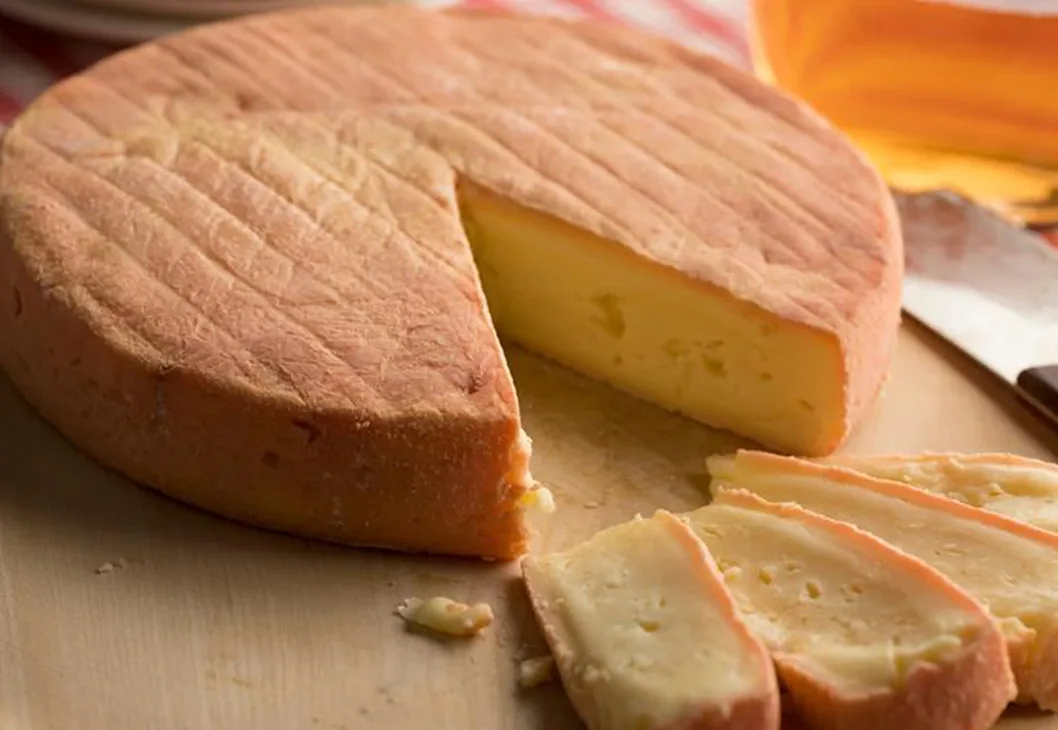
What is Munster?
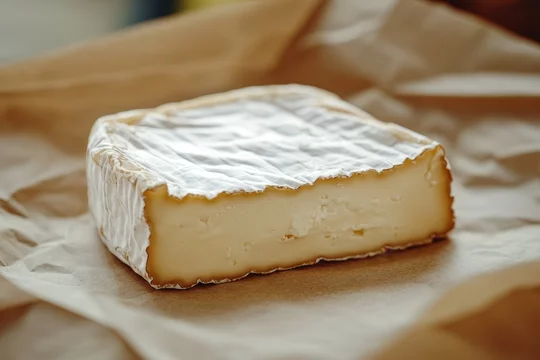
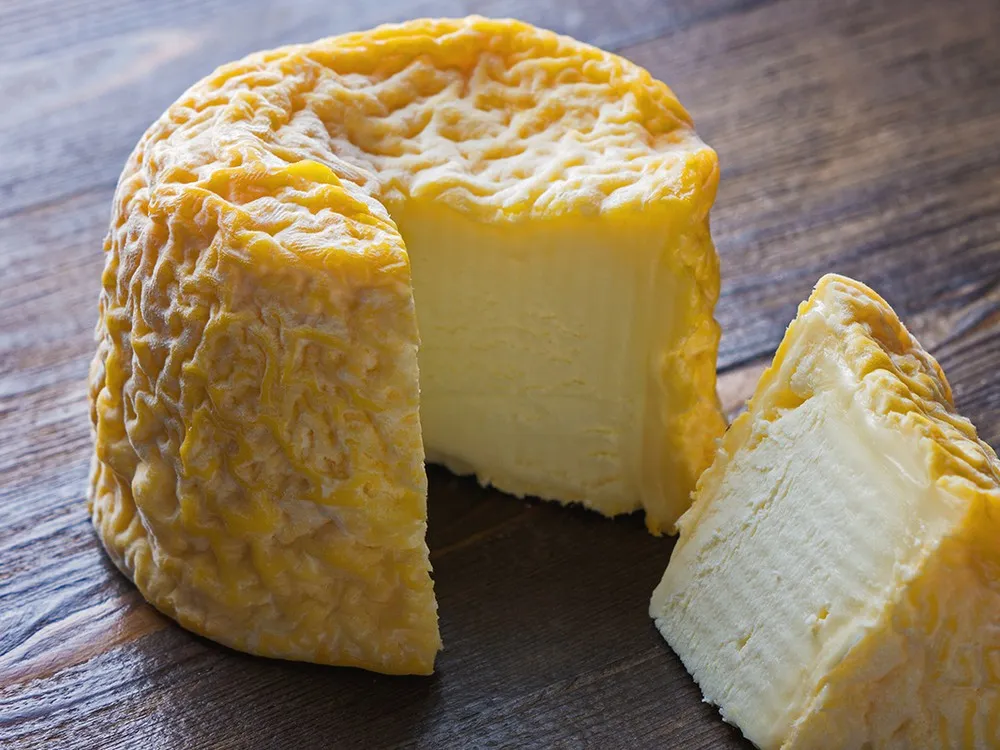
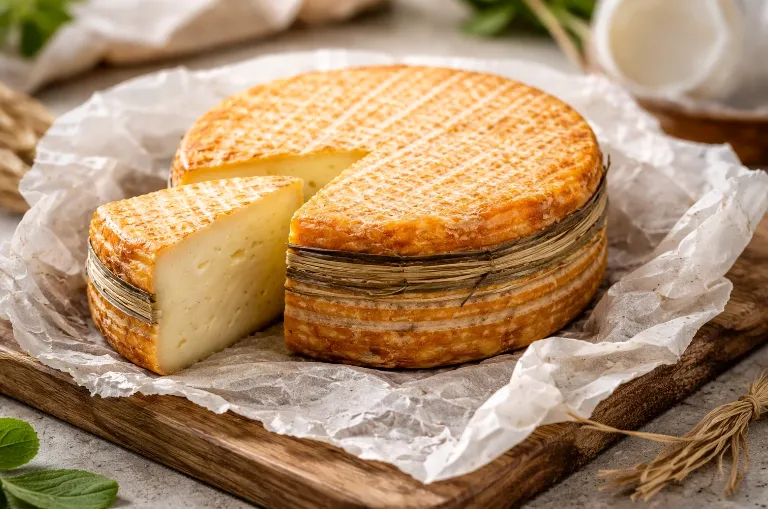
A soft washed-rind cow’s milk cheese from Alsace and parts of Lorraine, produced in two sizes: Munster (450–500 g) and Petit Munster (120–150 g). The orange rind is washed repeatedly with brine during ripening. The pale ivory interior is surprisingly mild compared with the powerful exterior. Traditionally served with cumin seeds on the side. One of France’s most pungent washed-rind cheeses.
Taste, aroma, and texture
Pasty and nearly fluid at room temperature beneath the sticky orange-red rind. The interior is smooth, non-porous, and homogeneous. The rind is moist and slightly wavy. Petit Munster is firmer relative to its size.
Animal notes are strongly dominant, creating one of the most intense barnyard aromas in French cheesemaking, driven by Brevibacterium linens. Earthy notes are strongly present, with notable lactic tones. Fruity and herbal notes remain faint. No smoky character.
Cheesepedia taste profile
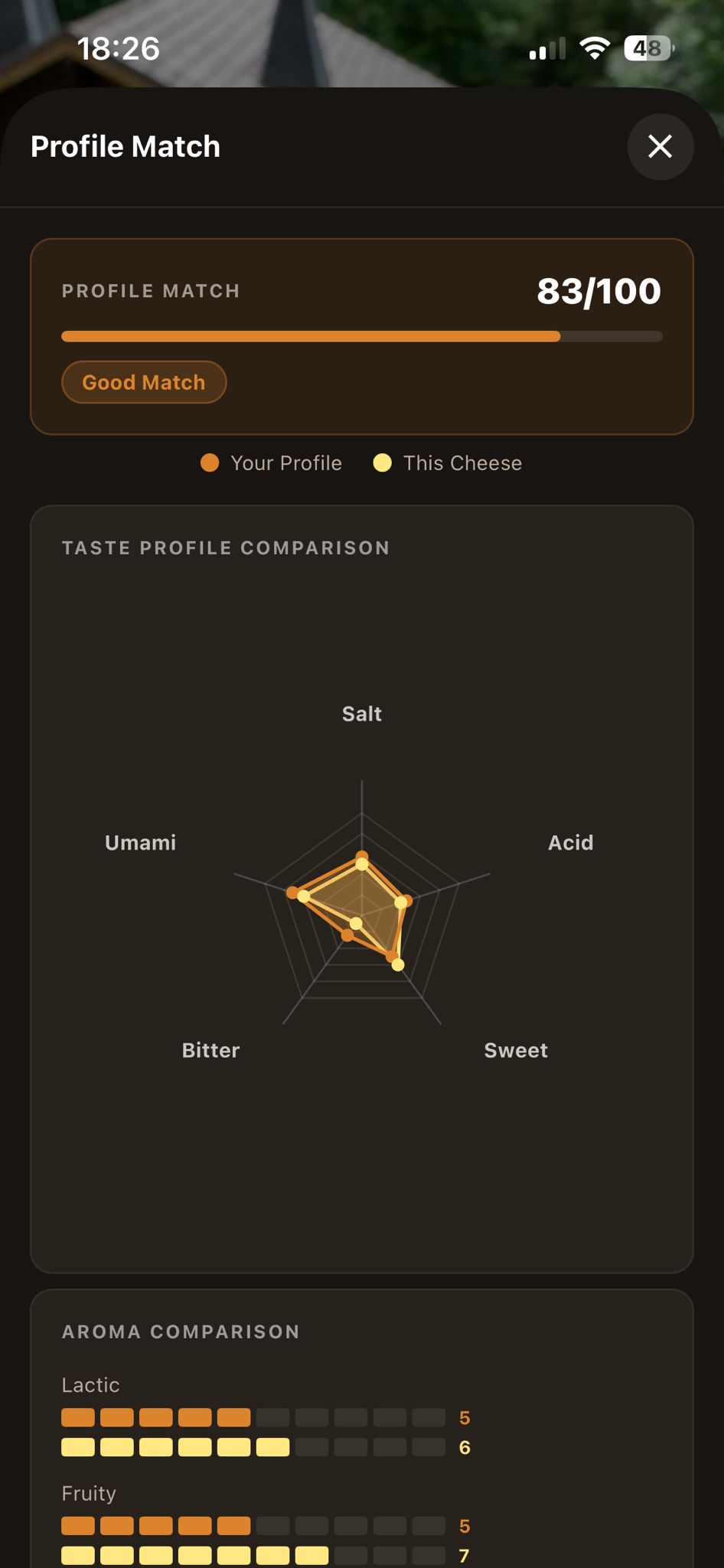
The values below are the structured baseline in the Cheesepedia app. Your personal match is calculated separately from your own taste profile.
A general profile can describe Munster, but it cannot know how closely the cheese fits your preferences. Cheesepedia Premium compares this profile with your personal taste profile and lets you evaluate cheeses side by side.
See your personal matchHow to enjoy it
- Served with boiled potatoes, onions, or rustic bread.
- Melted into tartes flambées or gratins.
- Used in strong cheese sauces for potatoes or pasta.
- Added to savoury pies or baked dishes.
What pairs with Munster?
Classic serving companions from the Cheesepedia catalog.
- Walnuts
- Sourdough Bread
- Grapes or Apples
- Dijon Mustard
- Dark Rye Bread
Find the right wine in Cheesepedia
Cheesepedia uses an expert-designed algorithm that compares the cheese's taste, intensity, and production profile with the wine's body, acidity, tannin, and sweetness. Wine pairings are not generated by AI.
See wine pairings for MunsterStory and origin
First made by Irish monks who settled in the Vosges mountains in the 7th century near the town of Munster, whose name derives from the Latin monasterium. The washed-rind technique was developed to extend shelf life. It is one of France’s oldest washed-rind cheeses. It has held AOC status since 1969 and PDO status since 1996.
Storage and serving
- Store in the fridge, wrapped and kept in a separate container.
- Air travel: suitable only if well sealed and kept cold.
Profile sources and methodology
This page uses the same curated record as the Cheesepedia mobile app. Production-style and designation references provide context; they do not imply endorsement of Cheesepedia.