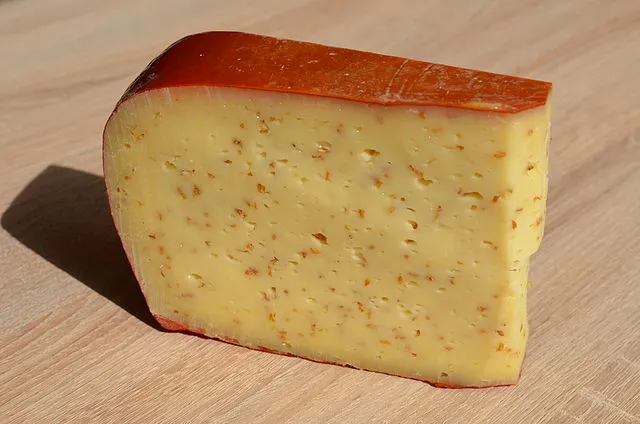
What is Leyden (Leidse kaas)?
One of the Netherlands’ most historic and distinctive spiced hard cheeses, from the Leiden area. Traditionally made from partially skimmed cow’s milk with a generous addition of cumin seeds, and sometimes caraway. The characteristic double-headed eagle stamped on the rind is the coat of arms of the city of Leiden. Low in fat. It has held PGI status since 1996.
Taste, aroma, and texture
Firm, dense, and slightly dry due to its skimmed-milk base; less buttery than Gouda. Cumin seeds are embedded throughout the pale ivory paste and visible in cross-section. The Leiden double-headed eagle is stamped on the rind. Natural rind is golden-brown.
Herbal notes are strongly dominant, with toasted cumin seeds shaping the aromatic profile. Lactic and fruity notes are present beneath the spice. Animal and earthy notes remain faint. No smoky character. The cumin aroma is warm, pungent, and deeply savoury.
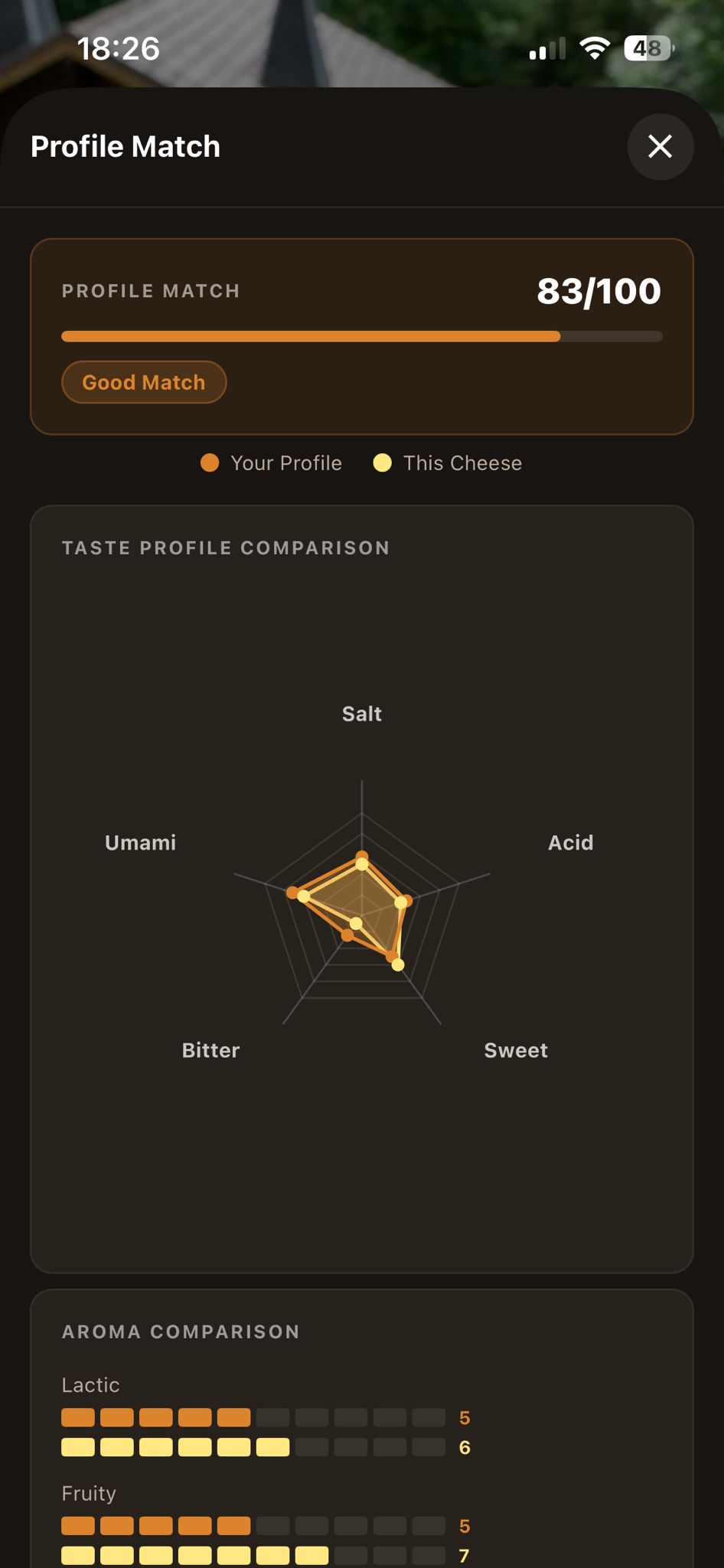
Cheesepedia taste profile
The values below are the structured baseline in the Cheesepedia app. Your personal match is calculated separately from your own taste profile.
A general profile can describe Leyden (Leidse kaas), but it cannot know how closely the cheese fits your preferences. Cheesepedia Premium compares this profile with your personal taste profile and lets you evaluate cheeses side by side.
See your personal matchHow to enjoy it
- Sliced into rye bread sandwiches or savoury snack plates.
- Grated over soups, potatoes, or roasted vegetables.
- Served in thin pieces with pickles, apples, or cold appetisers.
What pairs with Leyden (Leidse kaas)?
Classic serving companions from the Cheesepedia catalog.
- Salted Cracker
- Grissini
- Butter Cracker
- Whole Wheat Cracker
- Sesame Cracker
Find the right wine in Cheesepedia
Cheesepedia uses an expert-designed algorithm that compares the cheese's taste, intensity, and production profile with the wine's body, acidity, tannin, and sweetness. Wine pairings are not generated by AI.
See wine pairings for Leyden (Leidse kaas)Story and origin
Leyden’s origins date back to the 17th-century Dutch Golden Age, when Leiden was a centre of the spice trade through the Dutch East India Company (VOC). The heavy use of cumin reflected both the availability of spices and the desire for a distinctive, long-lasting cheese. The Leiden coat-of-arms stamp is a centuries-old tradition. It has held PGI status since 1996.
Storage and serving
- Store in the fridge, wrapped or vacuum-packed.
- Air travel: suitable, especially if vacuum-packed.
Profile sources and methodology
This page uses the same curated record as the Cheesepedia mobile app. Production-style and designation references provide context; they do not imply endorsement of Cheesepedia.