What is Gorcola?
A fresh rennet-free cheese from the Şavşat district of Artvin, rooted in Georgian dairy tradition. Milk is left to sour naturally for two to seven days, then heated to separate the curd. Made from cow and/or sheep milk. Consumed fresh within days. No geographical indication status.
Taste, aroma, and texture
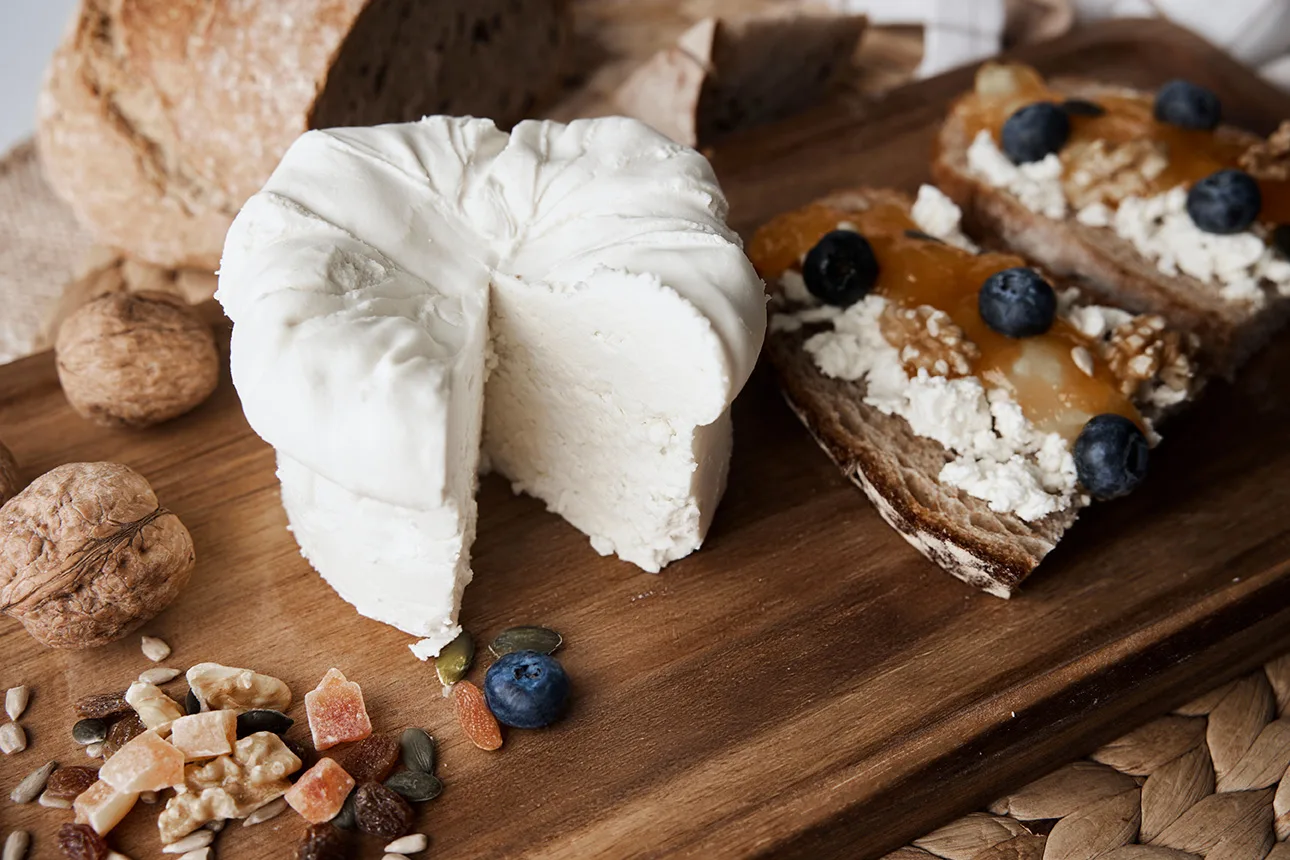
Soft and lightly grainy when fresh. Moist and crumbly, with an open, irregular structure that becomes creamy and stretchy when heated. No rind. Pure white.
Lactic and herbal notes are equally dominant; mild milky character is joined by clean fermented-yogurt freshness. Animal and earthy notes are faint. Fruity and smoky notes are barely detectable.
Cheesepedia taste profile
The values below are the structured baseline in the Cheesepedia app. Your personal match is calculated separately from your own taste profile.
A general profile can describe Gorcola, but it cannot know how closely the cheese fits your preferences. Cheesepedia Premium compares this profile with your personal taste profile and lets you evaluate cheeses side by side.
See your personal matchHow to enjoy it
- Served fresh on breakfast or village-style cheese plates.
- Used in simple pastries, flatbreads, or savoury fillings.
- Added to salads, herbs, or cold appetiser plates.
What pairs with Gorcola?
Classic serving companions from the Cheesepedia catalog.
- Cornbread
- Rustic Bread
- Butter Cracker
- Whole Wheat Cracker
- Walnut Cracker
Find the right wine in Cheesepedia
Cheesepedia uses an expert-designed algorithm that compares the cheese's taste, intensity, and production profile with the wine's body, acidity, tannin, and sweetness. Wine pairings are not generated by AI.
See wine pairings for GorcolaStory and origin
Originating in Georgia’s Javakheti and Adjara regions, gorcola crossed into Turkey through Artvin’s Şavşat district and spread to parts of Ardahan and Kars. It has been made by Laz and Georgian-origin communities in the region for generations using natural souring without rennet, preserving a pre-rennet cheesemaking tradition.
Storage and serving
- Store in the fridge, sealed or in an airtight container.
- Air travel: not ideal; suitable only if sealed and kept cool.
Profile sources and methodology
This page uses the same curated record as the Cheesepedia mobile app. Production-style and designation references provide context; they do not imply endorsement of Cheesepedia.