What is Fontina?
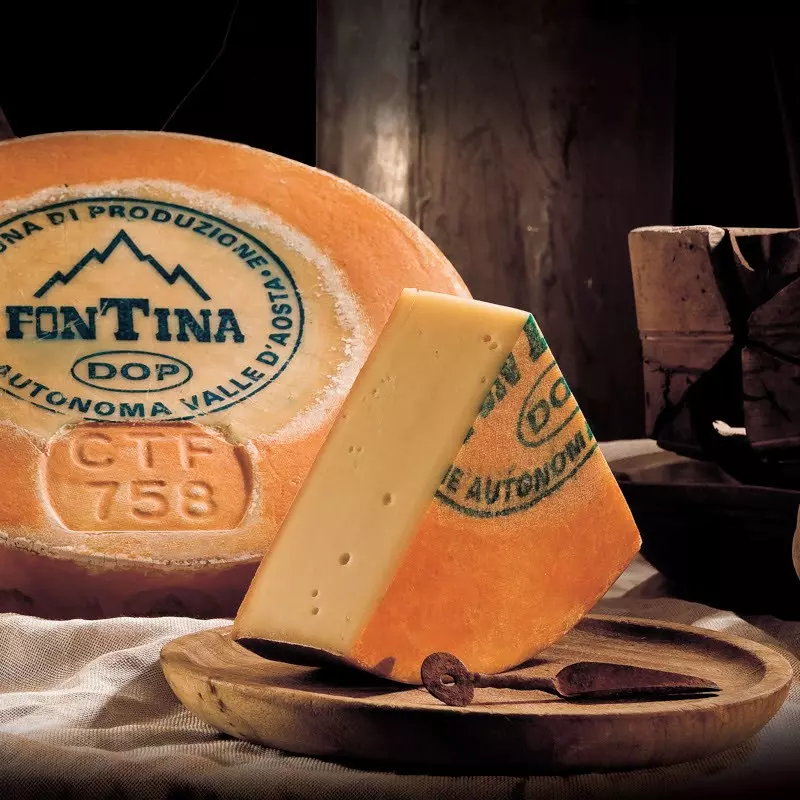
A semi-soft washed-rind cheese from the Aosta Valley, made exclusively from the raw milk of Valdostana cows grazing on alpine pastures above 1,000 metres. Produced in wheels of 7–12 kg and aged for a minimum of 80 days in mountain caves or cellars. One of Italy’s oldest and most celebrated cheeses, renowned for its exceptional melting properties and central role in fonduta valdostana.
Taste, aroma, and texture
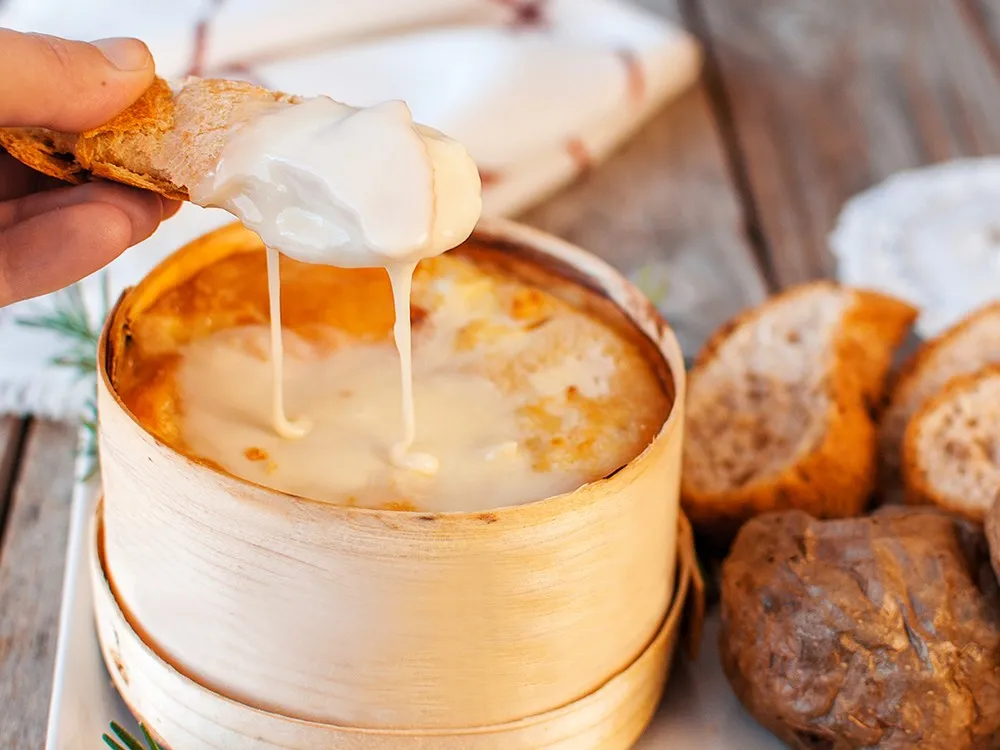
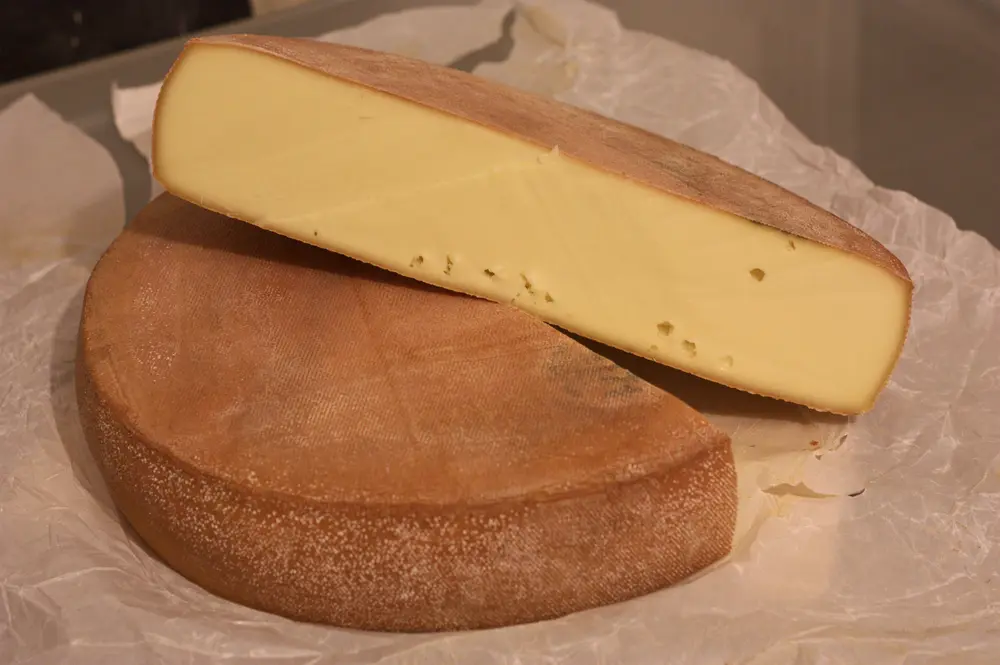
Elastic and semi-hard at room temperature, becoming silky, fluid, and stretchy when heated. The straw-yellow interior has sparse small pores. The thin washed rind is dark golden-brown and slightly moist. Exceptional melting properties make it ideal for fonduta, risotto, and polenta.
Lactic, fruity, earthy, and herbal notes are all strongly present in balanced measure, forming a complex and rounded alpine bouquet. Animal notes are noticeable. No smoky character. Honey and roasted hazelnut nuances appear within the fruity dimension.
Cheesepedia taste profile
The values below are the structured baseline in the Cheesepedia app. Your personal match is calculated separately from your own taste profile.
A general profile can describe Fontina, but it cannot know how closely the cheese fits your preferences. Cheesepedia Premium compares this profile with your personal taste profile and lets you evaluate cheeses side by side.
See your personal matchHow to enjoy it
- Melted into fonduta, gratins, or baked pasta.
- Sliced into sandwiches, panini, or toasties.
- Used in omelettes, risotto, or stuffed vegetables.
What pairs with Fontina?
Classic serving companions from the Cheesepedia catalog.
- Mini Sesame Bagel
- Salted Cracker
- Butter Cracker
- Breadstick
- Lavash Chips
Find the right wine in Cheesepedia
Cheesepedia uses an expert-designed algorithm that compares the cheese's taste, intensity, and production profile with the wine's body, acidity, tannin, and sweetness. Wine pairings are not generated by AI.
See wine pairings for FontinaStory and origin
Produced in the Aosta Valley since at least the 12th century. It is depicted in a 15th-century fresco at Issogne Castle, one of the earliest artistic representations of a named Italian cheese. The name may derive from the local term fontin, meaning “to melt.” It has held PDO status since 1996.
Storage and serving
- Store in the fridge, wrapped in cheese paper or parchment.
- Air travel: suitable for short trips if sealed and kept cool.
Profile sources and methodology
This page uses the same curated record as the Cheesepedia mobile app. Production-style and designation references provide context; they do not imply endorsement of Cheesepedia.