What photo recognition can really do
Photo-based cheese recognition begins with evidence visible in an image. That evidence may include the product name, label design, packaging, color, shape, rind, veining, holes, wrapping, and surface texture. An AI vision system compares these clues with known cheese patterns and proposes the most plausible identity.
The word proposes matters. A photograph is not a laboratory test, and it cannot prove that an unlabelled wedge was made in a protected region. Recognition is best understood as a fast first step: it narrows the search, retrieves a structured cheese profile, and helps you decide what to inspect next.
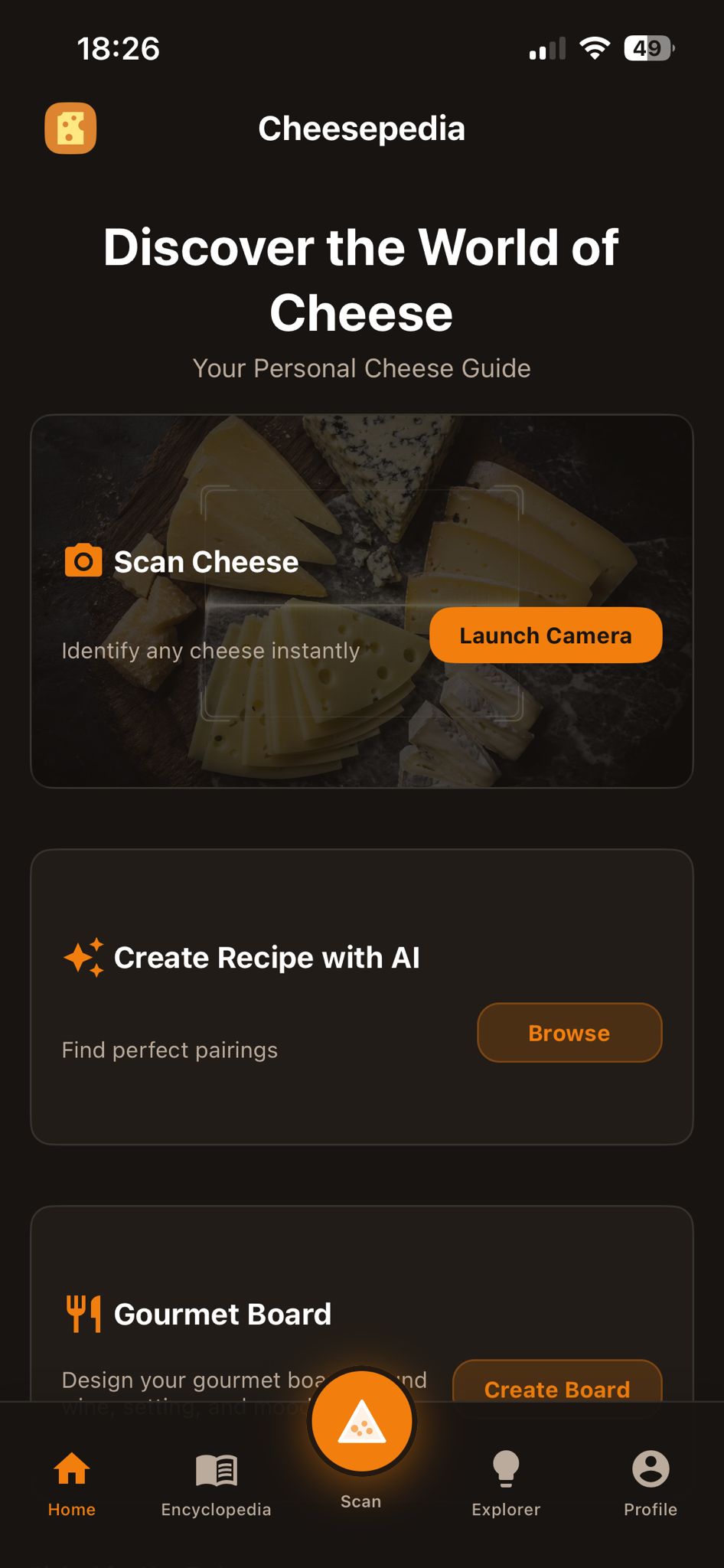
From camera to cheese profile
A useful scan has four parts. First, the camera needs a sharp, well-lit image. Second, the system interprets label and visual cues. Third, those cues are compared with candidate cheeses. Finally, the selected identity is connected to Cheesepedia's structured record rather than leaving you with a name alone.
- Capture: one cheese, in focus, with minimal glare or shadow
- Visual reading: packaging, text, rind, paste, form, and distinctive marks
- Candidate match: comparison with cheeses that share visible characteristics
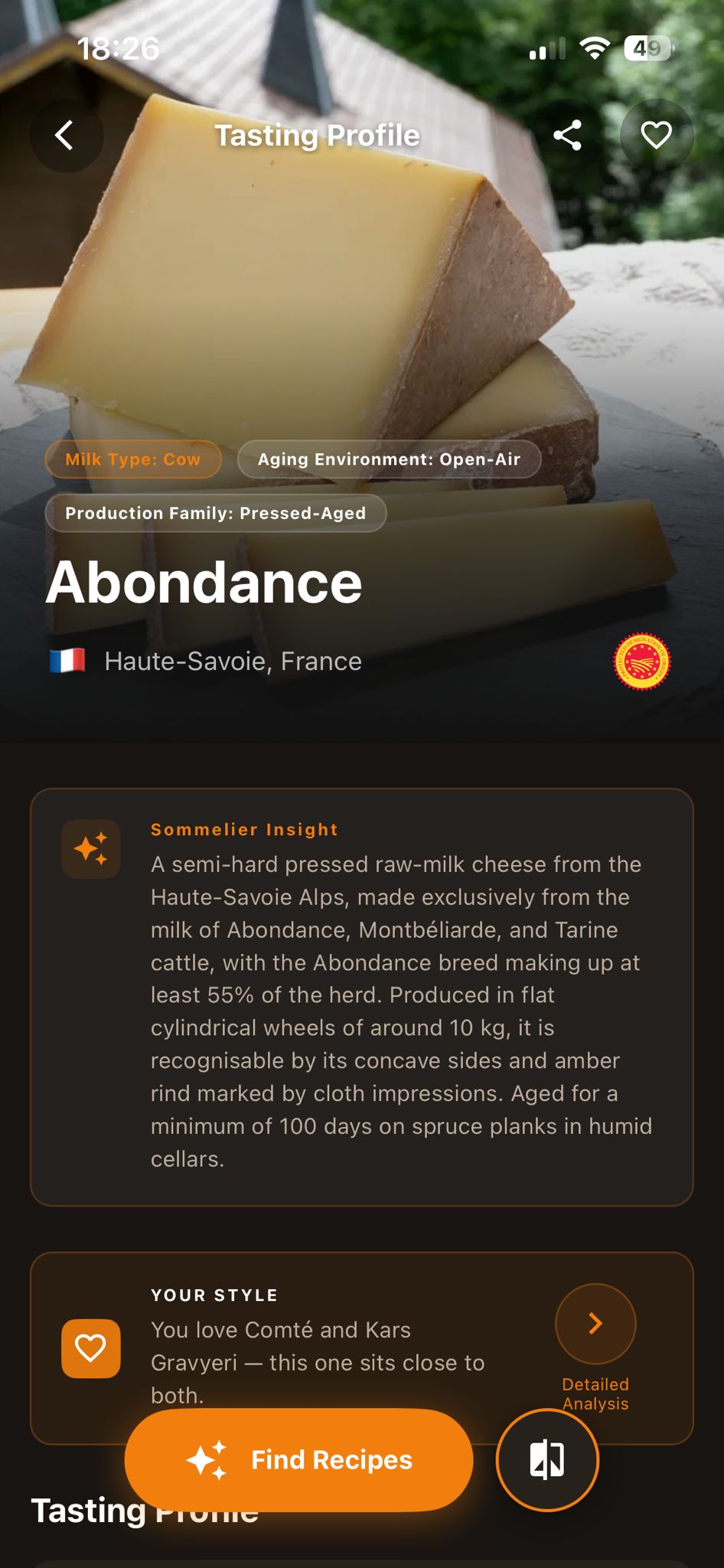
- Profile retrieval: origin, milk, texture, taste, aroma, history, and culinary context
Why packaged cheese is easier to identify
Two unlabelled wedges can look almost identical even when they come from different countries or production traditions. Packaging adds evidence that the cheese itself may not show: a printed name, producer, region, protected-designation mark, age statement, and recognizable label layout. This is why Cheesepedia's scanner is optimized first for packaged foods.
Clear visual differences can still be helpful without packaging. Blue veining, an ash-coated rind, leaf wrapping, a strongly washed rind, or a distinctive wheel shape may narrow the field. The less distinctive the cheese, however, the more cautious the result should be.
A packaged Abondance or Comté showing its name, region, and designation marks provides several clues that reinforce one another.
An unlabelled wedge of aged Gouda, Cheddar, or a firm Alpine-style cheese may share amber color, crystals, and a dense texture.
A blue-veined cheese or a leaf-wrapped cheese may be easier to place within a family, though the exact identity can still remain uncertain.
Fresh white cheeses in a plain container often reveal too little visually to separate one regional style from another with confidence.
Why classification and official records matter
Image recognition only becomes useful when the result connects to well-organized cheese knowledge. Cheesepedia groups cheeses by production method, texture, rind treatment, maturation, and sensory similarities so styles can be compared consistently.
Official geographical-indication records serve a different purpose. The European Commission explains that PDO and PGI systems protect names linked to a place, production specification, or reputation. Turkish geographical indications and Swiss AOP records provide similar identity and origin context for cheeses in their jurisdictions. These sources support the database entry; they do not make a camera image proof of authenticity.
What happens after a likely match?
Cheesepedia is designed to move beyond “what cheese is this?” A matched profile can help you understand salt, acidity, sweetness, bitterness, umami, aroma families, texture, intensity, origin, and production style. It can also lead to recipes, cheese-and-wine suggestions, or a comparison with your personal taste profile.
This is where the product becomes personal. Saving favorites and exploring different styles gives Cheesepedia more context about your palate, so a scan can become the beginning of a new recommendation rather than the end of a lookup.
How to get a better scan
- Photograph the front label and enough of the cheese to show its color and form.
- Use even light; avoid reflections on plastic film and very dark shadows.
- Keep one product in the frame and hold the camera steady.
- If the first result feels uncertain, scan a second angle or the back label.
- Compare the result with the package name, milk type, region, and allergen information.
Recognition can be wrong, incomplete, or affected by packaging changes. Treat the result as informed guidance, especially when a health, allergy, dietary, or authenticity decision depends on the answer.
Sources and further reading
These sources inform the classification and protected-origin context described in this guide. Cheesepedia summarizes the ideas in its own words and is not presented as approved by these organizations.