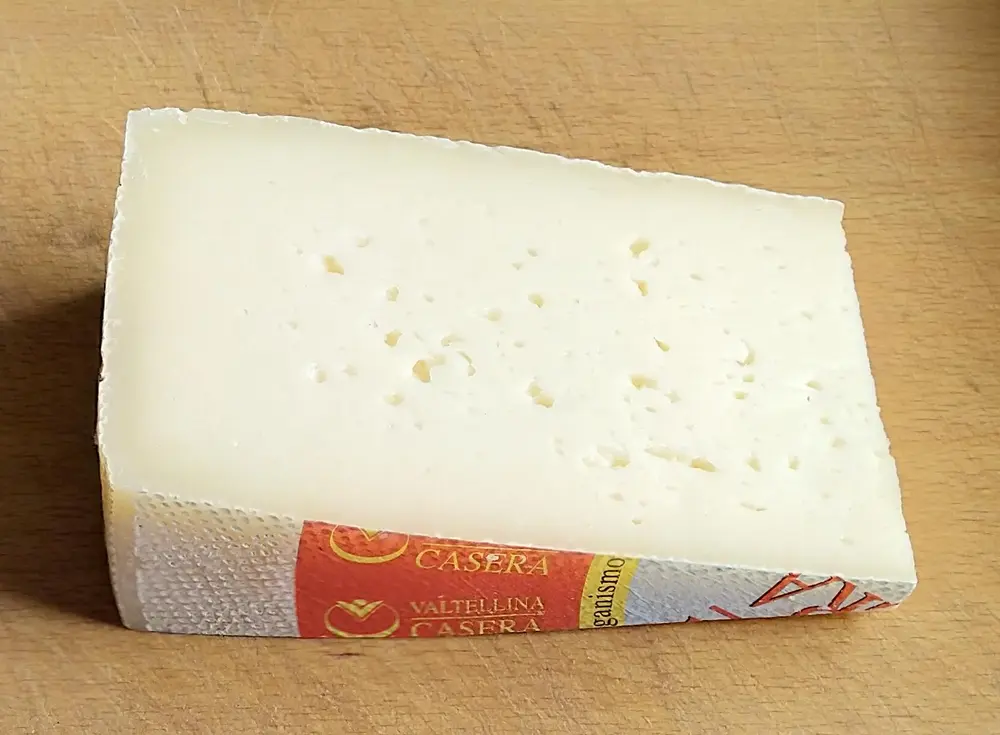
What is Valtellina Casera?
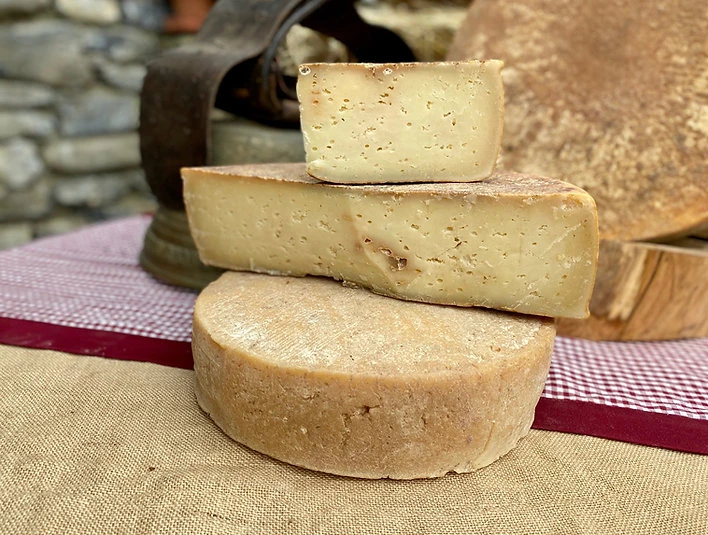
A pressed semi-hard cheese from the Valtellina Valley of Lombardy, made from partially skimmed raw cow’s milk from Brown Alpine cows. Produced in wheels of 7–12 kg and aged for a minimum of 70 days. A key ingredient in traditional Valtellina dishes such as pizzoccheri, a buckwheat pasta bake, and sciatt, buckwheat fritters.
Taste, aroma, and texture
Semi-hard, firm, and elastic, with small regular eyes. The straw-coloured paste is smooth and offers a satisfying chew. Natural rind is golden-brown and slightly grainy. Melts well in cooking and is essential for pizzoccheri. Wheels weigh 7–12 kg.
Lactic and herbal notes are equally dominant. Fruity notes are strongly present, with noticeable earthy undertones. Animal notes remain faint. No smoky character. A fragrant, clean alpine bouquet that intensifies with ageing.
Cheesepedia taste profile
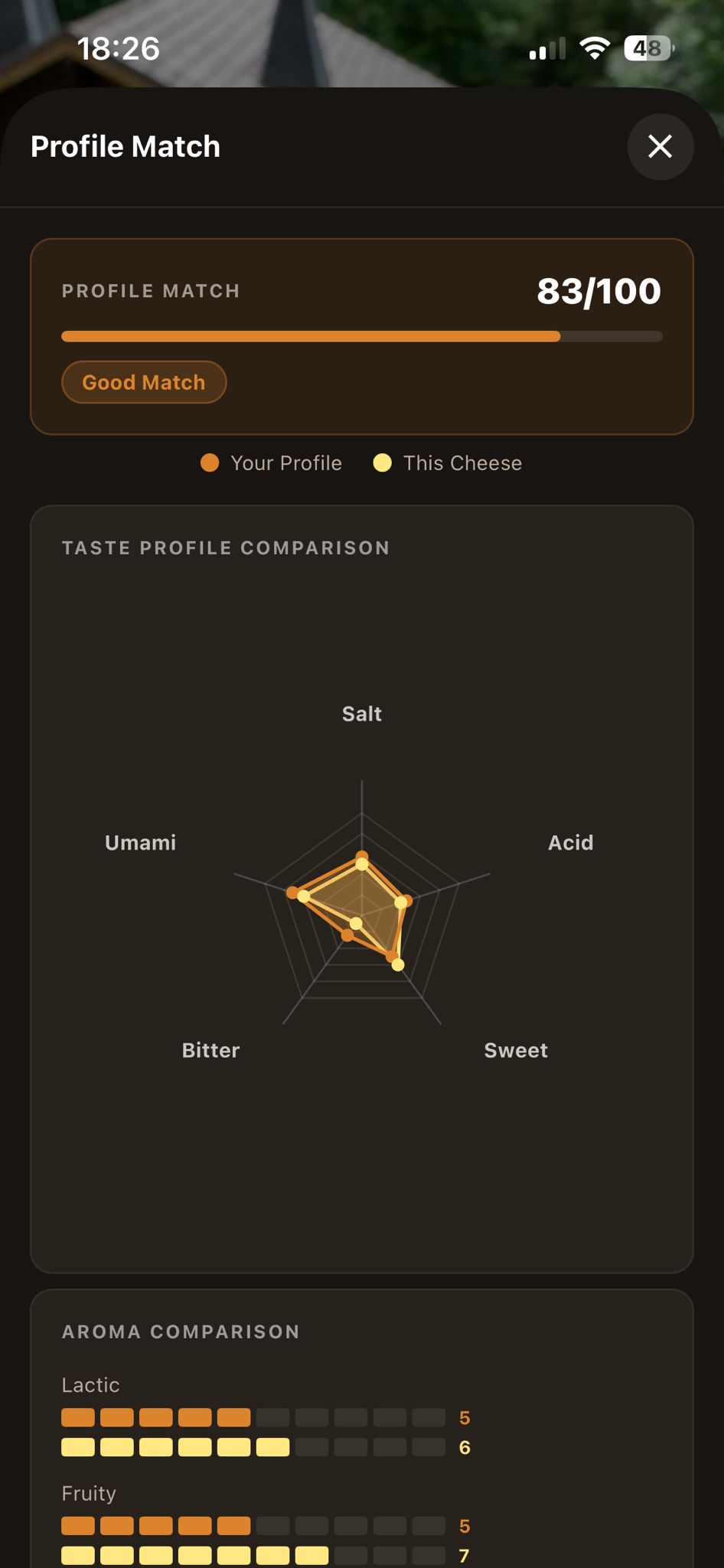
The values below are the structured baseline in the Cheesepedia app. Your personal match is calculated separately from your own taste profile.
A general profile can describe Valtellina Casera, but it cannot know how closely the cheese fits your preferences. Cheesepedia Premium compares this profile with your personal taste profile and lets you evaluate cheeses side by side.
See your personal matchHow to enjoy it
- Melted into pizzoccheri, polenta, or potato dishes.
- Sliced into mountain-style cheese boards.
- Used in gratins, omelettes, or baked vegetables.
What pairs with Valtellina Casera?
Classic serving companions from the Cheesepedia catalog.
- Quince Paste (Membrillo)
- Honey & Walnuts
- Fresh Sourdough Bread
- Serrano Ham
- Breadstick
Find the right wine in Cheesepedia
Cheesepedia uses an expert-designed algorithm that compares the cheese's taste, intensity, and production profile with the wine's body, acidity, tannin, and sweetness. Wine pairings are not generated by AI.
See wine pairings for Valtellina CaseraStory and origin
Produced in the Valtellina Valley since at least the 16th century, where it was historically used as currency for rent and tax payments. An essential component of Valtellina’s food culture, particularly in traditional alpine dishes. It has held PDO status since 1996.
Storage and serving
- Store in the fridge, in brine or sealed packaging.
- Air travel: suitable only in leak-proof packaging.
Profile sources and methodology
This page uses the same curated record as the Cheesepedia mobile app. Production-style and designation references provide context; they do not imply endorsement of Cheesepedia.