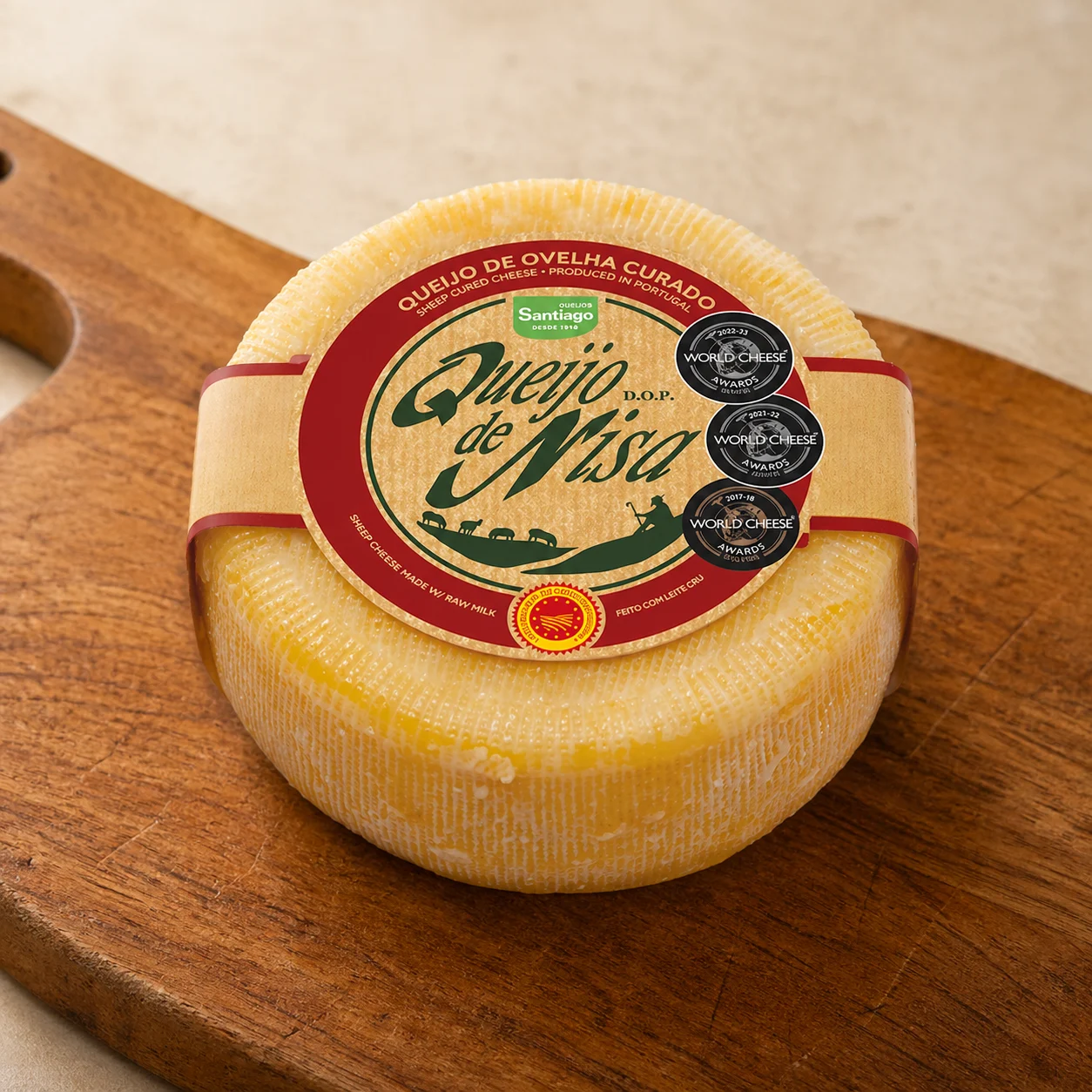
What is Queijo de Nisa?
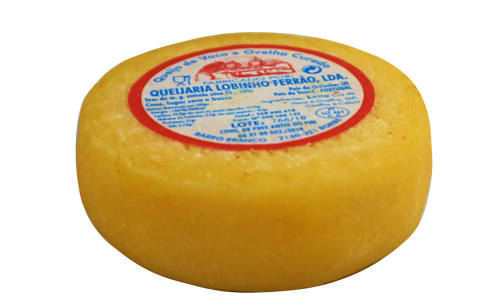
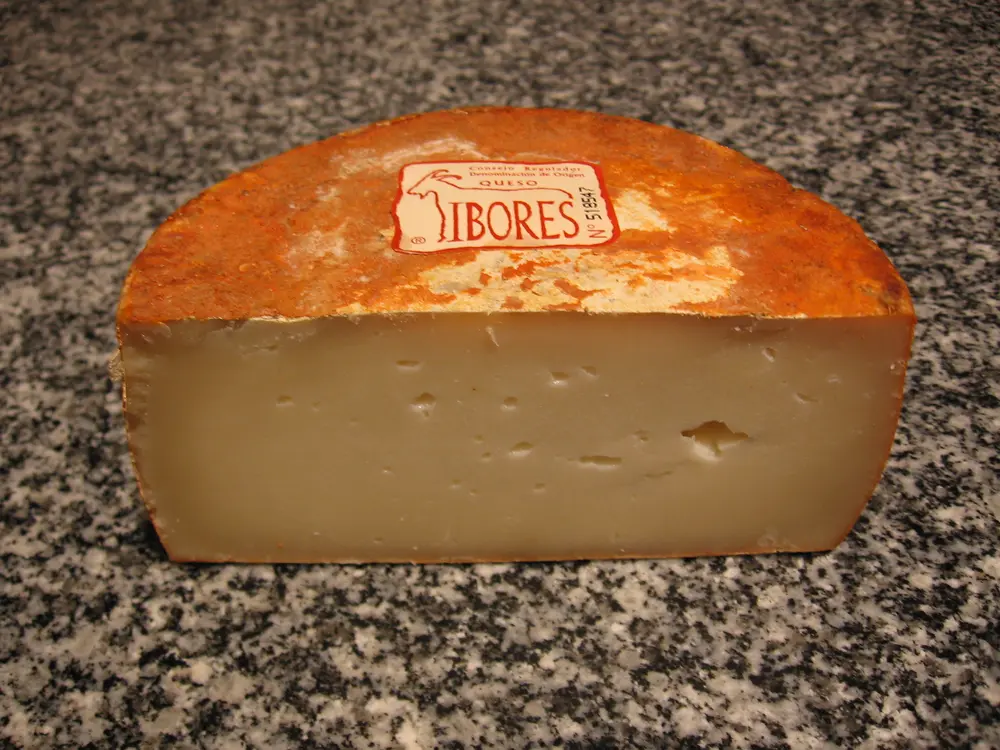
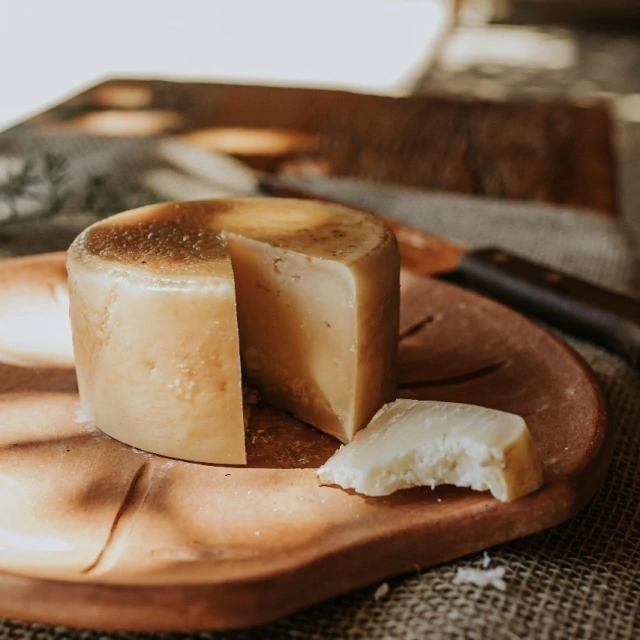
An artisanal sheep’s milk cheese from the Alto Alentejo district of Nisa, made from the raw milk of Merina Branca sheep and coagulated with wild thistle. Semi-hard and produced in wheels of 300 g–1.3 kg. Aged for a minimum of 45 days. The paste is marked by numerous small, irregular holes.
Taste, aroma, and texture
Semi-hard and compact, with numerous small, irregular holes throughout the paste. The firm structure yields gently on the palate. Thin yellow-white rind. The interior ranges from ivory to pale yellow. Wheels weigh 300 g–1.3 kg.
Earthy and herbal notes are equally dominant, shaped by wild thistle rennet and the diverse flora of Northern Alentejo. Animal notes are strongly present. Lactic notes are noticeable, while fruity notes remain faint. No smoky character.
Cheesepedia taste profile
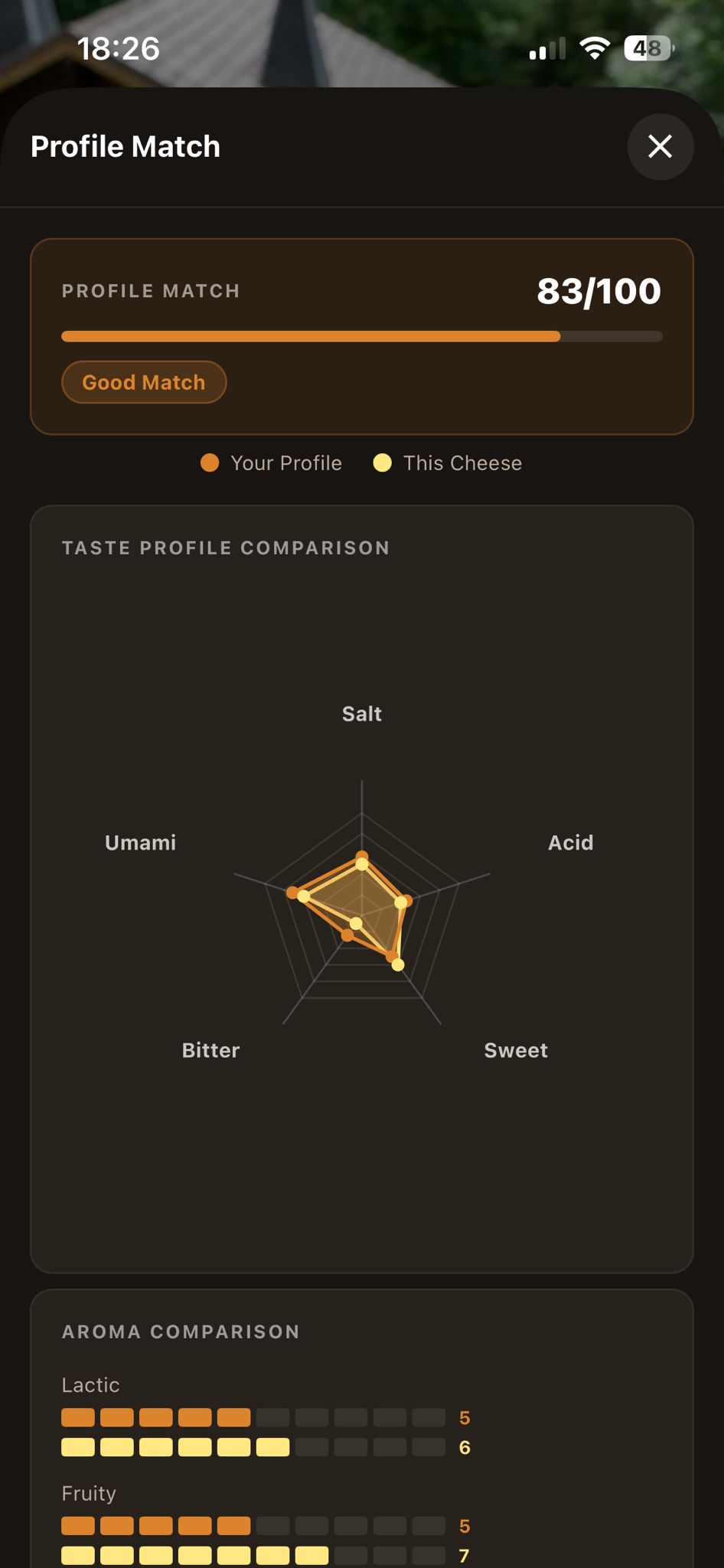
The values below are the structured baseline in the Cheesepedia app. Your personal match is calculated separately from your own taste profile.
A general profile can describe Queijo de Nisa, but it cannot know how closely the cheese fits your preferences. Cheesepedia Premium compares this profile with your personal taste profile and lets you evaluate cheeses side by side.
See your personal matchHow to enjoy it
- Served in wedges on cheese boards.
- Spread when soft on bread or crackers.
- Used in warm appetisers, tartines, or vegetable plates.
What pairs with Queijo de Nisa?
Classic serving companions from the Cheesepedia catalog.
- Mantua Pears
- Walnuts
- Sourdough Bread
- Fresh Figs
- Almond Cracker
Find the right wine in Cheesepedia
Cheesepedia uses an expert-designed algorithm that compares the cheese's taste, intensity, and production profile with the wine's body, acidity, tannin, and sweetness. Wine pairings are not generated by AI.
See wine pairings for Queijo de NisaStory and origin
Nisa cheese is deeply rooted in the ancient shepherd communities of the district, where the local climate and the high-quality milk of the Merina Branca breed shaped its distinct character. The use of wild thistle as rennet is a pre-Roman tradition that has been maintained continuously. It has held PDO status since 1996.
Storage and serving
- Store in the fridge, sealed or in an airtight container.
- Air travel: not ideal; suitable only if sealed and kept cool.
Profile sources and methodology
This page uses the same curated record as the Cheesepedia mobile app. Production-style and designation references provide context; they do not imply endorsement of Cheesepedia.