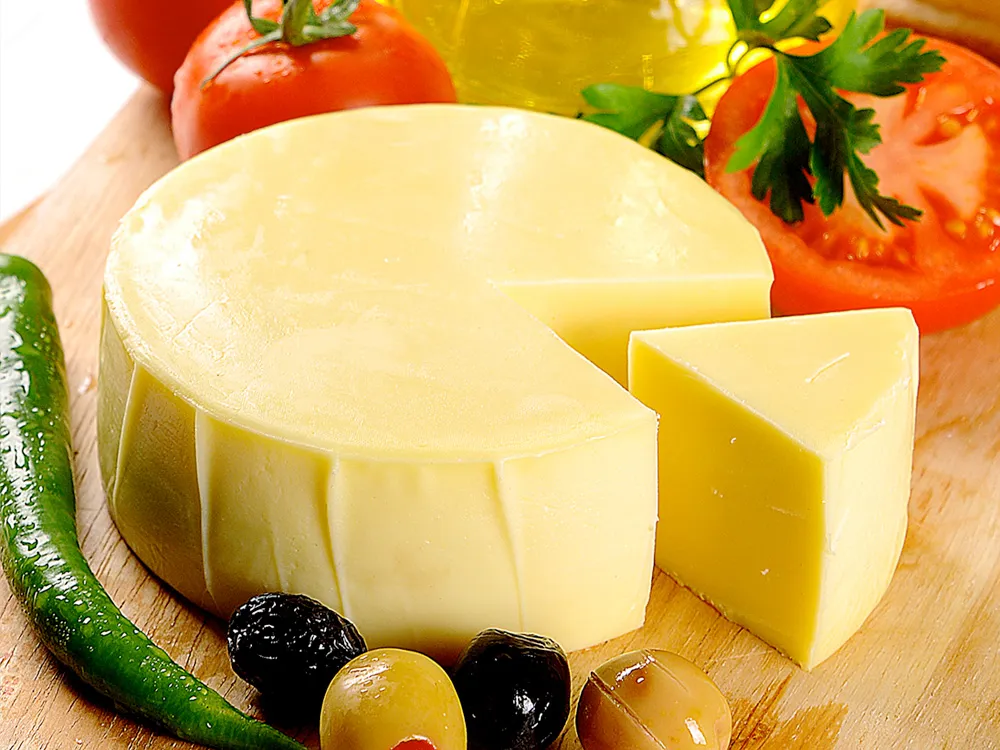
What is Kasseri?
A semi-hard pasta filata cheese from specific regions of Greece — Lesbos, Thessaly, Macedonia, and Xanthi in Thrace — made from sheep’s milk with up to 20% goat’s milk. Produced using the stretched-curd technique: the curd is kneaded and stretched in hot water, similar to mozzarella, giving it a characteristic fibrous and elastic structure. Aged for a minimum of 3 months.
Taste, aroma, and texture
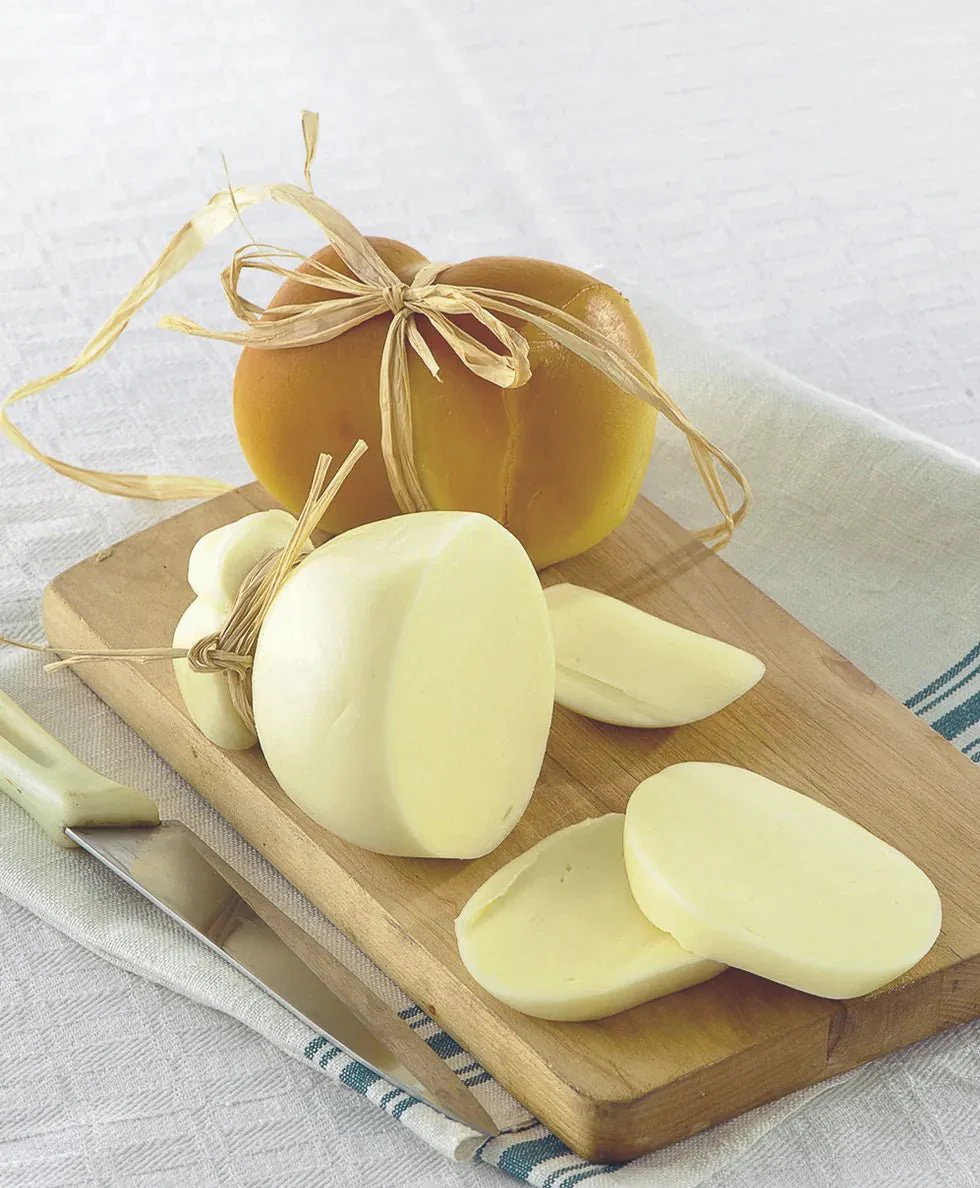
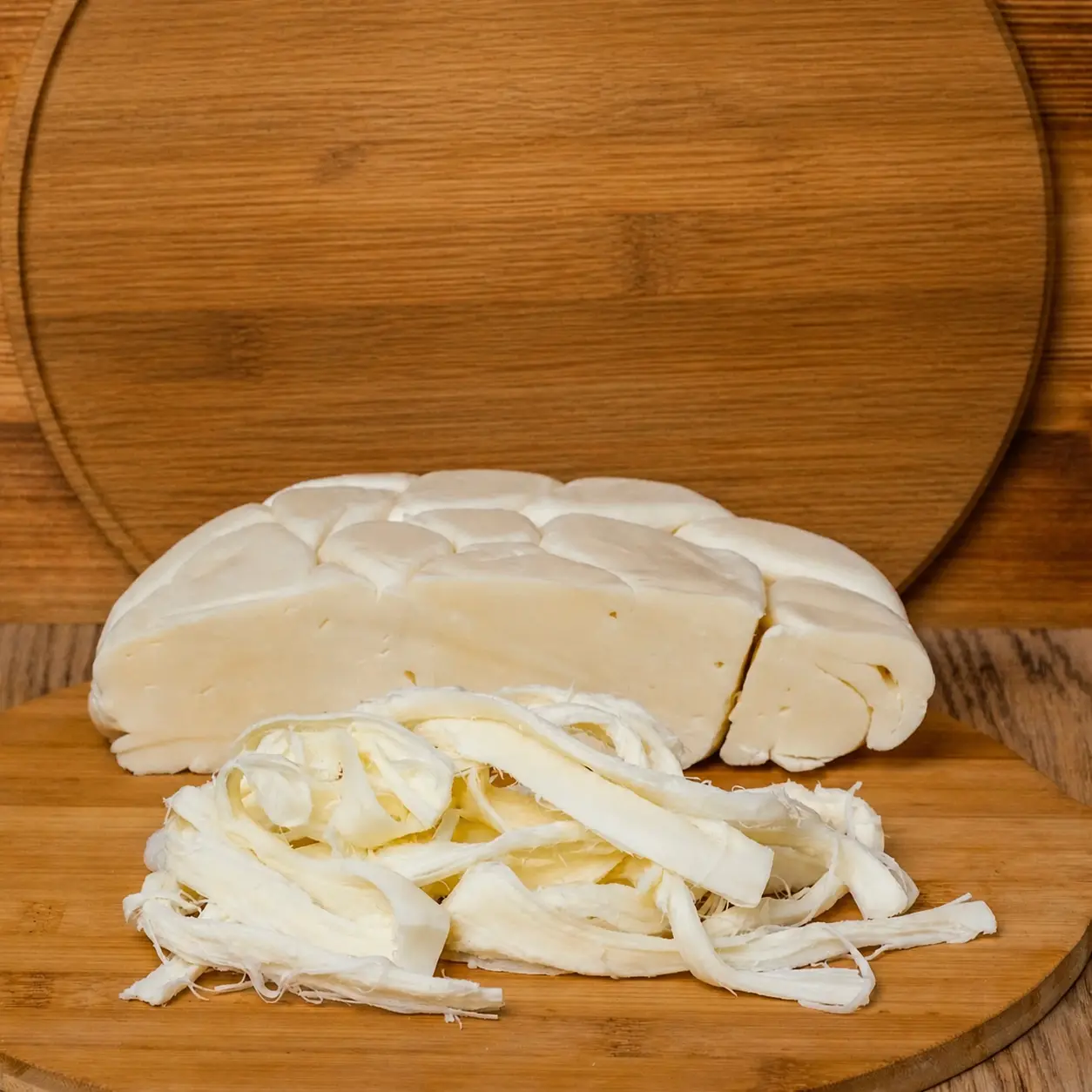
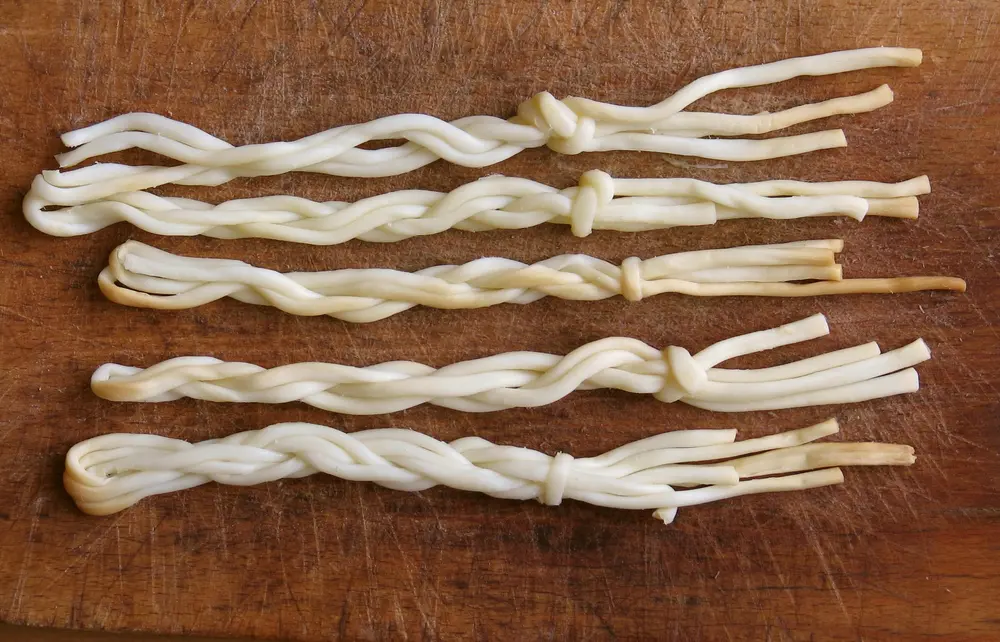
Semi-hard and elastic, with a smooth, closed paste and no holes. The interior is pale yellow. There is no significant rind; the surface is smooth and thin, sometimes wax-coated. The pasta filata method gives a characteristic fibrous structure visible when the cheese is pulled apart. Melts beautifully, making it ideal for saganaki and grilled dishes.
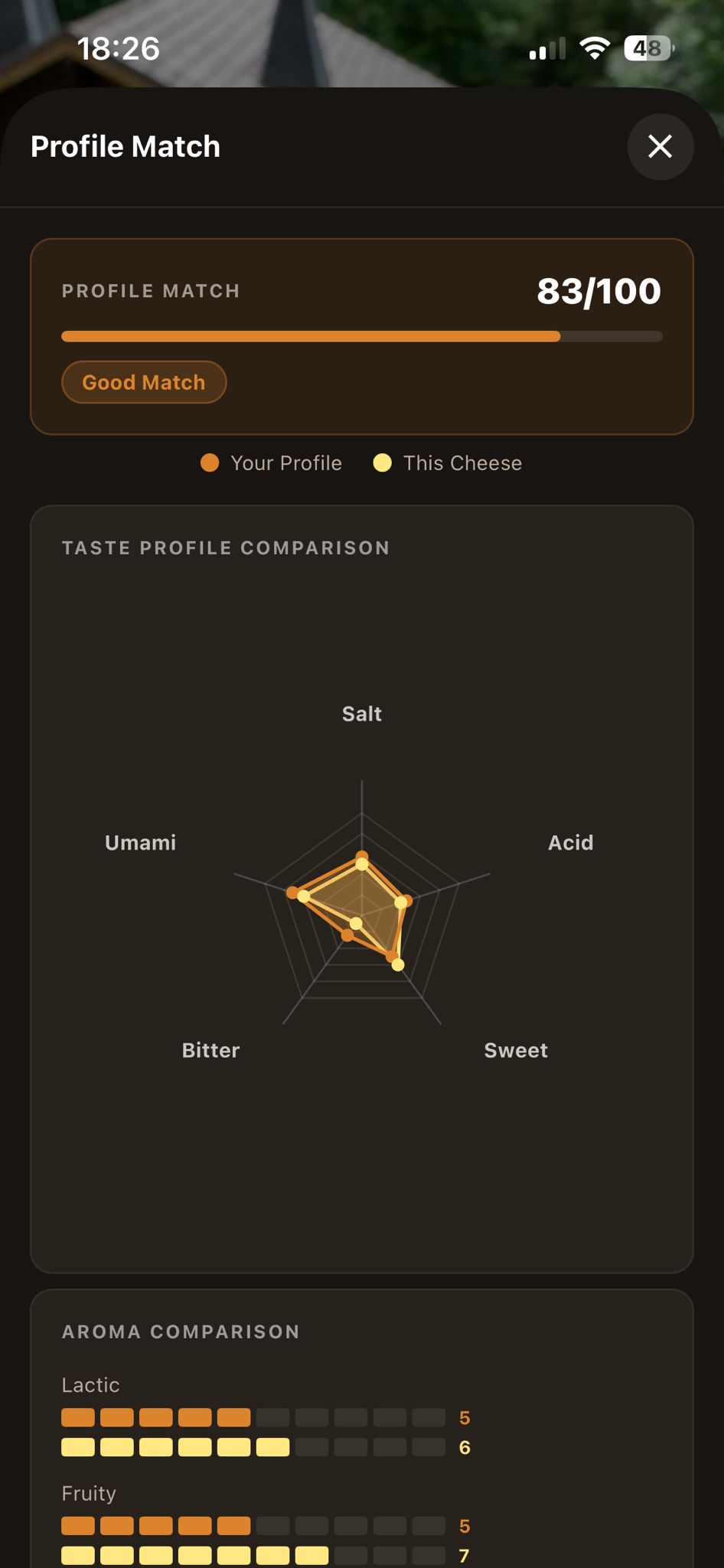
Lactic notes are dominant — fresh, milky, and subtly buttery. Fruity and earthy notes are equally noticeable, while animal and herbal notes remain faint. No smoky character. Clean and approachable throughout.
Cheesepedia taste profile
The values below are the structured baseline in the Cheesepedia app. Your personal match is calculated separately from your own taste profile.
A general profile can describe Kasseri, but it cannot know how closely the cheese fits your preferences. Cheesepedia Premium compares this profile with your personal taste profile and lets you evaluate cheeses side by side.
See your personal matchHow to enjoy it
- Melted into pies, toasties, or baked sandwiches.
- Used in saganaki or grilled cheese dishes.
- Added to flatbreads, omelettes, or savoury pastries.
What pairs with Kasseri?
Classic serving companions from the Cheesepedia catalog.
- Salted Cracker
- Grissini
- Butter Cracker
- Whole Wheat Cracker
- Sesame Cracker
Find the right wine in Cheesepedia
Cheesepedia uses an expert-designed algorithm that compares the cheese's taste, intensity, and production profile with the wine's body, acidity, tannin, and sweetness. Wine pairings are not generated by AI.
See wine pairings for KasseriStory and origin
First produced in the early 19th century by shepherds in the Pindos Mountains, drawing on pasta filata traditions that reached northern Greece through centuries of Balkan and Ottoman contact. The name is believed to derive from the Turkish word kaşar, itself possibly linked to the Hebrew kosher; early versions were made without rennet, making them suitable for Jewish dietary laws. It has held PDO status since 1996.
Storage and serving
- Store in the fridge, wrapped or vacuum-packed.
- Air travel: suitable, especially if vacuum-packed.
Profile sources and methodology
This page uses the same curated record as the Cheesepedia mobile app. Production-style and designation references provide context; they do not imply endorsement of Cheesepedia.