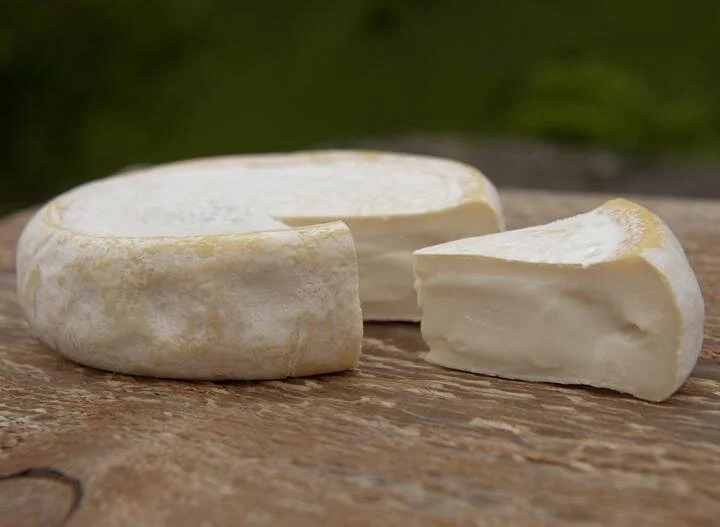
What is Chevrotin?
A rare farmhouse raw goat’s milk cheese from the high-altitude valleys of Savoie and Haute-Savoie, often described as the goat’s milk counterpart to Reblochon. Produced exclusively by small-scale mountain farmers (fermiers) under strict specifications. The washed rind develops an orange-pink surface. Aged for a minimum of 3 weeks. Wheels weigh 250–350 g.
Taste, aroma, and texture
Supple, smooth, and slightly sticky from the washed rind. The interior is homogeneous, compact, and buttery, melting easily on the palate. The orange-pink washed rind is thin and moist. Similar to Reblochon in size and feel, but with a distinct goat’s milk character.
Herbal notes are dominant, reflecting the alpine flora of high mountain pastures. Lactic and earthy notes are strongly present, while animal and fruity notes are clearly noticeable. No smoky character.
Cheesepedia taste profile
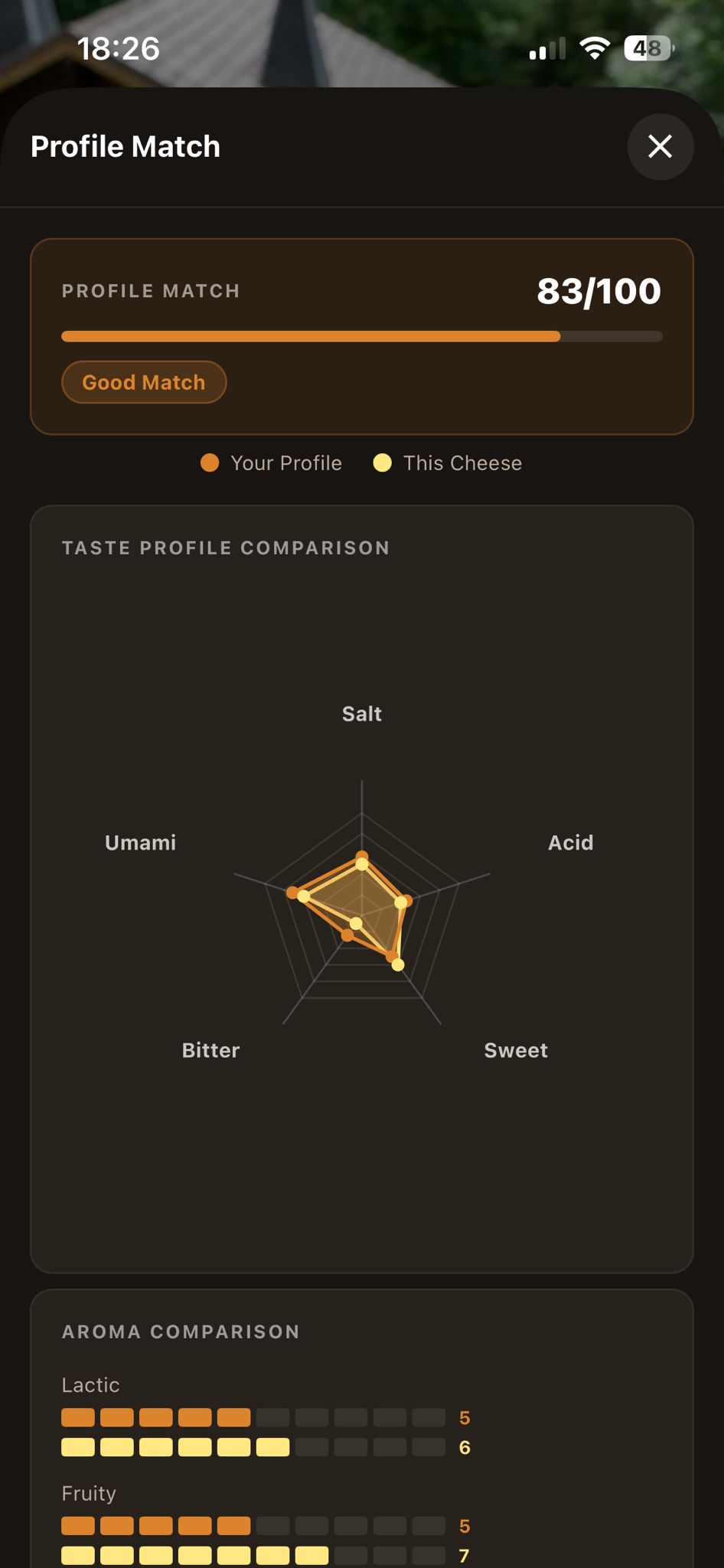
The values below are the structured baseline in the Cheesepedia app. Your personal match is calculated separately from your own taste profile.
A general profile can describe Chevrotin, but it cannot know how closely the cheese fits your preferences. Cheesepedia Premium compares this profile with your personal taste profile and lets you evaluate cheeses side by side.
See your personal matchHow to enjoy it
- Served with bread, nuts, or fresh fruit.
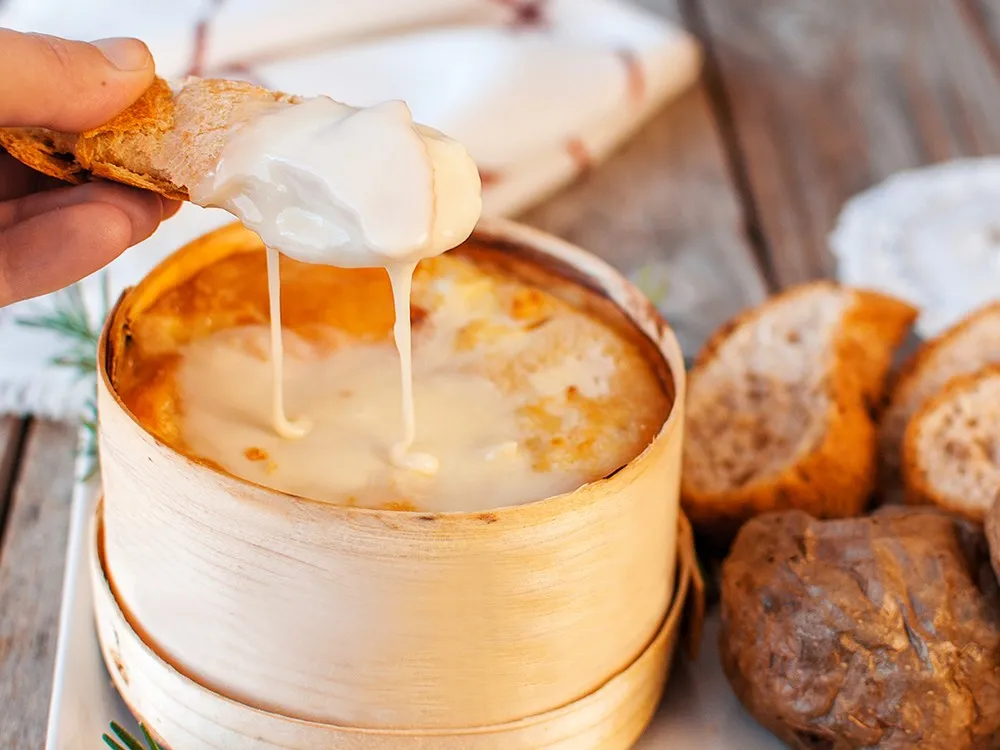
- Melted lightly over potatoes or roasted vegetables.
- Used in tartines, salads, or warm appetisers.
What pairs with Chevrotin?
Classic serving companions from the Cheesepedia catalog.
- Salted Cracker
- Grissini
- Butter Cracker
- Whole Wheat Cracker
- Sesame Cracker
Find the right wine in Cheesepedia
Cheesepedia uses an expert-designed algorithm that compares the cheese's taste, intensity, and production profile with the wine's body, acidity, tannin, and sweetness. Wine pairings are not generated by AI.
See wine pairings for ChevrotinStory and origin
Produced in the Savoie mountain valleys since the 17th century, when goat herding developed alongside cattle farming at high altitudes. It remained a strictly local product for centuries. It has held AOC status since 2002 and PDO status since 2014, making it one of the more recently protected French cheeses.
Storage and serving
- Store in the fridge, wrapped in cheese paper or parchment.
- Air travel: suitable for short trips if sealed and kept cool.
Profile sources and methodology
This page uses the same curated record as the Cheesepedia mobile app. Production-style and designation references provide context; they do not imply endorsement of Cheesepedia.