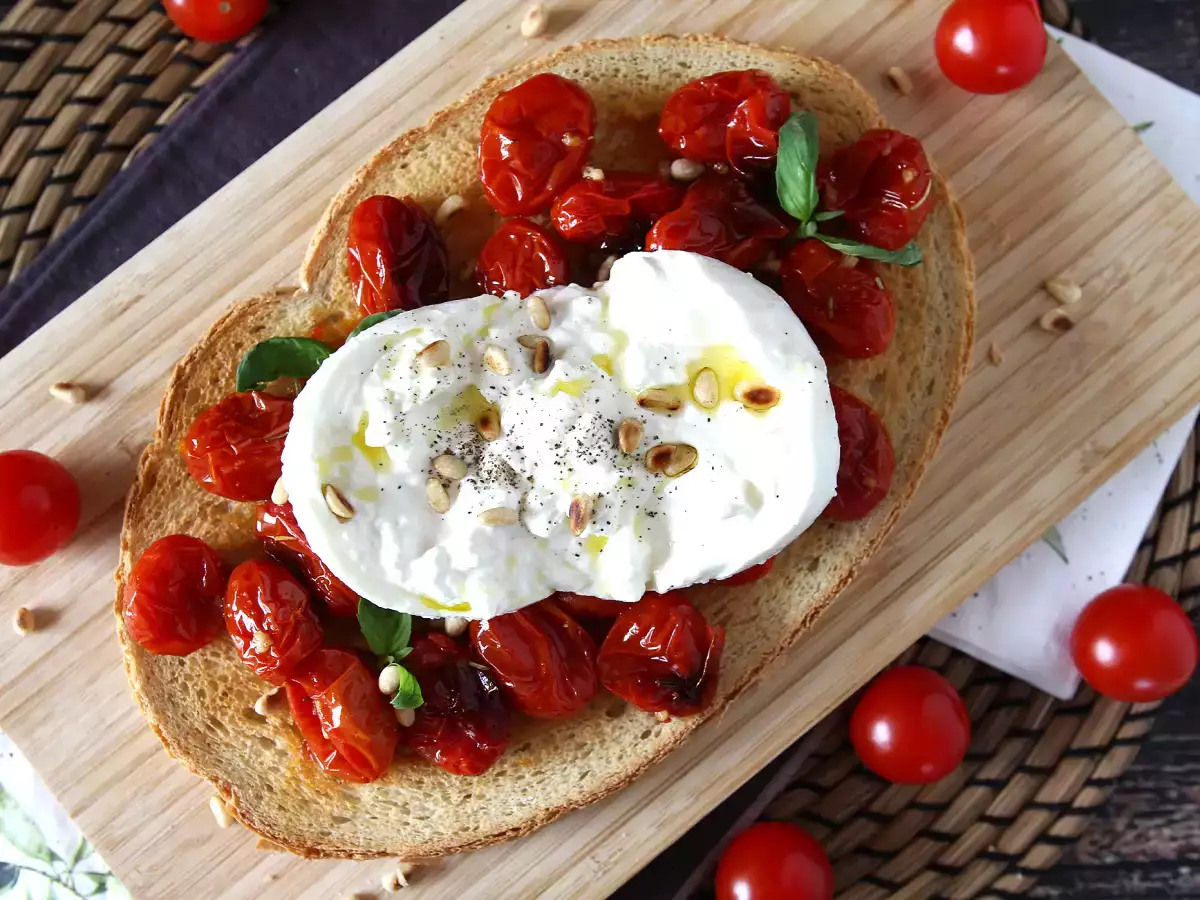
What is Burrata?
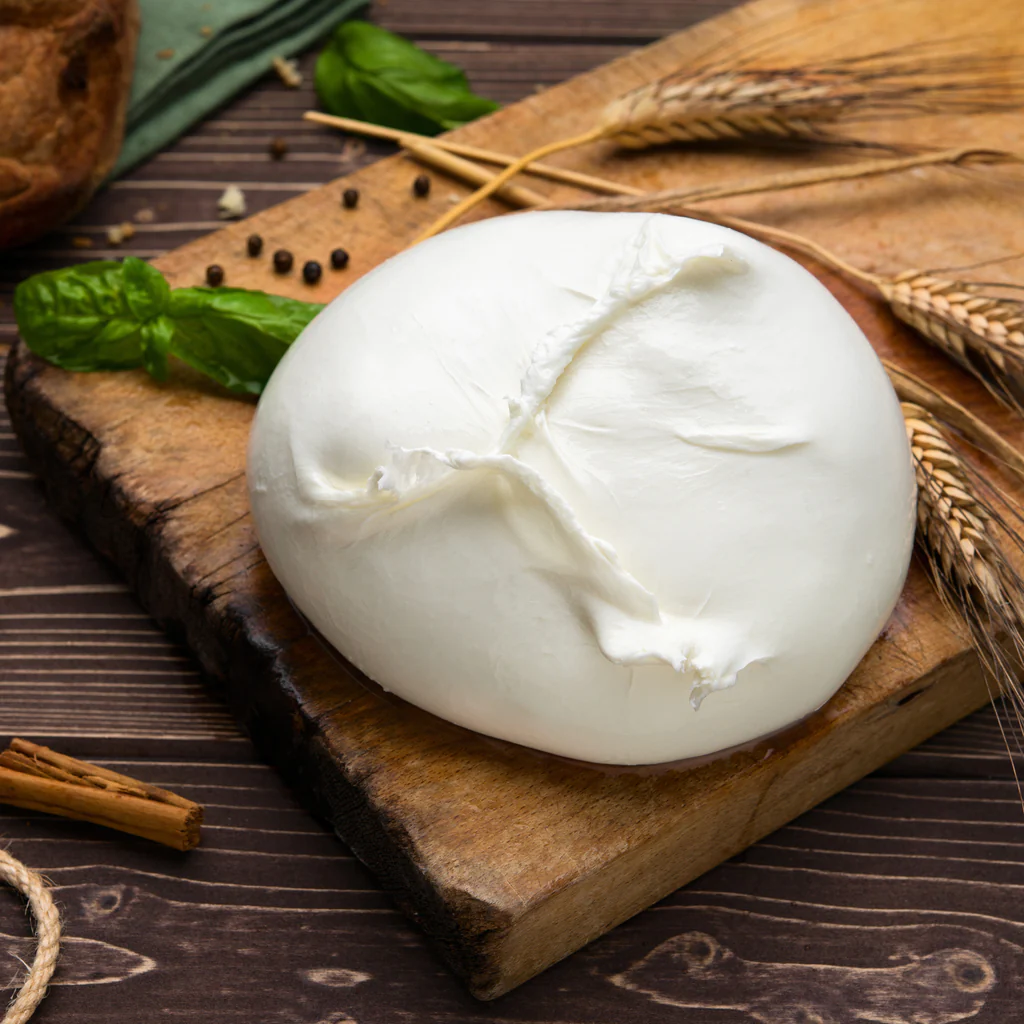
A fresh pasta filata cheese from Puglia, with a thin mozzarella outer shell enclosing a rich stracciatella filling of torn mozzarella and fresh cream. Burrata itself is not PDO; Burrata di Andria has held PGI status since 2016. It is typically consumed within 24–48 hours of production and is a signature of Puglian dairy culture.
Taste, aroma, and texture
Texture
A unique dual texture: a smooth, elastic mozzarella outer shell surrounds a cloud-like, liquid-creamy stracciatella centre that spills out when cut. The contrast between the firm exterior and flowing interior is its defining feature. No rind. Best served at room temperature.
Aroma
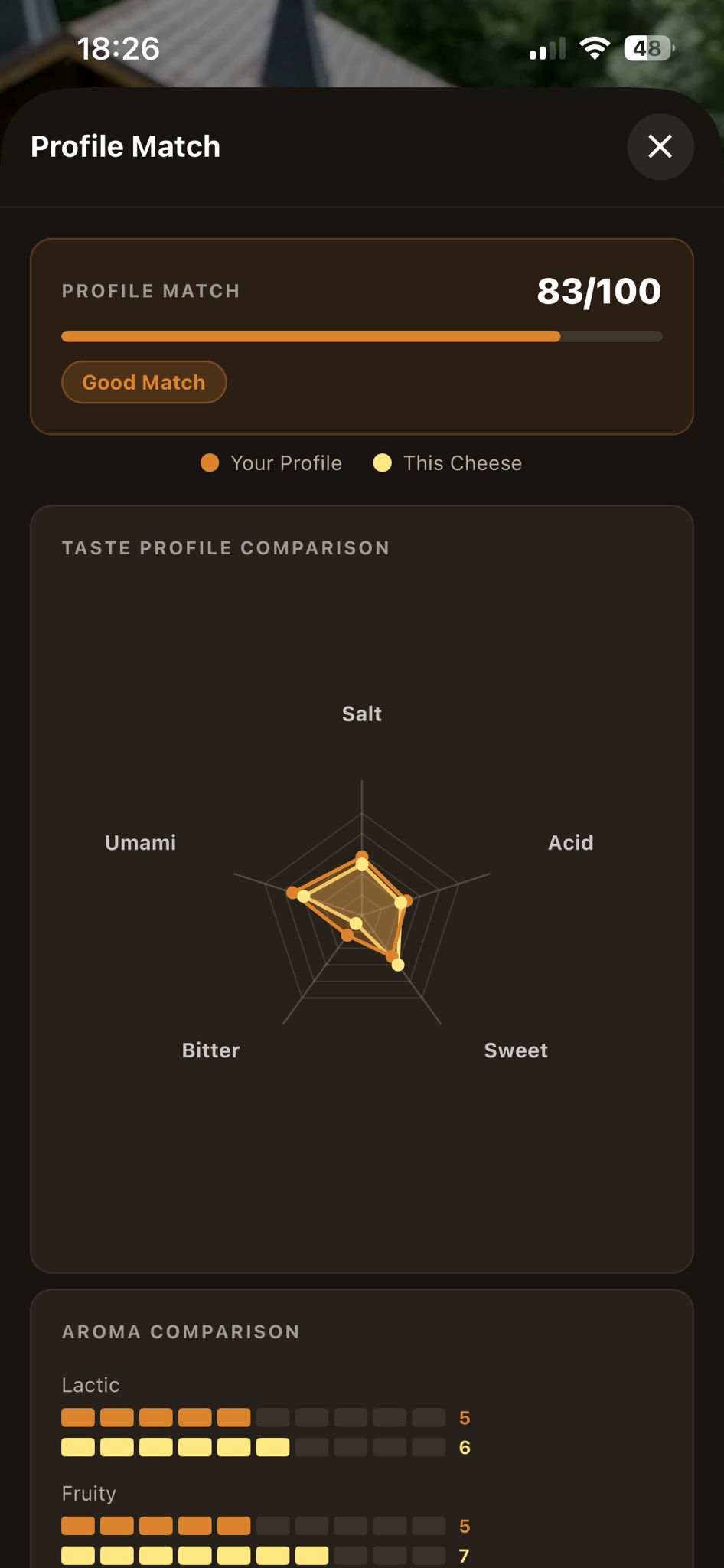
Lactic notes are strongly dominant — the purest expression of fresh, high-fat milk and sweet cream. Fruity, animal, herbal, earthy, and smoky notes are all barely perceptible. One of the freshest and most purely lactic profiles among Italian cheeses.
Cheesepedia taste profile
These values are the structured baseline in the Cheesepedia app. Your personal match is calculated separately from your own taste profile.
How to enjoy it
- 01
Served with tomatoes, basil, and olive oil.
- 02
Placed on salads, bruschetta, or roasted vegetables.
- 03
Added to pasta or pizza after cooking for a creamy finish.
What pairs with Burrata?
Classic serving companions from the Cheesepedia catalog.
- Salted Cracker
- Grissini
- Butter Cracker
- Whole Wheat Cracker
- Sesame Cracker
Story and origin
Created in Puglia in southern Italy, reportedly by Lorenzo Bianchino around 1920 as a way to use leftover mozzarella scraps mixed with fresh cream. The cheese spread rapidly through southern Italy and later across the world. Burrata di Andria received PGI status in 2016, recognising its specific origin in the Andria area of Bari.
Storage and serving
- Store in the fridge, in brine or sealed packaging.
- Air travel: suitable only in leak-proof packaging.
Profile sources and methodology
This page uses the same curated record as the Cheesepedia mobile app. Production-style and designation references provide context; they do not imply endorsement of Cheesepedia.